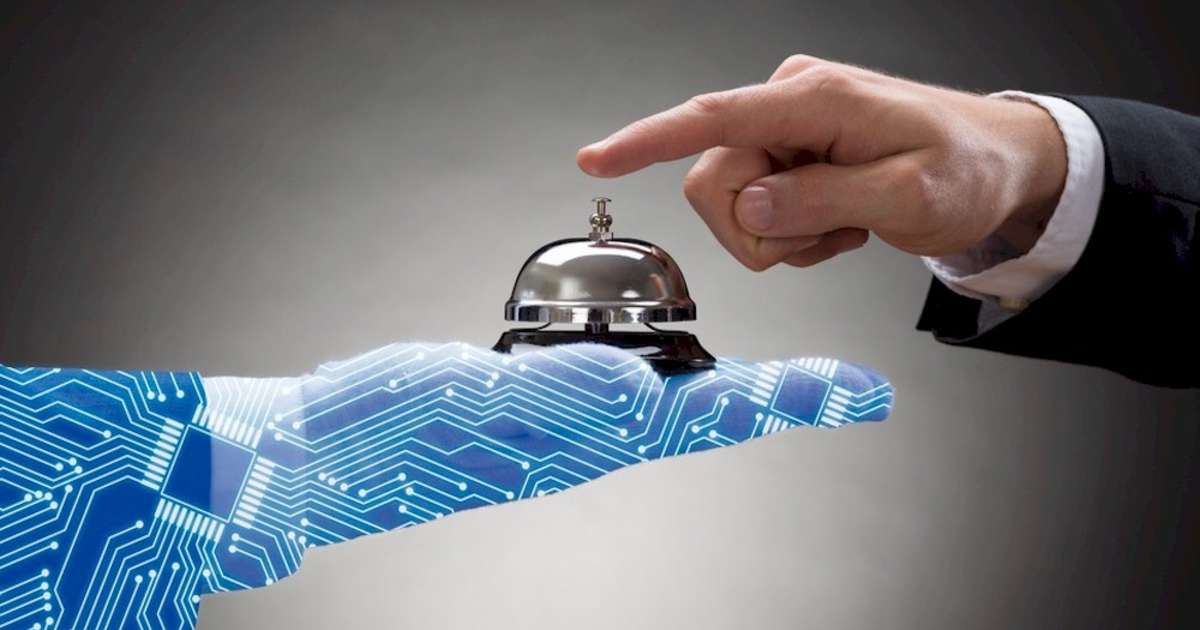
Artificial Intelligence has transitioned from the future of technology into an actual key player in business decisions – and the hospitality industry has welcomed it. From dynamic pricing engines and chatbot concierges to predictive maintenance and personalized guest journeys, AI is redefining how hotels operate, market, and deliver services to their customers. With these new tech inclusions, the industry has a vested interest in identifying what’s working, what’s not, and what pivots leaders should be planning for next.
Industry Context
The hotel industry is under great pressure to offer exemplary performances while experiencing rapid change. On one hand, practically every major hotel group has, is, or plans to invest in AI-powered platforms, from robotic process automation in accounting and HR, to CRM systems and revenue optimization tools. On the other hand, guest expectations that lean into hyper-personalization have drastically increased, while operators face pressure to be more efficient and reduce costs amid ever-present labor shortages.
AI applications – such as large language models (LLMs), image recognition, and predictive analytics – are creating new possibilities but also introducing risks around data privacy, bias, and brand authenticity. For example, the hospitality technology market is projected to grow by 50-60% annually over the coming years. Concurrently, the industry faces data silos, governance issues, and the challenge of preserving the “human” element of service.
The Current State of Hotel Technology Adoption
AI is reshaping the guest experience in many ways. It is embedded across the entire guest journey. AI-driven chatbots and virtual assistants handle booking inquiries, guest Q&A functions, and check-in. Consider that AI platforms analyze guest data and social behavior to customize upsells, such as spa bookings and room upgrades, and to prepare smart-room settings based on prior preferences. AI also supports post-stay engagement, such as follow-up messaging, loyalty re-engagement based on data analytics, and personalized offers. According to research, one of the most cited benefits of implementing AI technology is unlocking guest insights. The ability to collect key information from current, former, and future guests can help organizations provide more pinpoint services for new and existing guests, as well as enhance the guest journey for the most dedicated consumer. Given that word of mouth is a powerful marketing strategy, providing stellar service to current customers is an effective way to attract new ones.
The use of AI goes beyond guest-facing functions. Research indicates that AI is being applied to organizational operations such as housekeeping optimization and energy management; revenue management (dynamic pricing and demand forecasting); marketing efforts (targeted offers and segmentation); and workforce management (task automation and predictive scheduling). Case in point: AI-based revenue-management systems adjust room rates in real time based on supply and demand and competitor pricing. In operations, AI supports predictive maintenance of equipment and HVAC, housekeeping scheduling, and smart-building controls.
The Adoption Gap
While luxury brands and major hotel groups are actively investing in AI solutions, many independent hotels and smaller operators are lagging behind. According to research, only around 28% of hospitality and travel companies can be classified as “AI leaders” – defined as having an aligned AI strategy, compliance measures, adequate training, and agent deployments. In contrast, a similar proportion remain in a “wait-and-see” mode, assessing but not yet pursuing AI initiatives. Smaller properties often cite cost, legacy systems, a lack of skilled talent, and data fragmentation as the biggest barriers to adoption. With constant improvements in AI models and the consistent addition of AI tools, the cost barrier should be virtually eliminated in a matter of years, not decades.
Operational Implications
One of the strongest drivers for AI adoption in hotels is operational efficiency. By automating manual tasks – such as check-in/out, concierge Q&A, scheduling, and housekeeping sequencing – hotels free staff to focus on higher-value tasks. For example, AI scheduling tools can match staffing levels to predicted guest volumes, reducing labor costs and improving responsiveness. Similarly, smart-building systems using AI optimize energy consumption by controlling lighting, HVAC, and other systems based on occupancy or demand patterns.
Impact on Workforce Models
As machines take on more routine tasks, hotel roles are being redefined. Reservation agents may become experienced curators rather than data-entry operators; revenue managers increasingly work alongside algorithmic tools; guest services staff may shift their focus to empathy, storytelling, and personalized engagement rather than transactional tasks. This transition introduces opportunities – upskilling, job redesign – but also tensions. Staff may fear displacement or struggle with new hybrid workflows combining human and machine tasks.
Risks and Challenges
Even though the inclusion of AI into the hospitality industry is proving to be a positive addition, with all its promises, there are important risks and challenges:
First: data integrity. AI systems are only as good as the data they operate on (aka, garbage in, garbage out), and hotels frequently suffer from siloed systems, incomplete guest profiles, and inconsistent data flows.
Cybersecurity and privacy are critical. With personalization comes the collection of guest data, such as preferences, behavior, and responses – all of which must be handled securely and ethically.
Preserving the human touch is essential: AI should enhance – not replace – interaction, giving staff more time to improve the guest experience.
Bias and fairness. Generative AI or predictive models risk embedding bias (e.g., in guest segmentation or offers) and may undermine brand authenticity. Improper use of predictive models could lead to monolithic business decisions, hampering the ability to provide a unique customer experience for everyone.
What Leaders Are Doing About It
Building Internal AI Task Forces and Tech Partnerships
Hotel leaders have started recognizing that AI is a strategic investment, not just a nice-to-have add-on. Many are forming dedicated AI or digital-innovation task forces that span IT, marketing, operations management, and guest experience functions. They are also forming partnerships with specialised vendors or start-ups to accelerate adoption. These partnerships enable faster deployment of capabilities, such as chatbots, revenue-management modules, and smart-room systems, while avoiding the need to build everything in-house.
Reassessing Data Strategies
A key enabler of AI is data. Hotels are rethinking how systems talk to each other; how guest, operations, and financial data are integrated, and how insights are generated. Without connected systems, AI adoption stalls. Siloed platforms are cited as a main barrier. Leaders are investing in unified guest-data platforms, upgrading property management systems (PMS), and deploying analytic layers that make AI actionable rather than just experimental.
Balancing Innovation with Brand Consistency
Innovation must align with brand and service culture. Hotels are tasked with ensuring that automation and AI enhance rather than replace the brand’s personality and connection. For example, robots or chatbots should not feel cold or transactional. The better approach: use AI for routine tasks and free up human time for emotion-driven guest interactions. Thus, leaders are emphasizing the “human in the loop” model: even if a chatbot handles initial queries, escalation to a human remains seamless.
Investing in Up-Skilling
Implementing AI is as much about people as it is about technology. Hotels are paying greater attention to training their staff to work alongside AI tools – interpreting analytics outputs, maintaining AI systems, understanding when human override is needed, and focusing on higher-value guest interactions. Without this, systems may underperform, or staff may resist adoption.
Looking Ahead
AI will not replace hospitality… but it will redefine it. Contrary to the popular fears that robots will replace hotel staff, the more realistic outcome is that AI will redefine the nature of hospitality. What a hotel does and how it does it will evolve, even if the core purpose – creating a memorable guest experience – remains unchanged.
Integration, Not Just an Add-On
Within five years, many hotels will treat AI not as an add-on, but as a core infrastructure layer. The technology stack will embed AI across pricing, operations, guest management, and maintenance rather than be limited to pilot projects. The competition won’t just be about who has the technology, but who uses it most intelligently to create value for both guests and employees.
Smart Use, Not Just More Use
The next phase of competition will not be about who adopted AI first, but about who uses it best. Hotel groups that combine technological fluency with operational acumen and brand clarity will win. Those that implement AI for its own sake risk disconnection, guest alienation, or wasteful spending. Intention is key to both the successful implementation and execution of value-adding AI adoption.
Staying Human
As automation proliferates, the emotional connections of empathy, anticipation, surprise, and delight become the key differentiators. Hotels that get the balance right (automation + human warmth) will stand out. It will be the groups that can offer automated excellence combined with compassionate customer service and human experience that will come out on top in the AI implementation race.
AI’s arrival in hospitality isn’t a distant concept – it’s already here. The opportunity now lies in translating potential into performance. The hotels that succeed will be those that combine technological fluency with the timeless fundamentals of hospitality: empathy, anticipation, and connection.
When a guest steps into a hotel lobby, they may have been led there by chatbots, a smart room application possibly chose their room location and other predictive insights possibly worked behind the scenes – but ultimately, what they will remember are the human moments: the staff member who knew their name, the personalized gestures, the moment of delight seeing the view from their room, the fruit basket awaiting their arrival. AI might be the enabler, but human hospitality will always remain the heart.
Reprinted from the Hotel Business Review with permission from www.HotelExecutive.com.
Alice Sherman
Executive Vice President & Managing Director, Americas at HVS
HVS