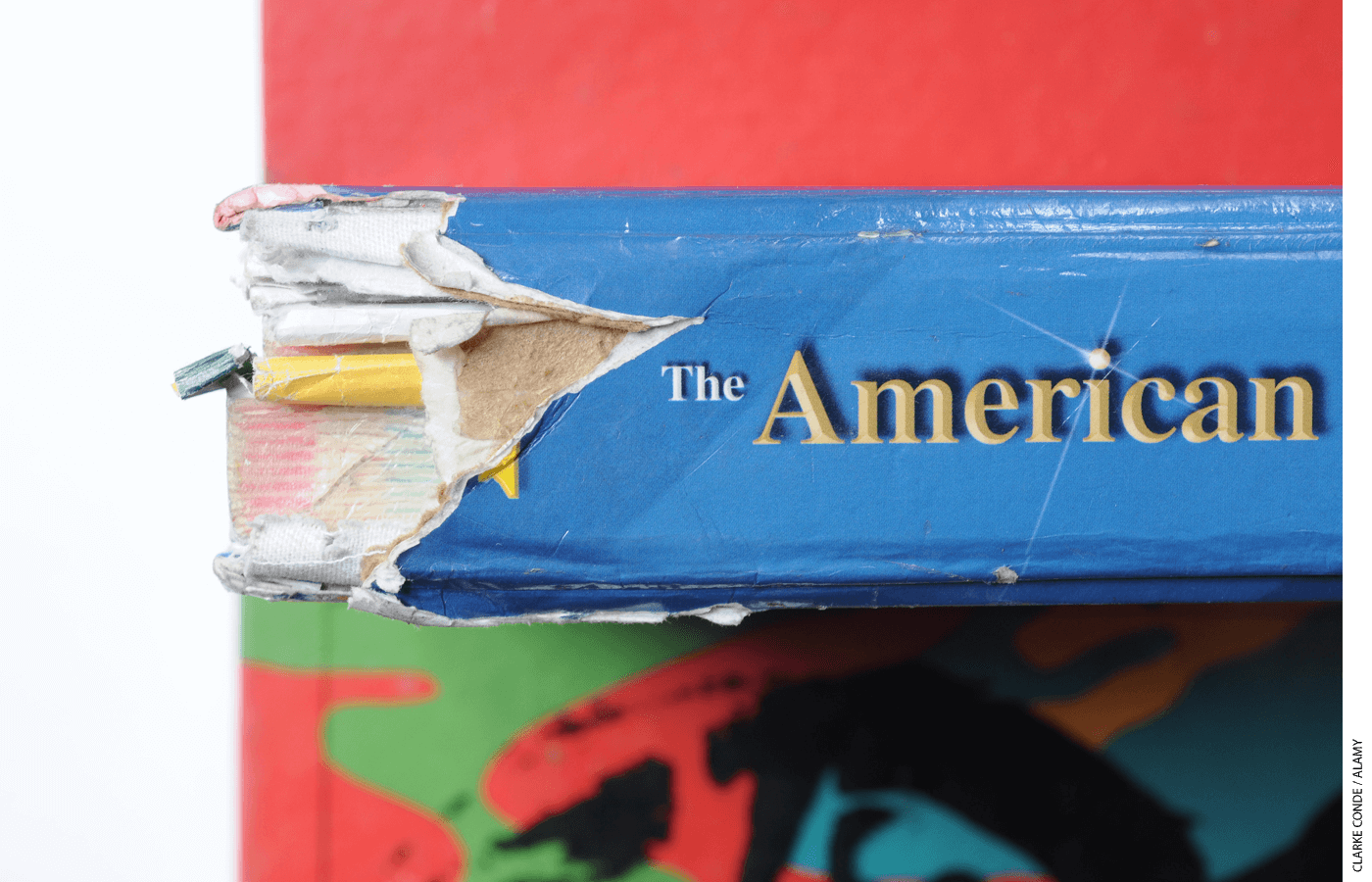
Before Moms for Liberty, before Christopher Rufo, before Nikole Hannah-Jones, there was “Man: A Course of Study”.
Usually shortened to its acronym, MACOS was an elementary and middle school social studies curriculum developed by a team of Harvard-based researchers, funded by the National Science Foundation, and implemented in a handful of school districts in the 1970s. It was an intellectually ambitious pedagogical initiative for its time, rooted in mid-century anthropological practices, that examined the behaviors, habits, and social structures of a wide range of species, beginning with Pacific coast salmon and progressing through herring gulls, baboons, and ultimately humans. MACOS introduced ideas about social organization in relatively simple terms when discussing animals like salmon and then repeatedly returned to them in greater complexity when applied in other contexts, culminating in an extended study of the Netsilik, an Innuit nation in northern Canada. The curriculum was organized around a series of documentary films, with few cuts and no narration, allowing students to engage with the material as budding social scientists, observing and interpreting the content for themselves.
Some of the footage of the Netsilik was provocative, to say the least. Students witnessed the gory end of a ringed seal, impaled with a spear by an expert hunter, its neck forcibly broken and its bright red blood spilled across the white snow. Another lesson featured a grandmother from the community (mercifully unfilmed but described in detail in an accompanying textbook) who was left behind on a journey because of her poor eyesight and mobility, untenable limitations in a merciless environment.
Critics pounced. Denounced as anti-Christian, anti-American, and a secret communist plot to promote cannibalism, infanticide, and senicide, MACOS became the subject of a series of hearings in the U.S. House of Representatives and one of the justifications for the termination of NSF’s grant-making efforts for curriculum development in the social sciences. A new phase of America’s long-running culture wars over K–12 education had begun.
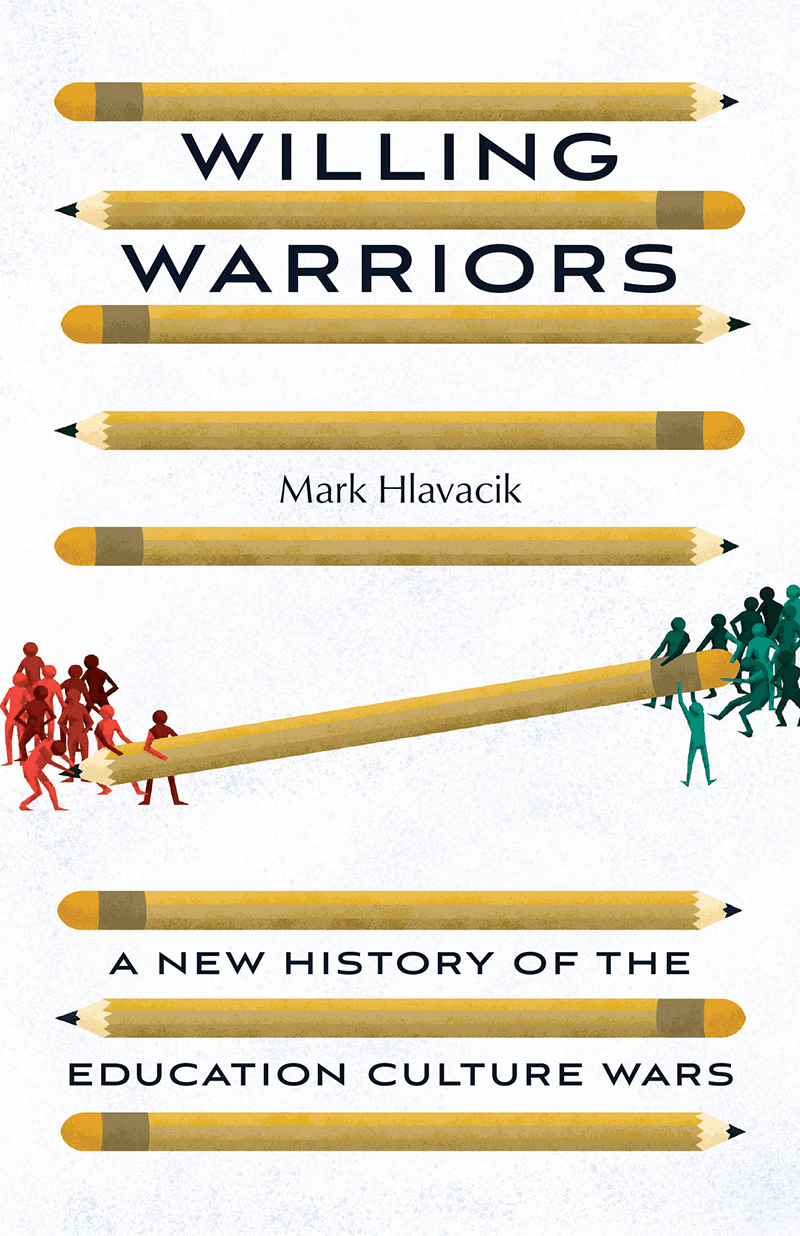 Willing Warriors: A New History of the Education Culture Wars
by Mark Hlavacik
University of Chicago Press, 2025, $24.00, 224 pages
The MACOS tale is just one episode in Mark Hlavacik’s new book on the history and rhetoric of education culture wars in the U.S. over the last half century. Hlavacik guides the reader through a cohesive narrative that begins with MACOS and winds its way through Allan Bloom’s lament over the demise of classical liberal arts education in his 1987 book The Closing of the American Mind, the collapse of a federally funded set of national history standards in the 1990s, the backlash to the Common Core State Standards in the 2010s, and the more recent maelstrom over the New York Times’s 1619 Project and related efforts to reimagine how race and racism are treated in K–12 classrooms. He argues that all five of these instances featured similar rhetorical strategies, that these strategies were reliably effective at generating public outrage, and—most importantly—that none of these conflicts contributed to the improvement of the state of education in America.
The primary legacy of education culture war, according to Hlavacik, is one of missed opportunities and backfires. While the political conflagration over MACOS revolved around its graphic depictions of life in the Arctic, little ink was spilled over its imperialist orientation to the Netsilik, its deliberate omission of the ways that community had adopted modern tools and conveniences, and its decision to present its people as subjects to be studied rather than teachers sharing their cultural heritage. (The participants in the documentaries were well aware that they were being filmed and understood the educational purposes of those videos.) The most durable outcome of that battle was NSF’s retreat from funding the creation of rigorous K–12 curricula on anthropology, economics, political science, psychology, and sociology, arguably weakening elementary and secondary social studies for a generation or more.
Similarly, the debate that followed Bloom’s analysis of late-20th century higher education focused disproportionately on his hostility to youth culture while largely ignoring his critique of how the undergraduate experience had remodeled itself to facilitate students’ career prospects rather than expand their sense of possibility. The controversy over the National History Standards merely managed to extinguish a broad, nationwide conversation about how to teach U.S. history in K–12 classrooms, warts and all. The conflict that consumed its most prominent successor, the 1619 Project, was waged almost entirely along partisan lines, all but ensuring that a common national narrative, institutionalized through a thoughtful and comprehensive history curriculum, remained out of reach. Hlavacik pointedly notes that the competing curricular products catering to the left and right that emerged in the 1619 Project’s wake were filled with “lessons marked by an agenda that makes them unlikely to be taught anywhere there are minds that need to be changed about the nature of U.S. history.”
While the earlier education culture wars recounted in his book predate our hyper-polarized political moment, by assembling these episodes into a single story, Hlavacik reveals how the contours of these disputes gradually took on the shape of the broader partisan conflict that now defines American politics. Back in the 1970s, initial opposition to MACOS originated among religious conservatives, but political support for the curriculum quickly dissipated among leaders in both parties. By the 2010s, however, the recurring political battles over what to teach in American classrooms began to mirror the country’s growing partisan divide. Support for the Common Core State Standards split almost entirely along party lines—but even then, there were key cross-cutting exceptions. Jeb Bush, the Republican governor of Florida, remained a staunch supporter of the standards; the major teachers unions, stalwart Democratic allies, mostly abandoned them. The integration of the education culture wars into the wider partisan whirlwind was made complete with the unremittingly polarized reaction to the 1619 Project and the subsequent debate over how educators ought to teach about the role of race in America’s past and present.
Taking a step back from the partisan fray, Hlavacik appears more interested in identifying the common features of culture-war rhetoric and its poor track record of promoting constructive change than in declaring which end of the ideological spectrum is more to blame. His examples tend to skew conservative, but not exclusively so. There are few lasting educational benefits to a style of political communication meant to maximize outrage, he argues, regardless of its partisan provenance.