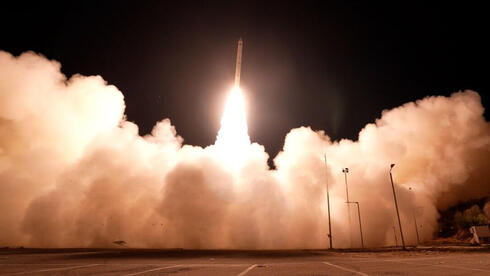
For decades, Israel’s space industry operated largely out of public view: small, defense-oriented, closed, and focused primarily on the state’s strategic needs. Satellites, communications systems, and sensors were developed mainly for the defense establishment, sometimes in collaboration with civilian entities, but almost always under a veil of secrecy and with minimal exposure to commercial markets.
That picture is now beginning to change. According to The State of the Israeli Space Industry 2026 report published by Startup Nation Central, the sector is undergoing a profound transformation, from a security-driven industry to a broader ecosystem increasingly oriented toward civilian services, data, and global commercial space applications. The report was prepared in collaboration with Rakia, the Israeli Space Agency at the Ministry of Science, and the Growth Administration, and was released as part of Israel Space Week 2026.
The report maps an ecosystem of roughly 90 companies: about 50 “core” space companies and another 40 developing civilian applications that rely on space infrastructure. While still relatively small, the sector displays a markedly different profile from Israel’s traditional high-tech industry, less consumer-facing and application-driven, and more infrastructural, long-term, and operationally intensive.
According to the report’s data, roughly 45% of Israeli space companies operate in the upstream segment, manufacturing satellites, launch systems, communications components, and ground infrastructure. About 31% are active in the downstream segment, focusing on satellite communications, navigation, Earth observation, and data analytics. The remainder are divided between in-space activities, such as maintenance and development in microgravity, and infrastructure and operational services.
Among Israeli companies active in in-orbit activities, the report highlights SpacePharma, which conducts pharmaceutical experiments in microgravity, and Amorphical, which develops calcium supplements and health technologies designed to address bone density loss in astronauts. While still limited in scale, these efforts signal the ecosystem’s expansion beyond satellites and communications into biotechnology and life sciences in space.
Beyond its statistical mapping, the report identifies a broader strategic shift: the industry’s economic center of gravity is gradually moving from the satellite itself to the services built around it. As in global markets, value is no longer defined solely by the ability to launch hardware into orbit, but by the capacity to extract information, connectivity, and insights, for governments, corporations, and civilian infrastructure.
This shift marks a significant departure for an industry historically built on heavy hardware, multi-year development cycles, and a small number of customers. The transition to space-based services requires not only engineering expertise, but also software, data, systems integration, and product-thinking capabilities, areas in which Israel holds a comparative advantage, even if its accumulated experience in civilian space markets remains limited.
One of the defining characteristics of Israel’s space ecosystem, according to the report, is its dual-use nature. Technologies originally developed for security purposes, such as secure communications, precision sensing, and resilience in extreme conditions, are increasingly being adapted for civilian markets. This evolution does not come at the expense of security, but rather expands the range of applications and customers.
Over time, the stringent requirements imposed by Israel’s defense establishment have become a competitive advantage in civilian markets, where space is increasingly viewed as critical infrastructure, for emergency communications, infrastructure management, climate forecasting, navigation, and supply-chain resilience. Israeli companies are entering these markets with technologies designed for reliability and survivability, attributes that are becoming increasingly valuable well beyond the defense sector.
A concrete example of this trend is the collaboration between Israeli chip company Xsight Labs and Elon Musk’s SpaceX Starlink satellite constellation.
According to the report, Xsight has been selected to supply high-speed communications chips for Starlink’s V3 generation of satellites, an infrastructure-critical component for bandwidth, latency, and network control. The partnership illustrates how semiconductor technologies, once considered peripheral, are becoming geostrategic assets at the core of both civilian and military space systems.
One of the report’s more striking findings is the gap between operational scale and capital availability within Israel’s space ecosystem. Most companies remain in early funding stages, and investment volumes lag those seen in the United States and other leading markets. Over the past five years, the median deal size in Israel stood at approximately $4.3 million, compared with $5.3 million globally and $7.4 million in the United States.
Despite this, operational activity is relatively robust. About 33% of Israeli space companies employ more than 50 people, nearly double the comparable share across Israel’s broader tech sector. In addition, roughly 19% of active space companies have already been acquired or gone public.
This suggests that a meaningful number of firms are successfully transitioning from research and development into sustained business operations, even without large capital injections. The report describes this as a familiar paradox within the space industry: high costs and long development cycles alongside continuous demand for operations, maintenance, and skilled personnel.
According to the report, Israel has managed, at least in part, to offset capital constraints through accumulated expertise, experienced human capital, and participation in international programs and partnerships.
Despite its modest size, the Israeli space sector has grown rapidly. Over the past decade, it expanded by 66%, significantly outpacing growth in Israel’s broader high-tech industry. Much of this growth occurred between 2020 and 2023, amid a global surge in space investment. Since then, activity has cooled somewhat, with fewer new companies and deals, a trend that mirrors the broader global slowdown in technology funding.
The report also points to a structural driver behind current activity: a renewal cycle in space infrastructure. Satellites and constellations launched in the previous decade are reaching the end of their operational lives and are being replaced by more flexible, software-driven systems with greater integration capabilities. This shift is accelerating the industry’s transition from a pioneering, experimental phase to a more mature, cyclical infrastructure market.
At the same time, the report notes that investment cycles in Israel remain closely synchronized with those in the United States. Peak investment years, such as 2021, 2023, and 2025, have coincided in both markets, underscoring that while Israel’s space ecosystem is small, it is deeply connected to the same macroeconomic and technological forces shaping the global space industry.