
Listen to this article
Estimated 3 minutes
The audio version of this article is generated by AI-based technology. Mispronunciations can occur. We are working with our partners to continually review and improve the results.
Hyundai is exploring a “potential collaboration” with the Canadian hydrogen energy sector, it told CBC News on Thursday, as the South Korean automaker bets on natural gas-fuelled cars to be the future of the automotive industry.
The revelation came a few days after Canada and South Korea signed a memorandum of understanding that will see the two co-operate in several key industries, including auto and battery manufacturing.
A Hyundai spokesperson said while the company does not currently have plans to open an auto manufacturing plant in Canada, it’s reviewing “a range” of opportunities to collaborate, including in the hydrogen energy sector “to support Canada’s clean-energy transition.”
Hydrogen-fuelled cars have a longer range and can refuel faster than electric vehicles can recharge. But widespread adoption would require creating new infrastructure for hydrogen cars, a cost that most companies are unwilling to take on as they expand their EV programs.
Hyundai has bet “most heavily” on hydrogen as a potential fuel source for its vehicles at a time when some of its competitors are drawing back on the technology, said Flavio Volpe, president of the Automotive Parts Manufacturers’ Association in Toronto.
“They know that the hydrogen future starts with the hydrogen present, which is trucks and heavy vehicles,” Volpe said. The company unveiled the world’s first heavy-duty commercial trucks in 2020.
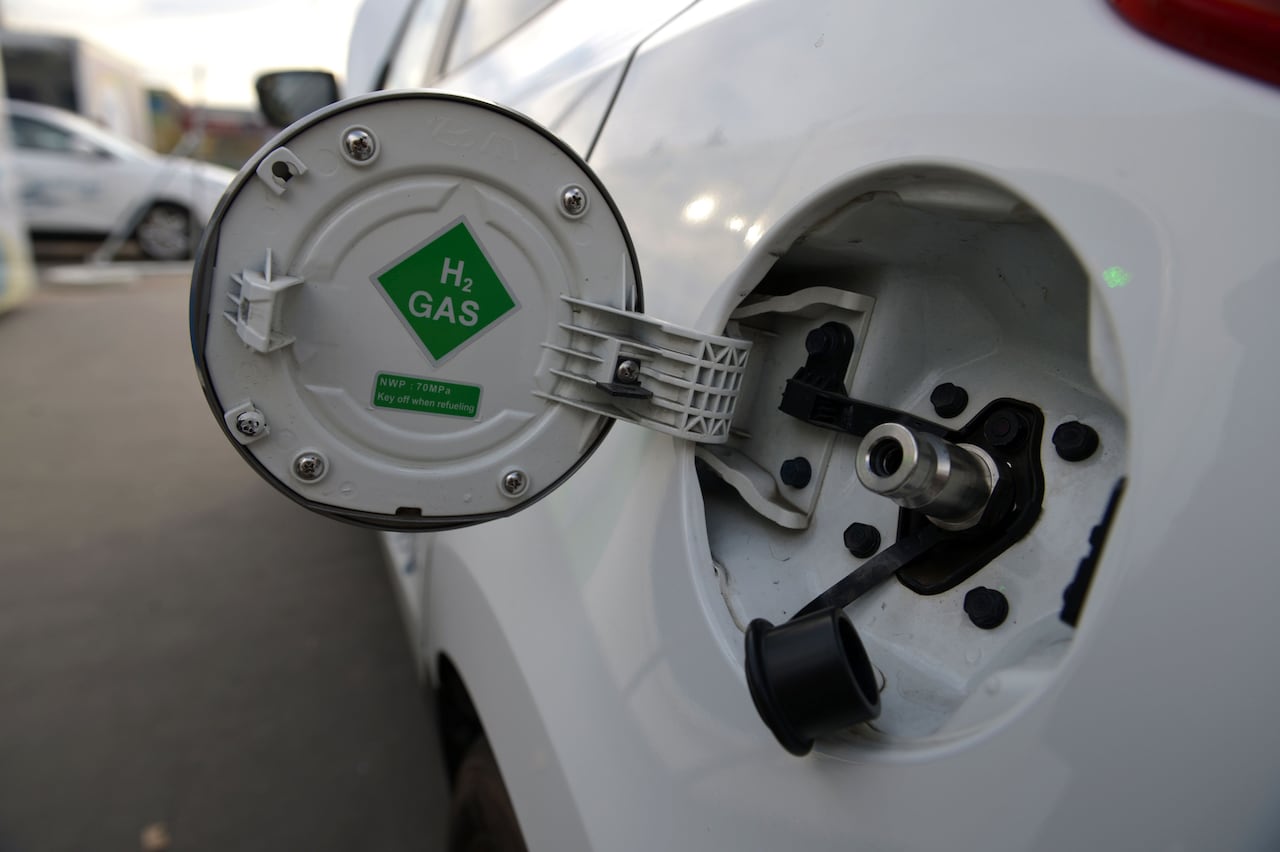
A Hyundai fuel cell vehicle is shown at a hydrogen station in Paris in 2015. The cars refuel similar to gas-powered vehicles. (Eric Piermont/AFP/Getty Images)
As rivals draw back, Hyundai leans into hydrogen
Stellantis discontinued its hydrogen fuel cell technology development program last summer, for example, and General Motors did the same in October, saying that the path to a sustainable fuel cell business was “long and uncertain.”
“If there’s only a few players in a market that’s going to be 10 per cent of the automotive market, well, globally, that’s 10 million cars a year. And a production plant is 250,000 cars a year. So I’m not worrying so much that it’s a niche market,” Volpe said.
“The Italians have built a car sector on niche markets that make Ferraris and Lamborghinis and Maseratis. As long as there aren’t a hundred companies making Ferrari-type vehicles, then they’re safe, too.”
Hyundai, which owns Kia, has about 12 per cent of the market share in Canada, just behind Toyota, Ford and General Motors. Canadians bought more than 146,000 Hyundai cars and over 94,000 Kia vehicles in 2025.
With that kind of market share, a potential partnership between Hyundai and the Canadian energy sector makes sense, Volpe said. “Given the advances in hydrogen technology from British Columbia to the advances in fuel sources in Quebec, this could be a pan-Canadian plan.”
The company’s investment in hydrogen-fuelled cars hasn’t been without risk. It was forced to recall almost 1,600 NEXO vehicles in Canada and the United States in 2024 due to a risk of fuel leaks and potential fires.