Inequality keeps growing in Australia because we play by one rule — don’t upset the rich, writes Carl Rhodes.
AS ANOTHER JANUARY comes to a close, so too does the World Economic Forum’s annual gathering in Davos, Switzerland. ‘A spirit of dialogue‘ was this year’s slogan, and once again the political and economic elites of the world descended on the idyllic alpine setting to, in their words, “engage in forward-looking discussions to address global issues and set priorities” and “call for bold collective action”.
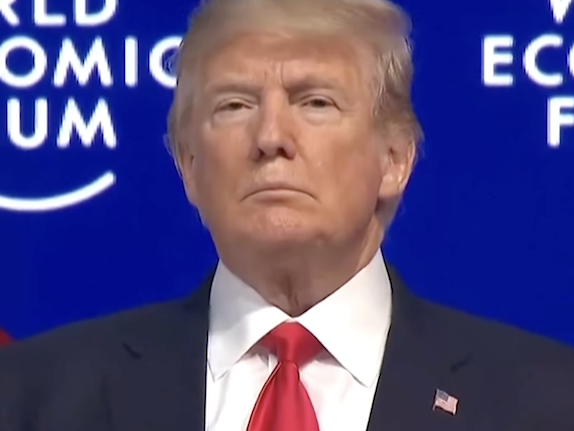
The reality was less noble. It was another routine spectacle where the rich and powerful rubbed shoulders and jockeyed for position. U.S. President Donald Trump boasted that:
“Growth is exploding, productivity is surging, investment is soaring, incomes are rising, inflation has been defeated”.
His former “first buddy” Elon Musk promised that his AI was the “pathway to abundance”.
Big words from the two billionaires! The facts tell a different story. As reported by Oxfam in the lead-up to the meeting, 2025 saw billionaire wealth surge by more than 16 per cent. Australia follows the same trajectory. Here too, the wealth and power of the ultra‑rich continue to grow, and economic inequality continues to deepen. So why is nothing being done about it?
Australia follows the world trend in inequality
Each year, as a prelude to the Davos conference, Oxfam, the international organisation focused on reducing global poverty and inequality, releases its annual Inequality Report. Its purpose is to highlight the problem of global inequality and to confront global leaders with the scale and consequences of this injustice at the very moment they gather to discuss the world’s future.
Oxfam has released the report every year since 2014, and each time it documents the same troubling pattern of how the wealth and power of billionaires are growing, while economic inequality stagnates or worsens.
Since 2015, the number of people in the world facing moderate or severe food insecurity has increased by 43 per cent, with almost half of the world’s population now living in poverty. Today, there are more than 3,000 billionaires globally, the highest number ever, with their collective wealth also at a record-breaking high.
It is not just about money, it is about power. Oxfam’s analysis shows that a billionaire is more than 4,000 times more likely to hold political office than the average person. Despite this enormous influence, and no matter how loud the warning signs become, it appears that the Davos elite, billionaires included, are failing to acknowledge or address the deepening crisis of global economic injustice.
Australia is no exception. When Oxfam Australia announced the 2025 Resisting the Rule of the Rich: Defending Freedom Against Billionaire Power report on 19 January, they stated that the wealth of the average Australian billionaire had grown by almost $600,000 for each day of 2025. Australia is home to 48 billionaires and the number is growing. They own more wealth than the entire bottom 40 per cent of Australians put together.
Band-Aids on a broken system
You might expect such a grotesque concentration of wealth to be a scandal in a country that claims to prize the fair go, mateship, egalitarianism, and a healthy disrespect for power.
Instead of outrage, we get silence. Australia’s political class treats inequality as if it were an acceptable side‑effect of modern life rather than a political choice. On both sides of politics, leaders tiptoe around the concentration of wealth and power, wary of upsetting a neoliberal order that has held firm for many decades.
The result is a political culture that normalises inequality while acting as if nothing can or should be done about it. We are caught in a downward spiral where naming the problem is avoided and confronting it is politically unthinkable, even as inequality corrodes social trust and undermines the values Australians claim to hold dear.
It is true that since being re-elected in May 2025 the Labor government has implemented policies to ease the financial pressure. There have been income tax cuts, Medicare exemptions for those on lower incomes, support for first home buyers, energy bill rebates, and cuts to student debts.
These policies offer welcome relief for households struggling with the cost‑of‑living crisis, but they do not touch the structures that drive inequality. They are Band‑Aids on a broken system that offer temporary fixes but leave the underlying problem untouched.

The golden rule: Don’t upset the rich
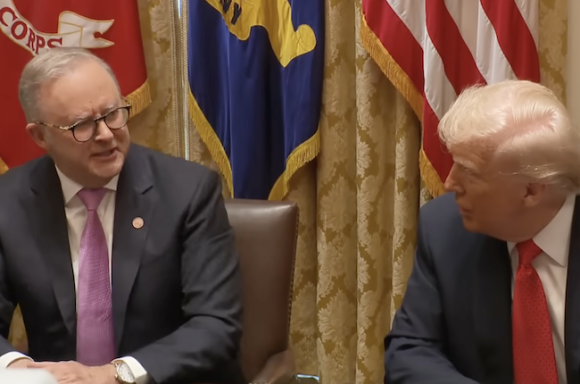
Prime Minister Anthony Albanese has been consistent about one thing: his government will not take bold action on inequality. He has explicitly ruled out introducing or even considering new tax measures, insisting last August that “the only tax policy we’re implementing is the one we took to the election”.
In practice, that means years of inaction with no meaningful reform considered until at least after May 2028, and probably nothing after that either. This is despite growing pressure from across the community to reform capital gains tax and negative gearing, and implement inheritance tax or wealth taxes. These are the levers that could be the start of real structural change. They are not being pulled.
Albanese is a political realist who wants to set up a winning hand for Labor at the next election. He also knows that any hint of tax reform is treated as political poison by an electorate terrified that their own assets might be touched. And so, the government chooses the safest path of offering relief, avoiding reform, and hoping no one notices the widening gulf between the wealthy and everyone else.
The hard truth is that in Australia’s mainstream politics, every policy option is on the table except those that might upset the wealthy. That is how oligarchy works. The political class will tinker at the edges, but they will not confront the structures that allow billionaire wealth to grow unchecked and inequality to spiral out of control.
Until that changes, the number of billionaires will keep rising, and inequality will continue its relentless, corrosive trajectory.
Carl Rhodes is Professor of Business and Society at the University of Technology, Sydney. He has written several books on the relationship between liberal democracy and contemporary capitalism. You can follow him on X/Twitter @ProfCarlRhodes.
Support independent journalism Subscribe to IA.


Related Articles