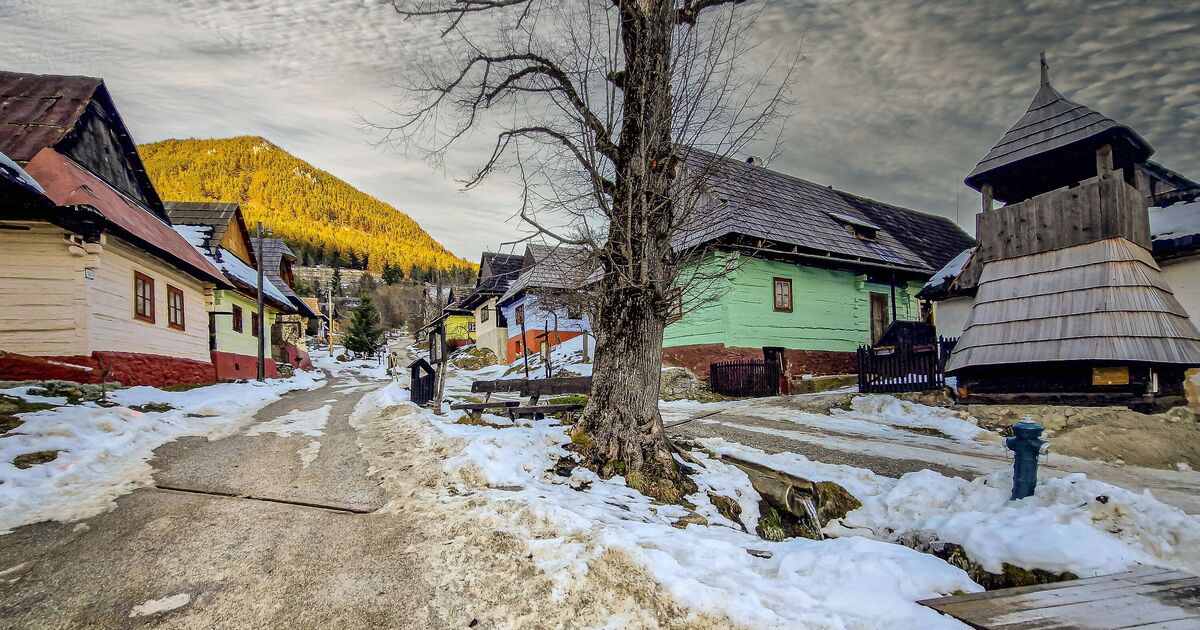
Residents in a small village in Central Europe are so fed up with tourists that they want to revoke its UNESCO World Heritage status. Vlkolínec is an isolated Slovakian village in the Carpathian mountains, known for its remarkably intact settlement of 45 traditional buildings.
The village, listed since 1993, attracts up to 100,000 visitors annually, and local residents are now calling for its removal from the UNESCO World Heritage List. Once seen as a prestigious status, they say it has turned their home into a “dead open-air museum”, according to the Slovakian daily Denník N.
Thirty years ago, seven families with 27 residents lived in Vlkolínec. Today, only 14 people remain. Many houses have been turned into weekend and holiday homes, standing empty for most of the year while busloads of tourists roam the streets. The four remaining families complain about tourists turning their lives into a “tourist zoo”, often walking through their private gardens and taking photographs through the windows of their homes. Think Cotswolds, but Central Europe.
One villager told the Mirror: “UNESCO has turned us into a tourist ‘zoo’. This supposed honour has become not just a burden – but a living nightmare.”
The site operates under the “highest form of monument protection”, with new construction forbidden and most buildings in the village protected as “national cultural monuments”, said UNESCO.
The strict preservation rules are also cited as an issue. They compromise the villagers’ traditional lifestyle, preventing them from raising pets or cultivating crops. When they want to repair their houses, they say “every nail, plank and roof tile must be approved”.
Anton Sabucha, the oldest resident of Vlkolínec, told Denník N: “Make sure they remove us from UNESCO, we would live better. Due to strict regulations, we cannot raise pets and cultivate crops as we used to.”
Sabucha even put up a barrier in front of his house and signs reading “Private property, no entry!” and “Photography prohibited”. It didn’t help.
According to UNESCO: “Vlkolínec represents the region’s best preserved and most complex urban unit of original folk architecture consisting of wooden houses and outbuildings, the wooden bell tower and mural buildings of the church and school.”
In 1997, the UN agency approved 10,000 USD in international assistance for the rehabilitation of Vlkolínec. Nowadays, the village is mostly funded via tourism itself.
It acknowledges the village’s vulnerability to tourism impacts, noting interference with inhabitants’ daily lives and the increase of temporary residents.