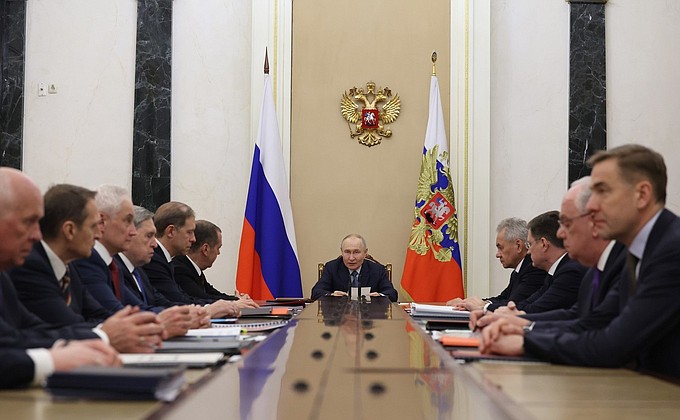
The meeting was attended by Deputy Chairman of the Security Council Dmitry Medvedev  Medvedev DmitryDeputy Chairman of the Security Council of the Russian Federation , Secretary of the Security Council Sergei
Shoigu  Shoigu SergeiSecretary of the Russian Federation Security Council , First Deputy Prime Minister Denis Manturov
  Manturov DenisFirst Deputy Prime Minister of the Government of the Russian Federation , Presidential Aide Yury
Ushakov 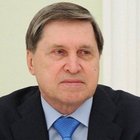 Ushakov YuryAide to the President , Defence Minister Andrei Belousov
 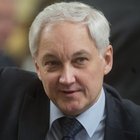 Belousov AndreiDefence Minister of the Russian Federation , Finance Minister Anton Siluanov
 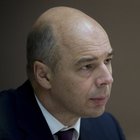 Siluanov AntonMinister of Finance of the Russian Federation ,
Director of the Foreign Intelligence Service Sergei Naryshkin 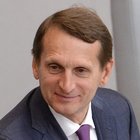 Naryshkin SergeiDirector of the Foreign Intelligence Service , Director of the Federal Service for Military Technical Cooperation Dmitry Shugaev, CEO of Rostec
State Corporation Sergei Chemezov 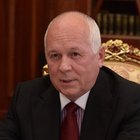 Chemezov SergeiCEO of Rostec State Corporation , Deputy Prime Minister Alexander Novak
 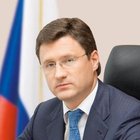 Novak AlexanderDeputy Prime Minister of the Government of the Russian Federation ,
Presidential Aide – Head of the Presidential State-Legal Directorate Larisa
Brychyova  Brychyova LarisaAide to the President – Head of the Presidential State-Legal Directorate , Head of the Presidential Directorate for State Defence Industry
Policy Viktor Yevtukhov, and CEO of Rosoboronexport Alexander Mikheyev.
* * *
President
of Russia
Vladimir Putin: Colleagues,
We are holding another meeting of the Commission for Military Technical Cooperation with Foreign States. First and foremost, we will review our performance in 2025 and outline plans for the period ahead.
I would like to note that throughout this
period, the military technical cooperation system continued to operate under
challenging conditions. Pressure from Western countries on our partners, aimed
at obstructing and blocking their business ties with Russia, not only persisted but
intensified.
Nevertheless, despite these attempts, our
export contracts were, on the whole, fulfilled reliably. Last year, Russian
military products were supplied to more than 30 countries, while foreign
currency revenues exceeded $15 billion.
These results create additional opportunities to channel resources into modernising defence industry enterprises, expanding
their production capacities, and advancing cutting-edge scientific research. It
is also important to emphasise that these enterprises manufacture a substantial
volume of civilian products. In addition, I would like to note that a significant portfolio of new export orders was formed over the past year.
Thus, the Russian military technical
cooperation system has not only demonstrated its effectiveness and high degree
of resilience. Equally important, a solid foundation has been laid that allows
for significantly expanding both the scope and geography of military product
deliveries. This enhances Russia’s
position as a reliable partner, as well as a developer and manufacturer of advanced
weapons systems – those that have been proven and tested in real combat
conditions.
I would like to express my gratitude to the staff of the Federal Service for Military Technical Cooperation and Rosoboronexport, as well as to the teams of defence industry enterprises, for their dedicated efforts. I wish you continued success in your endeavours.
I would like to emphasise that the stable and uninterrupted operation of defence industry enterprises, including the fulfillment of export obligations, has been achieved largely due to prompt
government support measures. Additional forms of support are planned under a new federal project, Development of Russia’s Military Technology Cooperation
with Foreign States, scheduled for 2026–2028. It is critically important to continue the effective use of existing financial and other support mechanisms
and tools, especially given that military export volumes are expected to grow
substantially in line with the plan for 2026, which we will finalise and approve today.
Particular attention will also be given to the work
on expanding military and technological cooperation and partnerships. At present, more than 340 such projects with 14 countries are either underway or in the development phase. I am positive that joint efforts in this area will boost
the performance of existing weapons systems and military equipment while
facilitating the creation of new advanced models, including those that are in demand on international markets.
Colleagues,
Another key item on today’s agenda is the development of strategic avenues for Russia’s military technical cooperation, particularly
with our partners within the CIS and the CSTO. This work is our priority for strengthening both bilateral and multilateral relations, as well as for ensuring stability and security across Eurasia.
Starting January 1, 2026, Russia has
assumed the chairmanship of the CSTO; this places an obligation on us to engage
in consistent cooperation with our partners, including through comprehensive
approaches to expanding military technical ties. We have already addressed this
issue, and today we will review the current situation in greater detail.
New opportunities are also emerging to deepen
military technical cooperation with countries in other regions across the globe,
including those in Africa. We highly value our
long-standing, friendly, and genuinely trusting relationships with African
states. In previous years, the USSR,
and later Russia,
supplied African states with substantial volumes of weapons and military
equipment, trained specialists in their production, operation, and maintenance,
and prepared military personnel.
Today, despite pressure from Western countries,
our African partners are demonstrating a willingness to expand cooperation with
Russia
in both military and military technical fields. This includes not only increasing
exports of Russian military products, but also the procurement of other
weapons, materials, and related goods. This encompasses comprehensive
maintenance of previously supplied equipment and the organisation of licensed
production of our military products, as well as certain other issues; there are
quite a number of them for our consideration today.
Let us get down to work. Thank you.
<…>