
With a price-to-earnings (or “P/E”) ratio of 7.2x Central Petroleum Limited (ASX:CTP) may be sending very bullish signals at the moment, given that almost half of all companies in Australia have P/E ratios greater than 22x and even P/E’s higher than 42x are not unusual. Although, it’s not wise to just take the P/E at face value as there may be an explanation why it’s so limited.
While the market has experienced earnings growth lately, Central Petroleum’s earnings have gone into reverse gear, which is not great. The P/E is probably low because investors think this poor earnings performance isn’t going to get any better. If this is the case, then existing shareholders will probably struggle to get excited about the future direction of the share price.
View our latest analysis for Central Petroleum
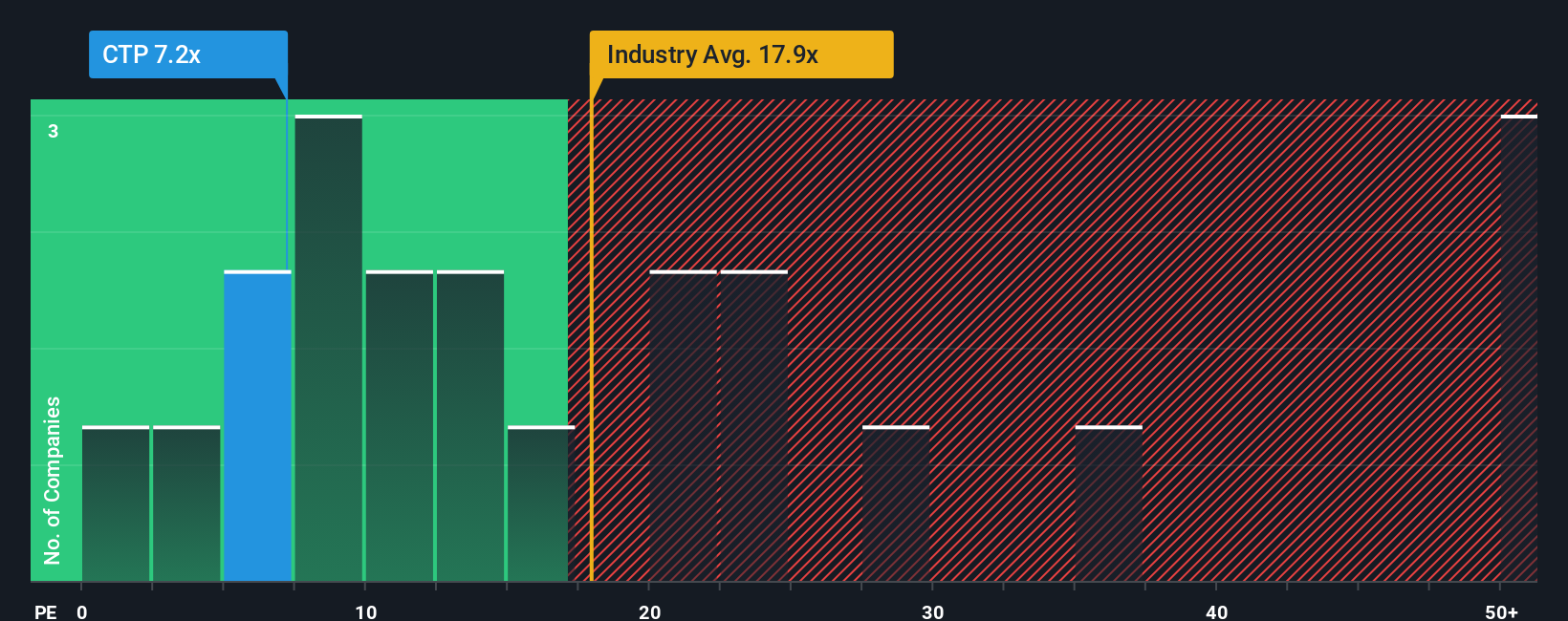 ASX:CTP Price to Earnings Ratio vs Industry January 30th 2026 If you’d like to see what analysts are forecasting going forward, you should check out our free report on Central Petroleum. Does Growth Match The Low P/E?
There’s an inherent assumption that a company should far underperform the market for P/E ratios like Central Petroleum’s to be considered reasonable.
If we review the last year of earnings, dishearteningly the company’s profits fell to the tune of 38%. The last three years don’t look nice either as the company has shrunk EPS by 65% in aggregate. So unfortunately, we have to acknowledge that the company has not done a great job of growing earnings over that time.
Looking ahead now, EPS is anticipated to climb by 52% each year during the coming three years according to the only analyst following the company. With the market only predicted to deliver 18% each year, the company is positioned for a stronger earnings result.
With this information, we find it odd that Central Petroleum is trading at a P/E lower than the market. Apparently some shareholders are doubtful of the forecasts and have been accepting significantly lower selling prices.
What We Can Learn From Central Petroleum’s P/E?
Typically, we’d caution against reading too much into price-to-earnings ratios when settling on investment decisions, though it can reveal plenty about what other market participants think about the company.
Our examination of Central Petroleum’s analyst forecasts revealed that its superior earnings outlook isn’t contributing to its P/E anywhere near as much as we would have predicted. When we see a strong earnings outlook with faster-than-market growth, we assume potential risks are what might be placing significant pressure on the P/E ratio. At least price risks look to be very low, but investors seem to think future earnings could see a lot of volatility.
It’s always necessary to consider the ever-present spectre of investment risk. We’ve identified 2 warning signs with Central Petroleum, and understanding them should be part of your investment process.
If these risks are making you reconsider your opinion on Central Petroleum, explore our interactive list of high quality stocks to get an idea of what else is out there.
Our new AI Stock Screener scans the market every day to uncover opportunities.
• Dividend Powerhouses (3%+ Yield)
• Undervalued Small Caps with Insider Buying
• High growth Tech and AI Companies
Or build your own from over 50 metrics.
Have feedback on this article? Concerned about the content? Get in touch with us directly. Alternatively, email editorial-team (at) simplywallst.com.
This article by Simply Wall St is general in nature. We provide commentary based on historical data and analyst forecasts only using an unbiased methodology and our articles are not intended to be financial advice. It does not constitute a recommendation to buy or sell any stock, and does not take account of your objectives, or your financial situation. We aim to bring you long-term focused analysis driven by fundamental data. Note that our analysis may not factor in the latest price-sensitive company announcements or qualitative material. Simply Wall St has no position in any stocks mentioned.