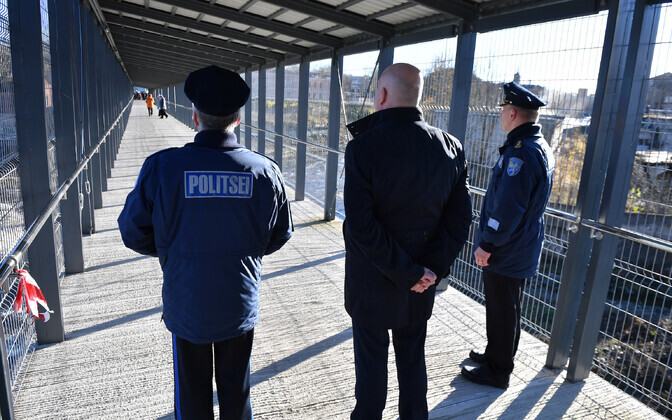
A full closure of Estonia’s eastern border is one option in response to Russia’s illegal border crossing last month, Foreign Minister Margus Tsahkna (Eesti 200) said.
Tsahkna said the Estonian government has so far not seen a direct security threat which would require closing the border, though this remains one of the possible pressure measures.
“We have not seen a practical need in the government that there would be a direct security threat, but this is indeed one of the steps with which we could exert pressure on our side as well. [With] Readiness to close the border is within a few hours if we decide to do so,” Tsahkna told “Aktuaalne kaamera.”
Whether to respond by closing individual border crossing points or by applying broader pressure is under discussion as of now, he said, and the government has not yet decided on specific countermeasures.
 Minister of Foreign Affairs Margus Tsahkna. Source: ERR
The Narva border crossing has been pedestrian-only for almost two years and closed to road traffic.
At a meeting on Friday, Russia denied three of its border guards had illegally crossed into Estonia on December 17 at the Vasknarva breakwater. Estonia has filed a formal protest with the Russian Embassy in Tallinn.
Estonia’s border representative Andris Viltsin called the incident part of a broader pattern of avoiding resolution on the border. Estonia has strengthened surveillance at Vasknarva and other border areas as a result.
Earlier this week, Russia said it will complete reconstruction of the Ivangorod border crossing, across the Narva River from Estonia’s Narva post, by year’s end. Although the upgrade would raise capacity by nearly 25 percent to almost 2,000 vehicles a day, Estonia says car traffic will not resume until Russia ends its war in Ukraine.
Estonia also this month tightened border rules for Russian diplomats and their families, aligning with the EU’s 19th sanctions package. They will now need to apply five working days in advance for entry.
In mid-October last year Police and Border Guard Board (PPA) closed the road through the Saatse Boot area in southeastern Estonia, after increased Russian activity, including footage showing seven armed Russian servicemen on the Russian side. At the time, Tsahkna said the road is a historical anomaly that Estonia plans to stop using, adding that reports of heightened tensions were exaggerated.
—