Elon Musk

Elon Musk

Elon Musk has once again sparked debate — this time over something most people consider essential to financial security: saving for retirement.

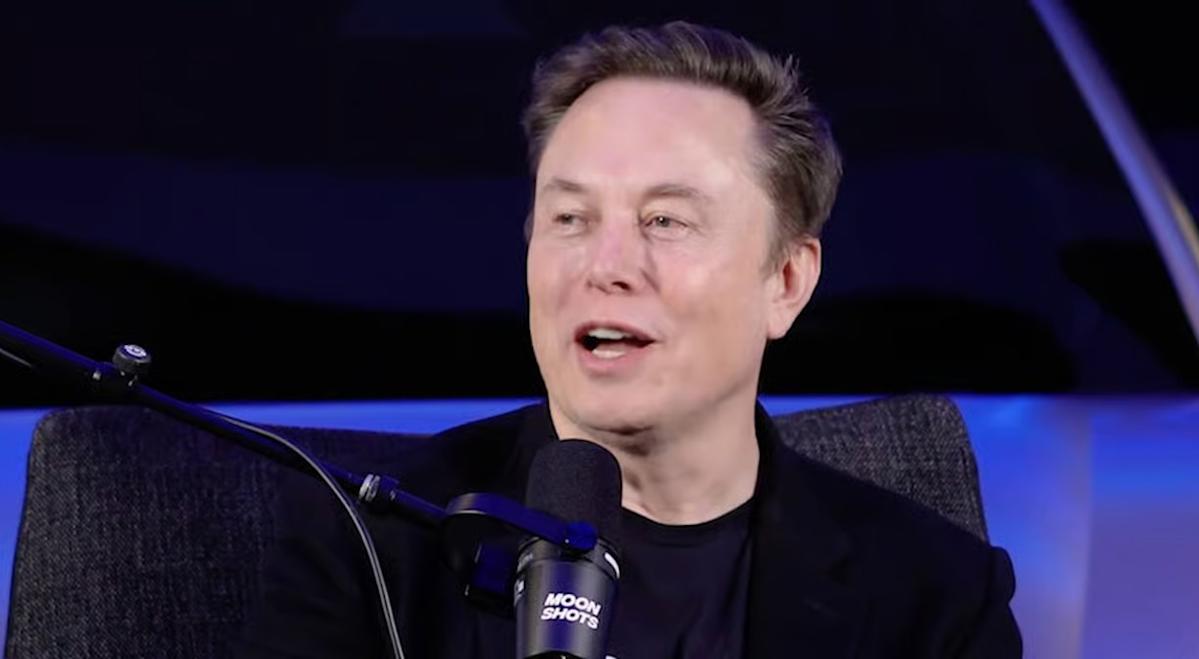
On a recent episode of the Moonshots podcast with Peter Diamandis, Musk suggested that advances in artificial intelligence (AI), robotics and energy technology could make retirement savings “irrelevant” within the next 10 to 20 years (1). He believes these technologies will create a world of abundance, where machines do most of the work, goods and services are cheap and a “universal high income” will cover everyone’s basic needs.

It’s a bold vision, but it asks people to bet their future financial well-being on a hypothetical techno-utopia. Before you stop contributing to your Registered Retirement Savings Plan (RRSP) or Tax-Free Savings Account (TFSA) based on Musk’s forecast, a reality check is in order.

Musk’s argument depends on a very ambitious idea: technology will advance so quickly that scarcity — the thing that makes money, work and saving necessary — will fade.

In this future, AI and robotics would handle most of the labour, productivity would surge and basic goods and services would become cheaper or even free. In a scenario like that, he suggests traditional retirement planning might not matter anymore.

It’s a striking vision, but it’s also highly speculative. Musk himself admitted the transition could be “bumpy,” potentially causing social tensions or a crisis of purpose if people no longer need jobs in the traditional sense (1).

It’s crucial to note that Musk isn’t giving personal finance advice; he’s describing a theoretical future economy. But given his influence, some people may take his comments as permission to save less or skip retirement planning altogether, which could prove especially risky for younger workers who haven’t built much of a financial cushion yet.

Musk may be imagining a future without financial scarcity, but today’s reality looks very different from his vision. Most people don’t have billion-dollar cushions to fall back on if that future never arrives. And in Canada, retirement savings are already falling short.

According to Statistics Canada, only about one-third of Canadians contributed to a Registered Retirement Savings Plan (RRSP) in 2022, and the median RRSP contribution was only C$3,910 (2) — far below what most people need to fund a 20- to 30-year retirement. Surveys from TD Bank Group (3) and CPP Investments (4) have repeatedly found that many working Canadians feel behind, not confident or unsure they can retire at all.

Financial planners generally recommend saving enough to replace a significant share of your pre-retirement income, which often adds up to several hundred thousand dollars — and in many cases over C$1 million — depending on lifestyle, location and health expenses. Fidelity Canada recommends about 70% of your working income to maintain approximately a similar standard of living once you enter your golden years (5).

That said, advice implying retirement savings may soon be inconsequential can be harmful if taken literally. For most households, retirement isn’t an abstract thought experiment — it’s a major financial challenge that takes decades of planning.

Read more: Keeping over this amount of cash in your bank account is a serious mistake — how much do you have stashed in there?

Comments like Musk’s may sound exciting, but they come with a psychological downside: people may take them as permission to relax their savings, delay opening retirement accounts or skip employer-matching programs — behaviours that can seriously weaken long-term financial security.

For many workers, retirement already feels far away, and for some, unattainable. High living costs, rent and mortgage payments, student loans, health and dental expenses and limited access to employer pension plans can make it difficult to save even small amounts. Messaging that suggests retirement planning may soon be irrelevant makes it even easier to delay contributions or stop saving altogether.

There’s also a gap between Musk’s vision and economic reality. Technology has historically boosted productivity and created new industries, but it hasn’t eliminated inequality or made essential goods universally cheap. Even major breakthroughs take time to diffuse through the economy, and there’s no guarantee that abundance will be evenly shared or that it will arrive within the 10- to 20-year timeline Musk predicts.

Most financial professionals agree on at least one point: retirement planning is still essential under today’s economic conditions. There’s no credible, widely supported economic model — in Canada or globally — that guarantees a future with universal income, no scarcity and no need for personal savings within the next decade or two.

Until such systems exist, individuals remain responsible for building their own safety nets. Musk’s comments can be useful as a thought experiment about how work and income could evolve, but they don’t function as a personal finance strategy. Good planning starts with what’s true today, not what might be true someday.

For now, that means focusing on the basics:

Contribute regularly to retirement accounts. In Canada, that often means RRSPs, TFSAs, workplace pension plans or group RRSPs. Taking full advantage of employer matching, when offered, is one of the easiest ways to boost long-term returns.

Build an emergency fund. Even modest buffers reduce the need to rely on credit during income disruptions or unexpected expenses.

Review your savings and personal goals annually. As income, debt, health and family needs change, so should your plans.

Stay informed. The future of work, automation and productivity is quickly evolving, but timelines and outcomes matter.

In short: plan for the world you live in today, while staying flexible enough to adapt if tomorrow looks different.

Musk’s vision of a future where retirement savings “won’t matter” makes for an interesting philosophical debate, but it doesn’t match today’s financial reality. Most Canadians still need to build their own retirement security, and delaying savings based on speculative predictions could leave people far more vulnerable if that tech-driven future takes longer to arrive, or doesn’t materialize at all.

Planning for the world we have now is still the safest approach: Save consistently when you can, take advantage of employer pension contributions or matches, build buffers against uncertainty and stay informed as the economy and technologies evolve. If abundance does arrive, you’ll be able to enjoy it — and if it doesn’t, you’ll be glad you prepared.

We rely only on vetted sources and credible third-party reporting. For details, see our editorial ethics and guidelines.

Peter H. Diamandis (1); Statistics Canada (2); TD Stories (3); CPP Investments (4); Fidelity (5)

This article provides information only and should not be construed as advice. It is provided without warranty of any kind.