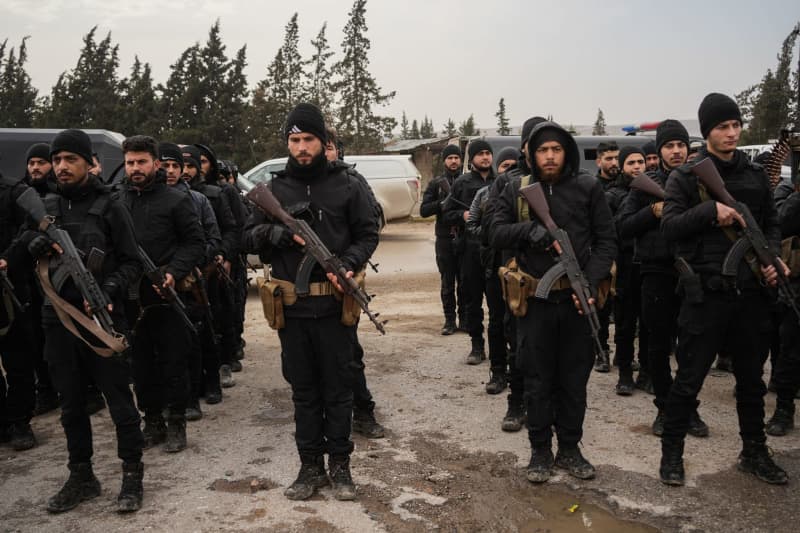
Syrian government forces entered the north-eastern city of al-Hassakeh on Monday under an agreement reached with the Kurdish-led Syrian Democratic Forces (SDF), Kurdish and Syrian government sources told dpa.
According to Kurdish sources, more than 100 Interior Ministry forces arrived in al-Hassakeh in a convoy of 16 vehicles, as part of a phased plan to transfer internal security responsibilities from the SDF’s Asayish forces to state authorities.
During the Syrian civil war, the Kurds established a self-governing administration in the north and north-east of the country, with the city of al-Hassakeh forming its administrative base.
In the wake of the upheaval in Syria, the new leadership in Damascus has set itself the goal of uniting the country after years of division in order to establish a centralized state. An agreement to this effect has been in place since last March.
However, tensions and violent clashes recently erupted in Kurdish-controlled areas. A new agreement was finally reached on Friday, with the entry into al-Hassakeh marking a first step toward its implementation.
“The deployment of the Syrian Army and Public Security Forces and their safe entry into al-Hassakeh city indicates adherence to the agreement,” a field military source in the Syrian Army said.
A Syrian military source told dpa that this marked “the beginning of the end of the Autonomous Administration rule and the start of a new era of a unified Syria.”
There has been no official comment from either the government or the SDF.
Al-Hassakeh was of central significance to Syria’s Kurdish population, acting as a foundation of their political authority, economic strength and security in the north-eastern part of the country, widely known as the Rojava region.
Kurdish sources said the SDF imposed a temporary curfew and restricted communications in parts of al-Hassakeh during the entry of the government forces.
Despite these measures, residents in several mainly Arab neighbourhoods reportedly gathered to welcome the convoy, with celebratory gunfire heard as the forces passed through.
A Syrian military source said the next steps would include entering Qamishli city on the border to Turkey and taking control of the Semalka border crossing on the Tigris River with Iraq, as well as oil fields and key facilities previously administered by the Kurdish-led Autonomous Administration of North and East Syria (AANES).
Al-Hassakeh and Qamishli have been under SDF control since the early years of Syria’s conflict in 2011.
The latest developments mark a significant shift in the security landscape of north-eastern Syria, with Kurdish sources describing the move as a test case for broader cooperation between Damascus and the SDF.
Under the decades-long rule of the al-Assad family, Syria became deeply divided, with different areas falling under the control of various forces during the civil war.
In the north and north-east, the Kurds established a self-governing administration. Their military wing, the SDF, fought alongside a US-led coalition against the Islamic State.
In March last year, SDF commander Mazloum Abdi and President Ahmed al-Sharaa reached an agreement on integrating Kurdish institutions, including merging the SDF into the regular Syrian army.
However, negotiations over implementation stalled.
Subsequently, government troops advanced into previously Kurdish-controlled areas and brought them under their control.
A ceasefire was later declared, followed by a new integration agreement envisioning the gradual incorporation of Kurdish-led structures.
The Kurdish-controlled areas are home to diverse communities, including Arabs.
Arab tribal fighters supported the government’s offensive against the SDF, with many saying they felt discriminated against under Kurdish administration and viewed the takeover as a liberation.
The Kurds, meanwhile, fear the loss of their rights. Under al-Assad’s rule, many were denied Syrian citizenship. The Kurdish self-administration was seen as a major step in their long struggle for recognition, as the Kurds are widely considered the world’s largest ethnic group without a state.
In Syria, Kurds remain skeptical of the transitional government that emerged from the Islamist group Hayat Tahrir al-Sham (HTS), fearing repression after years of self-governance.
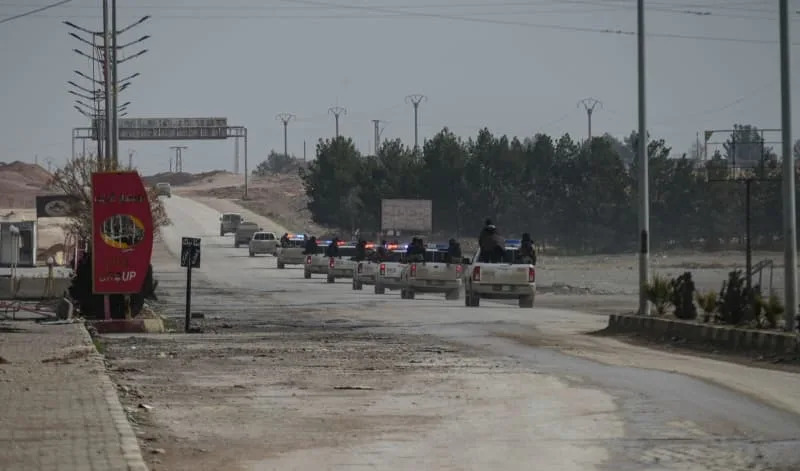
Syrian internal security forces are preparing near the village of Saran to enter the Ain al-Arab (Kobani) region northeast of Aleppo, following an agreement between the SDF and the Syrian government stipulating the entry of a number of Syrian security forces into the cities of Hasakah, Qamishli, and Ain al-Arab (Kobani) to take over government institutions. Moawia Atrash/dpa