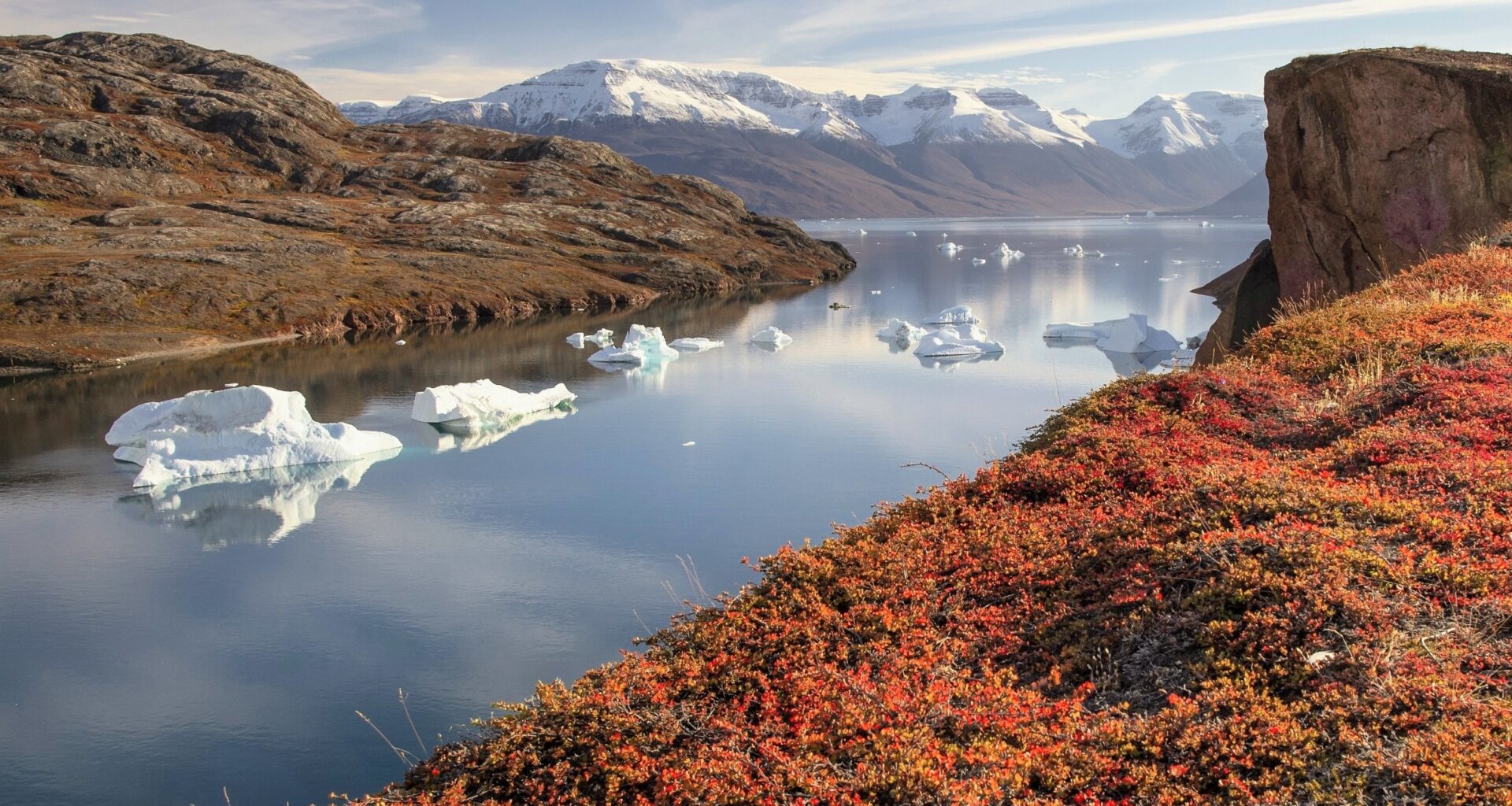
Greenland’s ice isn’t just melting because the air is warmer. Tiny particles drifting in on the wind can quietly change what happens on the surface, feeding dark algal blooms that soak up sunlight and speed ice loss.
That raises a simple question: where do those blooms get the nutrients they need to grow on bare ice?

New research shows that mineral dust in the air delivers a crucial ingredient directly onto the surface. Once it lands, that dust helps algae spread and darken the ice.
Over time, this darkening sets off a chain reaction that makes Greenland melt faster than it otherwise would.
Dust particles that trigger ice melt
This process plays out directly on exposed ice surfaces, where dark algal patches spread across areas that would otherwise reflect sunlight.
By collecting dust and biological material on the ice itself, Dr. Jenine McCutcheon and colleagues at the University of Waterloo (UWaterloo) documented how windblown particles arriving from nearby land become embedded in active melt zones.
Those deposits consistently coincided with algal growth patterns capable of sustaining dense, pigmented communities through the melt season.
The findings establish a local, repeatable link between what falls from the air and how quickly ice darkens, setting the stage for a closer look at how that process works.
Dark blooms on bare ice
Dark streaks formed on bare ice where pigmented glacier algae gathered, and those patches absorbed far more sunlight than clean ice. As the algae tinted the surface, albedo dropped, allowing the ice to retain more heat and melt faster.
Meltwater spreading across the surface then helped algae access light and nutrients, amplifying their growth and deepening the darkening effect.
That feedback only worked where ice remained exposed long enough; late snowfalls or heavy rain could disrupt it.
The missing ingredient turned out to be dust. Inside the windblown particles, the team found phosphorus, a key nutrient used to build genetic material.
Their analysis estimated about 1.2 milligrams of phosphorus delivered per square meter each year, enough to sustain dense algal populations.
With that nutrient supply, the researchers calculated algae could reach roughly 8,600 cells per milliliter – a concentration capable of rapidly darkening ice and accelerating melt.
Dust rides the wind
Chemical clues in the dust grains traced their origin to nearby ice-free plains, not distant deserts.
As glaciers retreated and exposed more bare ground, wind lifted aerosols – tiny particles floating in air – from local land and deposited them onto snow or bare ice.
Snowstorms tended to drop larger grains, while dry settling delivered finer dust that could remain airborne for days. As local ground becomes dustier, future melt seasons may begin with even more raw material for algal growth.
Air samplers near the field camp revealed that algae traveled alongside this dust, moving through the same air currents. Some cells settled onto fresh snow, and once melting began, they could divide and start coloring the surface.
“The cells are likely transported over the ice by wind, providing a mechanism for these organisms to be dispersed and grow on new snow and ice surfaces further afield, helping new algal communities get started,” said Dr. McCutcheon.
That shared airborne pathway makes bloom expansion difficult to contain, allowing wind to spread living starter populations across miles of ice.
Melting ice raises seas
Ice lost in Greenland does not just stay in Greenland, and coastal cities feel the extra water as higher seas.
Records from NASA tie Greenland’s ice loss since 1992 to about 0.4 inches of sea-level rise. In the southwest, glacier algae added roughly 10 percent more runoff from bare ice during one melt season.
When dust feeds those blooms, models that ignore biology can miss where meltwater will surge and when it will peak.
Soot worsens ice melt
Alongside mineral dust, tiny specks of soot also landed on the ice, and they can darken it even more.
These particles include black carbon, soot particles that strongly absorb sunlight, which warms the surface and speeds melting.
McCutcheon said her group also sampled soot falling from the air, and wildfire smoke can add to that load.
If soot and dust arrive together, their combined darkening can push the ice past a threshold where melting runs faster.
Forecasts miss key factors
Forecast teams already track temperature and snowfall, but nutrients and microbes now appear to be factors those forecasts still miss.
Earlier field experiments showed that mineral phosphorus could spark glacier-algae blooms, and this new work traced that supply line through the air.
At UWaterloo, McCutcheon can pair those measurements with lab tests showing how quickly dust minerals release nutrients in meltwater.
Better inputs could help agencies plan for flooding, but they also demand more on-ice sampling during short, chaotic summers.
What scientists still need
The study focused on one fast-melting corner of Greenland, so it cannot capture how dust and algae behave across the entire ice sheet.
That matters, because broader assessments warn Greenland can cross size thresholds where ice loss becomes difficult to reverse for centuries.
Satellites from NASA already track changes in ice color and surface height, but they still need on-the-ground chemistry to explain why surfaces darken.
Until scientists can measure dust, soot, and biological activity together, long-term projections will carry wide uncertainty – especially for future decades.
What’s becoming clearer is how closely linked these forces are. Dust can deliver nutrients, wind can spread microbes, and soot can amplify sunlight absorption, all feeding into the same melt cycle.
Researchers say more seasons of field sampling will be needed to see when this chain slows – or when it begins to accelerate.
The study is published in the journal Environmental Science & Technology.
—–
Like what you read? Subscribe to our newsletter for engaging articles, exclusive content, and the latest updates.
Check us out on EarthSnap, a free app brought to you by Eric Ralls and Earth.com.
—–