Published on
February 4, 2026
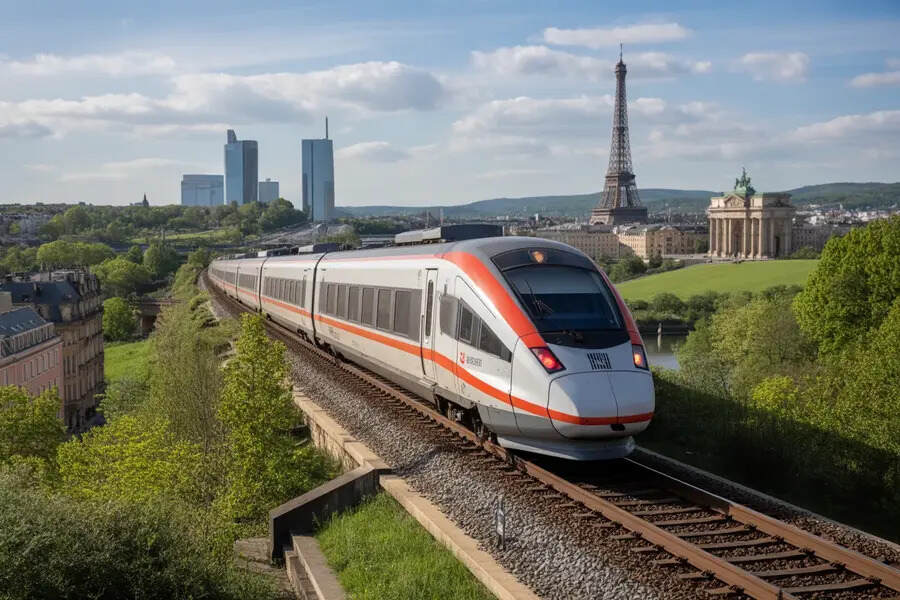
Denmark joins the Czech Republic, the UK, Hungary, Germany, France, and Serbia in establishing new high-speed rail connections in 2026, marking a significant change in the transportation landscape of Europe. These groundbreaking routes promise to transform the way travelers move across the continent, making cross-border journeys faster, more comfortable, and environmentally friendly. In addition to improving travel efficiency, these new routes—which include sleeper trains that have been revived and contemporary high-speed services—will fortify the cultural and economic bonds between important European cities. These rail extensions signify the start of a new era in European travel, whether you’re organizing a leisure or business trip.
In 2026, Europe is set to experience a major transformation in its rail network, with new high-speed routes and revived services linking key cities across the continent. As train travel continues to surge in popularity, thanks to environmental benefits, comfort, and convenience, a series of new routes will redefine how we travel across borders. Denmark joins the Czech Republic, UK, Hungary, Germany, France, and Serbia in the launch of several new train services that will offer faster, more comfortable journeys while promoting sustainability.
Paris–Berlin Sleeper: A Revived Icon
One of the most highly anticipated launches in 2026 is the revival of the Paris–Berlin sleeper train, which will be operated by European Sleeper. The service, set to begin on 26 March 2026, will operate three times a week, offering a comfortable overnight journey between the French capital and Germany’s bustling metropolis.
Route Details: The sleeper train will depart from Paris Gare du Nord on Tuesday, Thursday, and Sunday evenings, while returning from Berlin Hauptbahnhof and Ostbahnhof on Monday, Wednesday, and Friday.Additional Stops: Starting 13 July 2026, the train will also make a stop in Hamburg, enhancing accessibility for travelers heading to Scandinavia. Hamburg already boasts excellent connections to Copenhagen, Stockholm, and Oslo, so this stop is an exciting development for travelers seeking an alternative to traditional flight routes.
This revived service promises to bring back a much-loved part of European rail travel, combining the comfort of a sleeper car with the nostalgia of a cross-border journey through the night.
Paris–Munich High-Speed Service: Speed and Comfort Across Borders
The launch of a new high-speed service linking Paris and Munich at the end of 2026 will further enhance the connectivity between France and Germany. This new route will be run by the joint efforts of Deutsche Bahn and SNCF, the national railway operators of Germany and France, respectively.
Faster and More Frequent: While a TGV service currently operates between Paris and Munich, this new service will feature faster travel times and more frequent departures. The new trains are expected to drastically reduce the journey time between these two major cities, offering a more competitive alternative to flying.Route Details: While the exact timetable and pricing details are yet to be revealed, the launch of this high-speed service is set to make train travel the preferred option for both business and leisure travelers between the French and German capitals.
This high-speed route will be a game-changer, reducing the carbon footprint of cross-border travel and making it easier for passengers to experience both French and German cultures in one seamless journey.
Advertisement
Advertisement
Prague–Copenhagen Direct Train: A Daytime Marvel with Family-Friendly Amenities
In an exciting collaboration between Deutsche Bahn (DB), Danish Railways (DSB), and Czech Railways (ČD), a new direct daytime service will be launched between Prague and Copenhagen on 1 May 2026. This new route will offer a range of amenities aimed at improving the passenger experience and making it one of the most comfortable ways to travel across Czech Republic, Germany, and Denmark.
ComfortJet Trains: The service will use ČD’s new ComfortJet trains, which are designed for ultimate comfort. These high-speed trains will offer a children’s cinema, Wi-Fi, bicycle storage, and an on-board restaurant serving gourmet meals. The trains will be designed to cater to families and long-distance travelers, making it an attractive option for all kinds of passengers.Route Details: The Prague to Copenhagen journey will take approximately seven hours between Copenhagen and Berlin, and eleven hours between Prague and Copenhagen. The train will also stop in Dresden and Hamburg, making it a truly cross-border experience.
Passengers will also be able to take advantage of enhanced mobile connectivity through radio-transparent windows, ensuring a smooth experience for those needing to work or stay connected while traveling. This route offers convenience, luxury, and family-friendly amenities in one package, making it one of the most innovative services of 2026.
Budapest–Belgrade Direct Link: Reconnecting Two Great Capitals
After years of hiatus, the direct train link between Budapest and Belgrade, which was suspended in 2019 for infrastructure renovations, is set to return in 2026. The service is expected to begin in February 2026, with six round-trip services running daily between Hungary’s capital and Serbia’s largest city.
EuroCity High-Speed Trains: Some of these trains will be high-speed EuroCity services that will connect Budapest with Vienna, taking about six hours for the journey. This will bring faster travel between the two cities, significantly improving rail connectivity in this region of Europe.Improved Infrastructure: The return of this service is not only important for travel convenience but also for boosting economic and tourism exchanges between Hungary and Serbia. The newly upgraded infrastructure promises to make the journey more comfortable, and the additional high-speed connections with Vienna will open up new travel opportunities.
The resumption of the Budapest–Belgrade route is a significant step in enhancing transportation links between the Balkans and the rest of Central Europe, offering travelers a more sustainable alternative to air travel.
London–Stirling: A Scenic Journey to an Underrated Scottish Gem
For travelers seeking to explore some of the more underrated destinations in Scotland, a new train route connecting London to Stirling will launch in mid-2026. Operated by Lumo, a low-cost UK rail company, this new service will offer a cost-effective and eco-friendly way to visit one of Scotland’s historic cities.
Route Details: The London to Stirling route will stop at several cities en route, including Lockerbie, Carlisle, Preston, and Nuneaton, before arriving at Stirling, located about an hour north of Edinburgh. Known for its medieval castle, National Wallace Monument, and stunning landscapes, Stirling offers travelers a glimpse into Scotland’s rich history and natural beauty.Affordable Travel: The Lumo service will offer affordable tickets, making it accessible to a wide range of travelers, whether they’re exploring Scotland for the first time or returning for another visit.
The London to Stirling route opens up new opportunities for visitors to explore one of Scotland‘s hidden gems, providing a scenic and budget-friendly alternative to flying.
Countries Involved in the 2026 Train Revolution
This new wave of train travel innovation will span across several European nations, each contributing to the interconnected rail network of tomorrow. Here’s a breakdown of the countries involved:
France: Paris becomes the central hub for multiple new routes, including the sleeper train to Berlin and the high-speed service to Munich.Germany: Berlin, Hamburg, and Munich will be key stops, offering a seamless experience for passengers traveling between France, Czech Republic, and Denmark.Czech Republic: Prague emerges as a pivotal rail junction, with new routes connecting to Copenhagen, and improved links to Germany.Denmark: Copenhagen serves as a new endpoint for cross-border travel with high-speed connections to Prague and Berlin.Hungary: Budapest will see its long-awaited direct train link to Belgrade restored, boosting travel between the Balkans and Central Europe.Serbia: Belgrade’s inclusion in the reopened Budapest–Belgrade route underscores its importance as a growing travel hub.United Kingdom: London to Stirling provides access to lesser-known Scottish destinations, expanding the UK’s domestic rail network.Conclusion: A New Era of European Rail Travel
The new and revived train routes set to launch across Europe in 2026 are a true testament to the growing popularity of rail travel and its future role in cross-border connectivity. As Denmark, Czech Republic, UK, Hungary, Germany, France, and Serbia join forces to offer faster, more efficient, and family-friendly services, travelers will find themselves with more options than ever before to explore Europe sustainably and comfortably.
In 2026, Denmark joins Czech Republic, UK, Hungary, Germany, France, and Serbia to launch high-speed rail connections, revolutionizing European travel by offering faster, more efficient, and eco-friendly cross-border journeys. These new routes will enhance connectivity, making travel more accessible and sustainable across the continent.
With new trains featuring advanced amenities, eco-friendly technologies, and faster journey times, 2026 marks the beginning of a new era in European rail travel. Whether you’re seeking a relaxing sleeper train to Berlin, a high-speed journey to Munich, or a scenic ride to Stirling, there’s a new rail adventure waiting for you.
