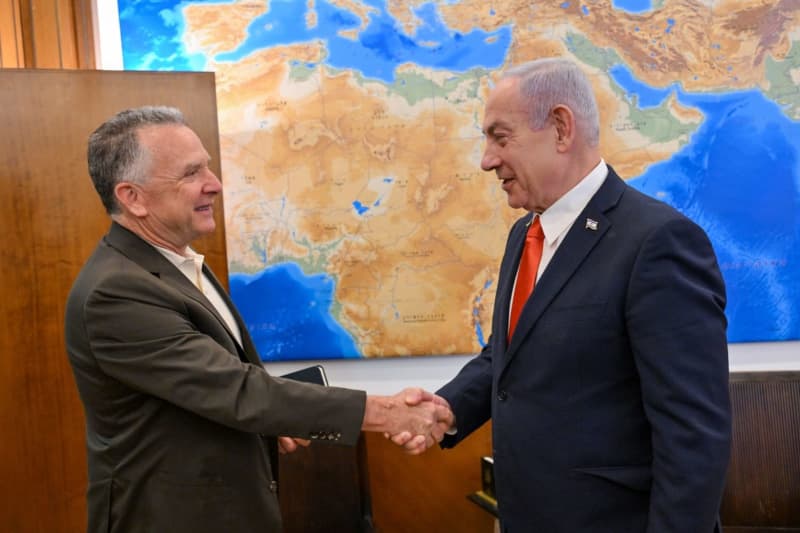
US Special Envoy Steve Witkoff met Israeli Prime Minister Benjamin Netanyahu in Israel on Tuesday evening, Israeli sources have confirmed.
The discussions were about coordinating positions before Witkoff’s negotiations with the Iranian side, which are expected to take place on Friday in Istanbul, according to Israeli media reports.
Netanyahu outlined Israel’s position that Iran has repeatedly proven that its promises cannot be trusted, according to a statement from his office.
Israeli Defence Minister Israel Katz, Chief of General Staff Eyal Zamir and the head of the Israeli foreign intelligence service Mossad, David Barnea, were also expected to participate in the consultations.
US President Donald Trump has repeatedly threatened the Iranian leadership with military strikes, partly due to the brutal actions of state forces in repressing demonstrators during the recent mass protests. Thousands, if not tens of thousands, of people are said to have been killed.
Iran has threatened retaliatory strikes against Israel and the US.
The US military has significantly increased its presence in the region since the beginning of January.
Despite the tense situation, talks between the US and Iran are still planned, US government spokeswoman Karoline Leavitt said on Tuesday.
Israel sceptical about potential for success of talks
Israel is more inclined to believe that the negotiations between Washington and Tehran will fail, media reports said. However, the Israeli leadership is concerned that the US might be satisfied with an agreement only on the issue of the Iranian nuclear programme.
Two issues that are also central to Israel, namely Iran’s missile programme and its support for anti-Israeli forces in the region, could be left out, according to fears reported by the Israeli newspaper Yedioth Ahronoth (Latest News).
“Gunboat diplomacy”
“The reinforcement of US forces – alongside reports of negotiations with Iran – aligns with the Trump administration’s strategy of exerting ‘maximum pressure,’ particularly economically, combined with the demonstrative display of military deterrence, which enables a rapid deployment option if diplomacy yields no result,” Israeli political scientist Ruth Pines Feldman wrote in a contribution for the business newspaper Globes.
“It is a form of ‘gunboat diplomacy’ aimed at achieving political objectives through the demonstration of military strength and threatening war should the opposing side not comply with the demands.”