#19,042Until about a decade ago, the prevailing notion was that the Atlantic and Pacific oceans were too vast to support the transoceanic spread of HPAI H5 via migratory birds.
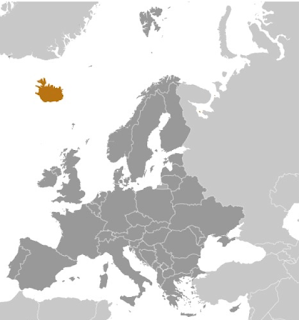
In 2017, in Iceland Warns On Bird Flu, we saw reports suggesting that European birds carrying avian flu may have reached Iceland, as it is the first major landing spot for wing-weary travelers, followed by Greenland (see 2016’s Avian Flu Surveillance In Greenland).
In late 2021, all doubts were erased after HPAI H5 arrived in Eastern Canada and Western Canada via two different routes; across the Pacific and the Atlantic (Multiple Introductions of H5 HPAI Viruses into Canada Via both East Asia-Australasia/Pacific & Atlantic Flyways).
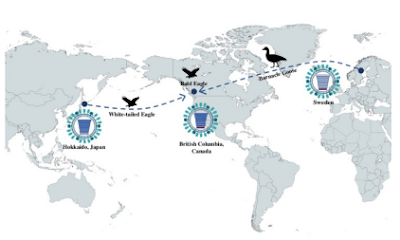
Changes in the virus – specifically the HPAI H5 clade 2.3.4.4b virus – have been credited with this arrival, but the rapid spread of older H5N1 clades across Europe and into the Middle East and Africa over 2004-2007 also suggest long-distance carriage.
Over the past couple of years, Iceland has only reported the H5N5 subtype (see More Reports On HPAI H5N5 In Iceland) including spillovers into foxes and domestic cats (see Icelandic Food and Veterinary Authority (MAST) : H5N5 Infection In Domestic Cat).
After an absence of two and a half years, Iceland’s MAST is once again reporting outbreaks of HPAI H5N1. Their (translated) announcement follows:
Avian influenza strain detected in wild birds in the capital area
News – 03.02.2026
The Icelandic Food and Veterinary Authority recently received reports of bird deaths in the capital area. One bird, a mallard, was found at Tjörnin in Reykjavík and the other bird, a swan, at Ögurhvarf in Kópavogur. Samples were taken and they were found to be infected with the H5N1 strain of avian influenza. This was confirmed by the University of Iceland’s Pathology Laboratory at Keldur yesterday.
The same strain of the highly pathogenic avian influenza virus H5N1 was last detected in July 2023 in Iceland. Since then, only the other highly pathogenic strain H5N5 has been found. At this stage, little is known about the origin of the infection, but it can be assumed that it recently entered the country with migratory birds or that it arrived last autumn and remained undetected until now. Genetic studies of the virus will be carried out and may shed light on whether it is of European origin or from North America. Little is known about the spread of the virus at present, but there is no evidence of increased mortality in wild birds in the southwest corner of the country or elsewhere.
The H5N5 variant has been detected in isolated wild birds across the country last fall, although cases have been decreasing and it appears to have disappeared in November 2025 or at least not been found since. In this country, there are also examples of mammals, such as foxes, minks and cats, falling ill with this variant of the virus, but the last cases were confirmed in October 2025, when three foxes were diagnosed with avian influenza of the H5N5 variant .
The avian influenza alert level has been at an uncertain level since this fall and will remain unchanged for the time being.
In light of this, the Icelandic Food and Veterinary Authority has issued a recommendation to poultry farmers, emphasizing stricter infection control measures to prevent infection in poultry from wild birds. Other bird owners are also encouraged to ensure strong infection control measures when handling their bird flocks and to be vigilant for signs of disease in birds or abnormal deaths in them and to report such cases to the Authority without delay .
The Icelandic Food and Veterinary Authority also encourages the public to report sick and dead birds and wild mammals they find to the agency. This is done by clicking on “ Suggestions and Inquiries ” on the front page of www.mast.is . It is important to describe the location of the meeting place well, preferably with coordinates, and to include a picture. The general rule is that the carcass of a wild bird is left lying around. If, on the other hand, the carcass is located in such a way that it is considered desirable to remove it, for example near people’s homes, it is necessary to take care of personal and infectious protection and use disposable gloves, goggles and virus-resistant masks for the task. The carcass should then be placed in a double plastic bag and disposed of in general waste, according to the Icelandic Food and Veterinary Authority’s instructions .
The strains of the bird flu virus that are currently most prevalent in Europe and elsewhere generally do not cause infections in people. This applies to both strains that have been detected in Iceland since the fall (H5N5 and H5N1). Isolated infections have occurred abroad, but in individuals who have been in close contact with sick birds without taking precautions. The chances of infection from birds to people are therefore very low, but infection can never be ruled out and people must always take precautions when handling sick and dead birds.
Further information and other instructions can be found on the Icelandic Food and Veterinary Authority’s information page on avian influenza.
Iceland’s Office of the Director of Health also issued the following brief statement:
Avian influenza of the H5N1 strain is detected in wild birds
February 2, 2026
The Icelandic Food and Veterinary Authority has published a report on the detection of influenza viruses of the H5N1 strain in wild birds in the capital area.
An H5N1 strain was last detected in a wild bird in Iceland in 2023, but since then only strains of the H5N5 type have been detected, in both wild birds and mammals.
The Chief Epidemiologist would like to draw special attention to MAST’s guidelines on appropriate responses if a carcass is discovered in a public place, which are mentioned in the news report .
A considerable amount of influenza is still being detected in people , but there have been no signs of H5 strains in people in this country.
Further information about avian influenza can be found on the website of the Director of Health .
The Chief Epidemiologist publishes weekly news on respiratory infections , and the epidemiology of various respiratory infections can be viewed on the regularly updated dashboard of the Office of the Director of Health.
Epidemiologist
While this is not the first arrival of HPAI H5 to Iceland, the $64 question this time is whether these recent reports reflect continued westward spread of European HPAI viruses, or an eastward expansion of North America HPAI viruses.
Either way, this is another opportunity for genetic mixing of HPAI H5 viruses, and that rarely turns out to be good news.