
In the fight for control of the US Senate, the majority may come down to which factor carries more weight: the map or the environment.
Let’s start with the map – and the math. Republicans currently hold 53 seats in the chamber compared to 47 for Democrats, which includes two independents who caucus with the party. With Vice President JD Vance serving as a potential tie breaker, that means Democrats need to gain four seats to claim the majority, a task made more difficult by a map that favors the GOP.
Of the 35 seats up for grabs in November, Democrats have only one target in a state that former Vice President Kamala Harris won in 2024 (Maine) while they are defending two in battleground states President Donald Trump carried (Georgia and Michigan). From there, the opportunities for Democrats turn to North Carolina, which hasn’t elected a Democrat to the Senate since 2008, then stretches into deep red turf.
Republicans believe the friendly playing field will work in their favor and be more receptive to Trump’s agenda, including the massive tax and spending legislation enacted last year.
As for the environment, Democratic leaders feel buoyed by recruiting wins and the party’s sweep of races in major off-year contests last November fueled in large part by an emphasis on cost-of-living concerns for voters. They are betting souring voter sentiment toward the president, particularly on his handling of the economy, will remain a driving force in elections this year – and will help the party overcome some of the challenges it faces when it comes to its own brand in the eyes of many Americans.
Even as both parties agree that the economy and affordability will be central to shaping the contours of the midterms, there is a shared understanding that other issues could factor into the decisions of voters over the next nine months. The Trump administration’s handling of immigration enforcement operations has emerged as a political flashpoint following the fatal shootings of two protesters in Minneapolis by federal agents.
Democrats are also hoping to capitalize on an energized base, with a recent CNN poll showing Democratic registered voters far more motivated to vote this year than Republicans – despite widespread dissatisfaction with party leaders. Republican candidates, meanwhile, will need to grapple with how to turn out base voters with the president’s name not on the ballot – something that has been a significant challenge during the Trump era.
The midterm cycle kicks off next month with primaries in Texas and North Carolina. Here’s a look at where the key Senate races stand nine months from Election Day:
Control of the Senate centers on four states featuring the most competitive races of the cycle: Georgia, Maine, Michigan and North Carolina.
Democrats must hold onto Georgia and Michigan and flip the other two if the party stands a chance of claiming the majority. A loss in any of them would mean needing to win another seat on terrain much more friendly for Republicans.
Sen. Jon Ossoff is the lone Democratic senator seeking reelection in a state Trump won in 2024. First elected in a runoff in 2021, Ossoff is a strong fundraiser and has tapped into frustration with Trump’s first year in office on issues like the economy and health care.

While Ossoff is already in general election mode, Republicans are engaged in a contested primary featuring Reps. Buddy Carter and Mike Collins and former University of Tennessee football coach Derek Dooley, who has the backing of Gov. Brian Kemp.
Trump has not yet endorsed in the race, but the GOP candidates have all aligned themselves closely with the president’s agenda and tried to portray Ossoff as extreme in a state that’s swung between parties in the past three presidential elections.
Maine
Sen. Susan Collins is a perennial target for Democrats in a state that’s voted against Trump all three times he’s been on the ballot. The five-term senator has at times bucked the president, including on his sweeping domestic agenda bill and a war powers vote last month, which led Trump to say Collins should never be reelected. But she has backed Trump on other priorities, including most of his Cabinet picks and two of his three Supreme Court appointments during his first term.
Keeping her seat red is a top priority for national Republicans. The Senate Leadership Fund, a group closely aligned with Senate Majority Leader John Thune, has pledged an initial $42 million investment to boost Collins.
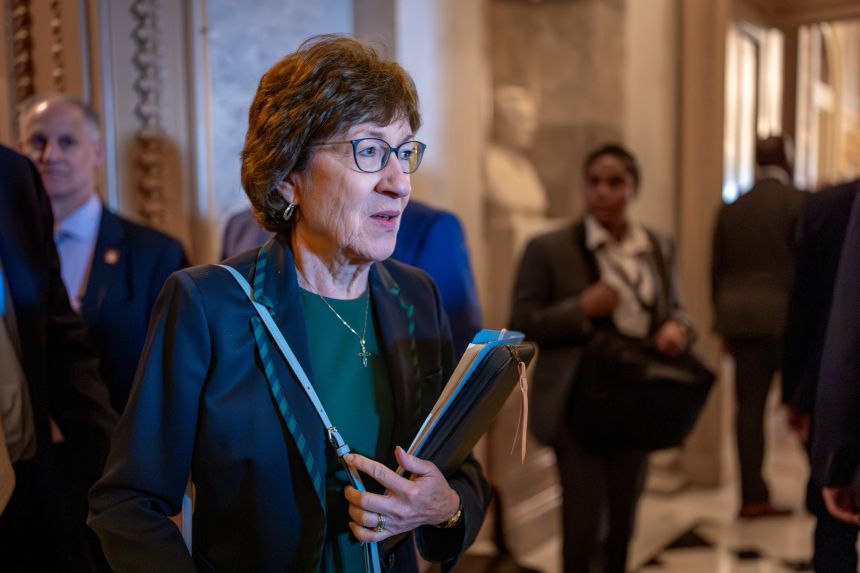
The Democratic primary pits 78-year-old Gov. Janet Mills, a party establishment favorite, against 41-year-old Graham Platner, a progressive oyster farmer and former combat veteran.
Mills is a popular figure who has won several statewide races. She would be the oldest freshman ever elected to the US Senate but has pledged to serve only one term. While her decision to run pleased Democratic leaders, some in the party have expressed concern about her ability to excite the base.
Platner, meanwhile, has tapped into progressive enthusiasm with his economic populist pitch. But a trail of negative stories, including those detailing past controversial online posts and a tattoo resembling Nazi imagery, could complicate his primary and general election bids.
Michigan is another swing state Trump won in 2024 where Democrats find themselves on defense – and engaged in one of this year’s most closely watched primaries that could serve as a barometer of where the party is heading in one of the country’s premier battlegrounds.
The retirement of Sen. Gary Peters kicked off a crowded three-way race for the Democratic nomination between Abdul El-Sayed, the progressive former executive director of the Detroit Health Department; state Sen. Mallory McMorrow; and Rep. Haley Stevens, a moderate who is seen as the favorite of the party establishment.
Republicans are hoping a potentially bruising Democratic primary stretching into August will work in their favor. Former GOP Rep. Mike Rogers is back for another bid after losing the Senate race in 2024 and cleared the field with Trump’s endorsement. But Democrats view Rogers as a retread and are confident the party will unite around the party’s eventual nominee.
While Trump won Michigan in 2016 and 2024, Democrats performed well in statewide midterm races in 2018 and 2022, a trend the party hopes to extend in 2026.
Democrats view North Carolina as one of their best pickup opportunities after GOP Sen. Thom Tillis, who at times has been a thorn in Trump’s side, decided not to seek reelection.
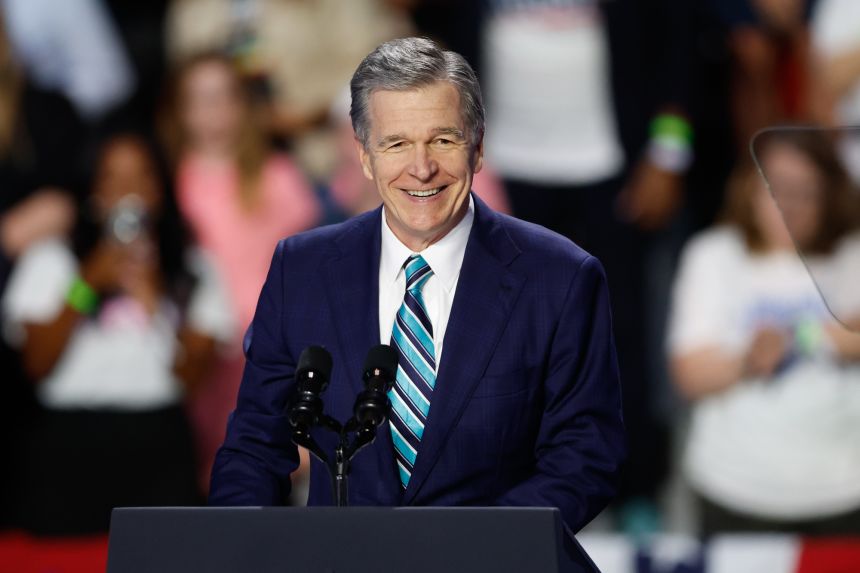
Democrats got their preferred candidate in former Gov. Roy Cooper, who served two terms and left office with favorable approval ratings. He is a prolific fundraiser and was at the forefront of the state’s efforts to expand access to health care, an issue Democrats are seeking to elevate this year.
That does not mean Cooper will have an easy path in a state Trump won three times. Former Republican National Committee chair Michael Whatley, who has the president’s backing, is favored to win the GOP primary next month.
Once you get beyond the four marquee races, the Senate map shifts to states where one party holds a clear early advantage – but offers reasons for some degree of optimism on the opposing side.
Alaska emerged as a possible pickup for Democrats after the party landed its desired recruit in former Rep. Mary Peltola to take on GOP Sen. Dan Sullivan. Peltola was the first Democrat to win statewide in more than a decade when she flipped Alaska’s lone US House seat in 2022. While she lost her reelection bid in 2024, Democrats think her moderate profile and “fish, family and freedom” campaign message will help put the seat in play.
They will need to overcome the state’s conservative tilt. Trump won Alaska by double-digits in all three runs. The state’s other senator – moderate Lisa Murkowski – has endorsed Sullivan after crossing party lines to back Peltola’s past House campaigns.
Ohio is another state where Democrats believe recruitment has put the seat in play, with former Sen. Sherrod Brown seeking a comeback. Though he lost his 2024 reelection bid, Brown overperformed Harris and has won hard-fought campaigns in the state before by appealing to work class voters with an economic populist agenda.
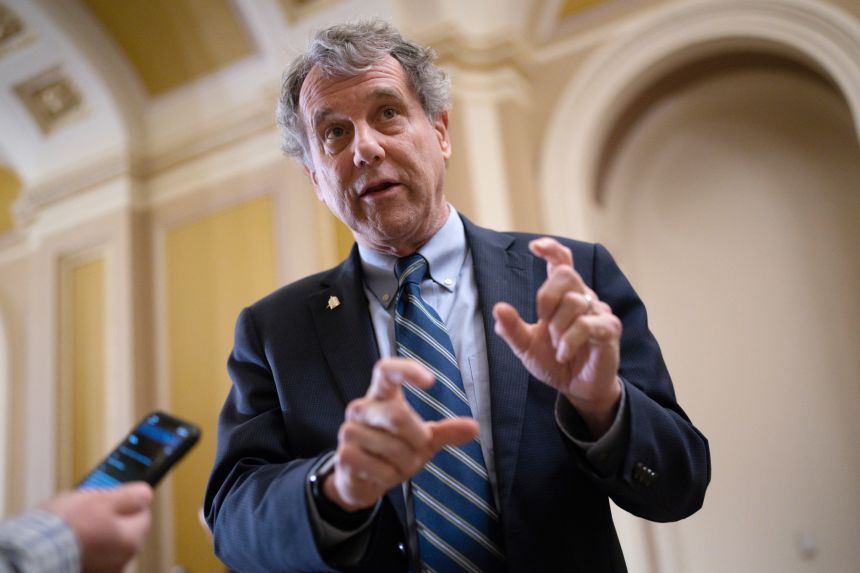
Brown will need to navigate the state’s rightward shift during the Trump era, which Republicans are counting on to help lift GOP Sen. Jon Husted to a full six-year term after he was appointed to fill the seat vacated by Vance.
Republicans see GOP Rep. Ashley Hinson as a strong contender to keep Iowa red following Sen. Joni Ernst’s decision not to seek a third term. Hinson, a former newscaster who flipped the state’s 2nd Congressional District in 2020, has already consolidated GOP support including from Trump.
While Democrats see Iowa as an uphill climb, they believe the president’s trade policies have hit farmers in the state hard and could resonate come November. The party also points to strong showings in special elections in the state since the start of Trump’s second term. The Democratic primary includes Marine Corps veteran Nathan Sage; state Rep. Josh Turek, a two-time Paralympic gold medalist; and state Sen. Zach Wahls.
Both parties believe the results of the primaries in Texas are likely to determine whether this seat gets put in play come November.
On the Republican side, there is an all-out brawl between Sen. John Cornyn, state Attorney General Ken Paxton, and Rep. Wesley Hunt. Cornyn, as the incumbent, has the backing of the party’s national infrastructure – yet all eyes in the GOP are on Trump, who has yet to endorse in the race but said recently he would give it “a serious look.”

Democrats – and some Republicans – think if Paxton emerges as the GOP nominee it could make for a much more competitive general election given his history of scandals. Most strategists believe the GOP primary will head to a May runoff, soaking up valuable resources with an extended intraparty fight.
But Democrats are engaged in a contentious primary of their own that will test competing theories of the best way to win the red state. Rep. Jasmine Crockett, a 44-year-old civil rights attorney, is making the case she’ll drive up turnout among Democratic voters and leans on her experience in Congress. State Rep. James Talarico, a 36-year-old former teacher and Presbyterian seminarian, is seeking to appeal to independents and Republican voters turned off by Trump.
Democrats are optimistic they will hold onto this New Hampshire seat despite Sen. Jeanne Shaheen’s decision not to seek reelection. First elected to the US House in 2018, Rep. Chris Pappas is seen by Democrats as a candidate who has faced tough campaigns.
Republicans feel they could have an opening in the Granite State with former Sen. John E. Sununu, who has been out of office since 2009. He’s facing a primary against another former senator – Scott Brown – who represented the neighboring state of Massachusetts more than a decade ago. Trump’s recent endorsement of Sununu could further tilt the primary in his favor.
The Senate race in Minnesota will be watched closely as the state has become the epicenter of Trump’s immigration enforcement actions.
The decision by Sen. Tina Smith to retire creates another open seat Democrats must defend – though the party is confident the state will stay blue. First the party must pick a nominee, with the August primary highlighting the ideological divide between progressive Lt. Gov. Peggy Flanagan, who was endorsed by Smith this week, and moderate Rep. Angie Craig.

The GOP field is much more crowded, but former sportscaster Michele Tafoya’s bid has sparked Republican hopes for November. Minnesota has consistently voted for Democrats in presidential elections for decades – though Harris only defeated Trump there by about 4 points.
Beyond the competitive general election landscape, both parties are also keeping their eyes on several primary battles in states that are expected to be safely in either the Democratic or Republican column come November. The outcome in those contests could offer a clearer picture of the direction of both parties moving forward.
The retirement of longtime Sen. Mitch McConnell has set up a three-way fight between Rep. Andy Barr, former state Attorney General Daniel Cameron and businessman Nate Morris. All three candidates have ties to the former Senate GOP leader but have aligned themselves more with Trump and his movement. The president has yet to endorse in the race – but tech titan Elon Musk plans to spend $10 million to help bolster Morris, who is a close friend of Vance.
There is another three-way battle underway in Illinois, where Democrats are picking a potential successor to retiring Sen. Dick Durbin. The primary includes Rep. Raja Krishnamoorthi, who has a strong financial advantage; Lt. Gov. Juliana Stratton, who was endorsed by Gov. JB Pritzker; and Rep. Robin Kelly.
With a single post on Truth Social, Trump upended the GOP Senate primary in Louisiana. The president’s endorsement of Rep. Julia Letlow paved the way for her to launch a challenge against Sen. Bill Cassidy, one of seven Republican senators to vote to convict Trump during his second impeachment in 2021. The result of the May 16 primary will test the power of Trump’s endorsement in a solidly conservative state.

The Massachusetts Democratic Senate primary is one of several contests this year that highlights the generational divide within the party. The matchup pits 79-year-old Sen. Ed Markey, who has served in Congress for more than five decades, against 47-year-old Rep. Seth Moulton, who has made the need for new leadership a centerpiece of his campaign.