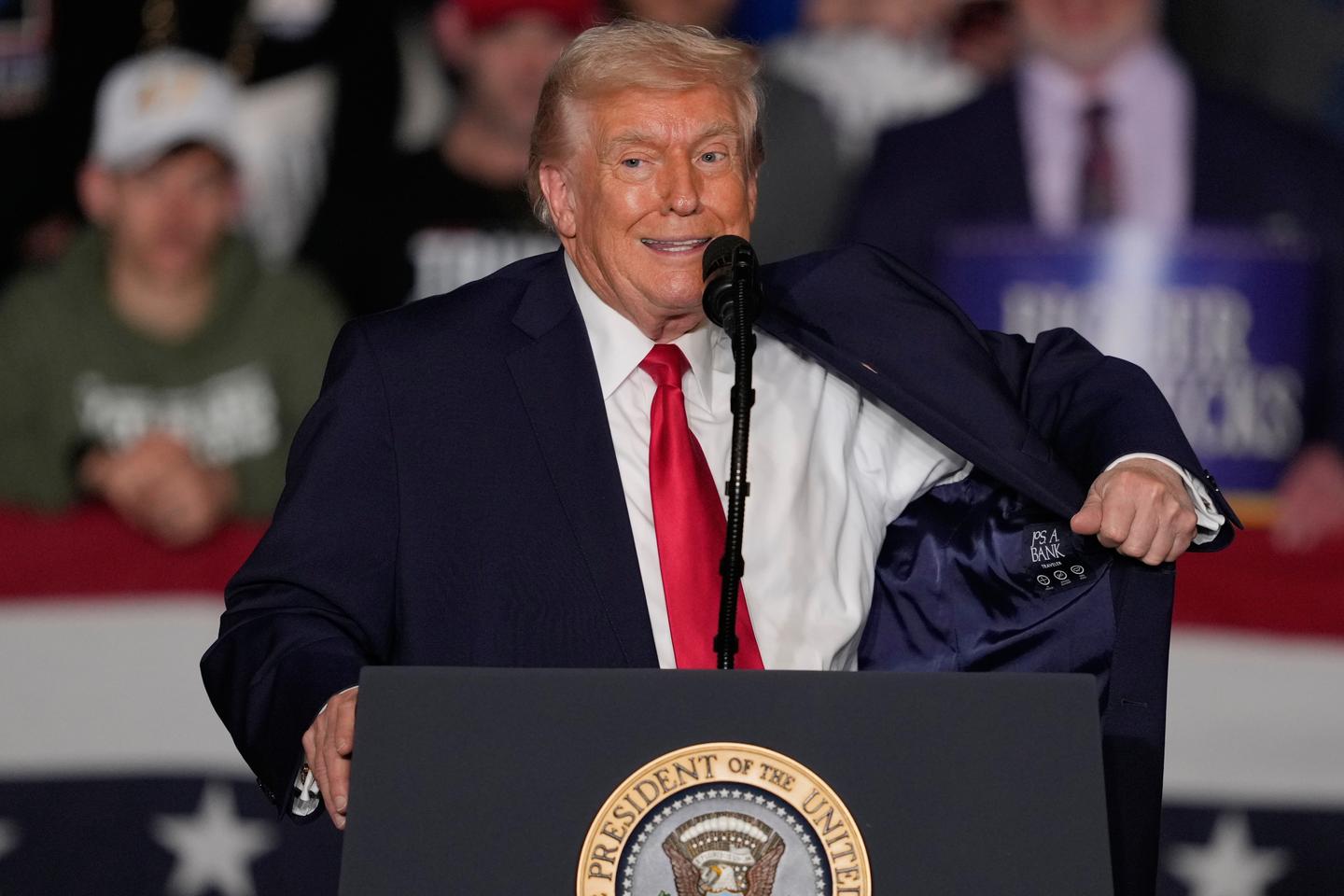
For over a year, a troubling political phenomenon has intensified on a global scale. From Donald Trump in the United States to Javier Milei in Argentina, Nayib Bukele in El Salvador and Vladimir Putin in Russia, an entire generation of heads of state has deployed communication strategies that have left democracies reeling.
We have been experiencing, at a transnational level, the political reign of calculated excess. At first glance, these presidents might seem to have little in common. Yet they share a method: the continual violation of democratic norms through provocation, excess and spectacle. Milei brandishing a chainsaw to symbolize his budget cuts, Trump multiplying scandalous statements on social media, Bukele photographing himself in prisons he controls with an iron fist – these staged displays are not slip-ups, but rather deliberate, intentional strategies.
Read more Subscribers only One year of Javier Milei: Chainsaws and controlled inflation in Argentina
The political grotesque is not new. History is full of burlesque figures and court jesters in power. But today, we are witnessing its systematic use as a tool. These leaders do not suffer ridicule: They cultivate it, claim it, make it their trademark. This posture has a double advantage: It captures media attention while making criticism ineffective. How do you attack someone who is already mocking everything, including themselves? Conceived in Washington, the abduction of Venezuelan president Nicolas Maduro, taken from his bed in Caracas on January 3, is not a minor event, but rather the launchpad for political destabilization operations targeting other countries, from Cuba to Nicaragua, from Greenland to Iran. The race toward the geopolitical grotesque must be taken very seriously.
Collective vulnerability
This is where the concept of shock comes into play – not just surprise, but a cognitive and emotional paralysis in the face of the unacceptable. When Trump simultaneously announces measures from another age, when Milei openly insults his opponents, when Putin multiplies nuclear threats, citizens and democratic institutions find themselves frozen, unable to prioritize, respond or act. This information overload is strategic. While the media comment on the latest provocation, fundamental policy measures go unnoticed. While the opposition exhausts itself reacting to the scandal of the day, the next one is already on its way. This constant acceleration prevents coherent and organized responses. The time for democratic debate – for reflection, argument, compromise – is thus short-circuited by the immediacy of emotional shock.
You have 54.08% of this article left to read. The rest is for subscribers only.