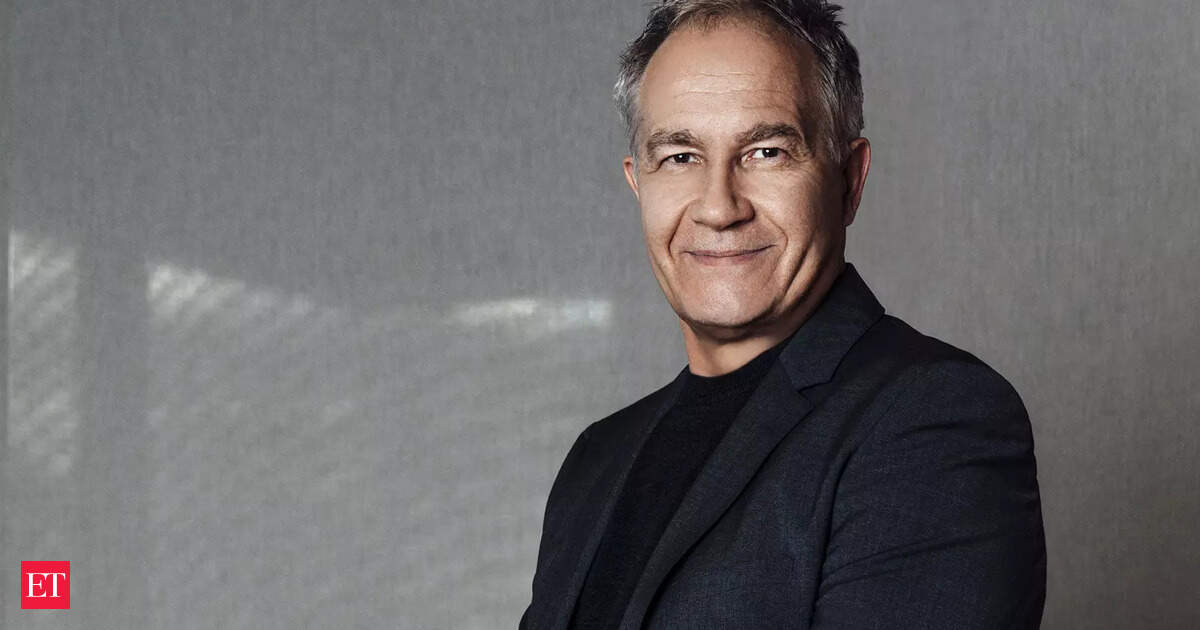
“Every trade agreement which reduces taxes is positive because the customer will pay for the product and not taxes… But you know the situation of the Swiss franc — it is a very strong currency, and the rupee has lost a lot,” Bosshard, currently on an India visit, told ET in an interview.
Under the Trade and Economic Partnership Agreement (TEPA) between India and the four-nation EFTA (Switzerland, Norway, Iceland and Liechtenstein) signed in 2024, India is phasing out import tariffs on Swiss watches from 22% to 0% over a seven-year period. “We are very, very happy, of course, that this happened. It was a deal between our prime minister and your authority to bring advantages for the Swiss watch industry and also to Indian customers,” Bosshard said.
But currency valuation is a deterrent. The rupee has been falling for months — hitting a historic intraday low of Rs 92.02 against the US dollar on January 30 — on account of capital outflows, trade deficits and global imbalances. At the same time, the Swiss franc has strengthened over 16% against the US dollar over the past one year.
“We have a currency which is going through the roof,” he said. “It’s a disadvantage for all exports…making our products more expensive, but this we cannot change… Not only the watch industry, all industries have to adapt a bit in terms of prices.”

In India, the trade deal has helped keep prices under control, said Bosshard who has been part of Swatch Group — the world’s largest watch manufacturer with 16 brands including Breguet, Omega and Tissot — since 1996.
In 2024, India became Rado’s largest market globally, ahead of China and the US, largely driven by sales in the ₹1 lakh-5 lakh affordable luxury segment.India’s luxury market is forecasted to grow multi-fold to reach $30 billion by 2030 from around $7 billion in 2024, a recent report by consulting and advisory firm Deloitte said. “In terms of luxury watch shopping, India leads the world with 47% consumers buying timepieces from multi-brand platforms or marketplace websites, compared to the global average of 24% percent,” the report said.
“In all the countries, we had some periods of growth,” Bosshard said. “For decades, in China there was growth… I believe that the market will come back, but, in the meantime, we have growth in India.”
The ₹6.8-billion Swatch Group in its latest annual report said key markets with high potential for future growth saw significant increases in 2025, with India, West Asia, Mexico, and Poland recording double-digit sales growth in all price segments. All Rado watches will continue to be imported from Switzerland, said Bosshard who has been steering the brand for six years now. “When the customer buys a Swiss watch, he wants to have a product produced in Switzerland… Not in India or in Germany, or anywhere else,” he said. “We are always doing this at the same place in Switzerland, and this is a part of the reputation and the credibility of all Swiss watches.”
He attributed Rado’s growth in India to a combination of factors including economic growth, population, rising level of education and digitisation of information. “Everywhere in India, people get information about luxury goods, about premium products, and, of course, it’s creating more and more demand,” Bosshard said.