
As an essential retailer, Home Depot kept most stores open and frontline staff working through the worst of North America’s Covid-19 lockdowns.
Almost six years later, chief executive Ted Decker last week ordered staff at its Atlanta headquarters – at least those still with a job after a round of job cuts at the world’s largest DIY retailer – that they must, too, finally return to the workplace full time from April.
“We must position the company to move faster and stay even more closely connected to our customers and frontline associates,” he wrote in a memo to staff, adding that increasing office days from four would simplify the business and drive results.
He’s among a number of US corporate chiefs who have called time on hybrid working in recent weeks. Carmaker Stellantis, whose brands span Citroën to Jeep, has told its US employees they must return to the office full time from the end of March, while banking group PNC has given its employees until the start of May to do the same. And, earlier this week, Meta’s Instagram workers in the US were forced to surrender again to the daily commute.
They follow a slew of high-profile return-to-office orders last year from US giants including Amazon, JP Morgan and Dell – each also affecting Irish employees – as well as AT&T and Walmart.
The past 12 months have also seen some hardening of hybrid-working expectations among top Irish financial and professional services firms, led by orders from some of the banks that workers spend more time in the office. A growing number of solicitors in commercial law firms are opting to come into the workplace four days a week too.
[ AIB sticking to new hybrid-working plan as of January despite staff rejectionOpens in new window ]
“There’s definitely been a tightening of rules, and employers are taking more control of the way they offer flexible arrangements,” says Trayc Keevans, global foreign direct investment director at professional services recruitment consultancy Morgan McKinley.
“Firms in Ireland are still committed to hybrid working, but they are definitely asking people to spend more time in the office to support collaboration and learning. This is particularly the case when it comes to people in the early stages of their careers and at leadership levels.”
Keevans says employers in large firms are also making the office more attractive to work from. “You’re seeing companies designing spaces with collaborative working areas and booths for people to do video conferencing or take private calls,” she said. “They are thinking more about the needs of employees when they’re in the office.”
The number of Irish job postings offering remote or hybrid work arrangements rose to a record last year, despite growing noises about the death of working from home, recruitment platform Indeed said in a report published last week.
 With the price of an ounce now more than $5,000, why is everyone going for gold?
This week on Inside Business, host Ciarán Hancock is joined in studio by Cliff Taylor to talk about the recent surge in the price of gold, which went past $5,000 an ounce on Monday, setting a new high. In January alone, the price has climbed by 17 per cent.So, who’s buying it? Why is it viewed as a safe investment? And what role has US president Donald Trump played in this price spike?Cliff has been following the story and explains the reasons behind the price surge. The EY Entrepreneur of the Year programme has been running since 1998, with Denis O’Brien chosen as the first winner. Each year 24 finalists are chosen for a months-long programme of events, culminating in awards night and the announcement of the category and overall winners. Last year, Edward McCloskey of WaterWipes fame took home the overall prize. Roger Wallace is the EY partner in charge of the programme while 2025 finalist James Kelly is a managing director with LMH Engineering in Arklow, Co Wicklow. They joined Ciarán in studio for a chat on the benefits of the awards programme, what it takes to be an entrepreneur and the current state of Irish entrepreneurship.Produced by John Casey with JJ Vernon on sound.
The proportion of Irish job postings mentioning remote or hybrid work rose to almost 20 per cent at the end of December, more than four times the pre-pandemic rate. Indeed economist Jack Kennedy said the Irish figures compare with a rate of about 8 per cent in the US and 18 per cent in the UK.
“There’s definitely a US versus Europe split on the hybrid working front,” said Kennedy, when asked about the report. “While we’ve all seen high-profile [return to office] mandates from US multinationals in Europe, it’s not really representative of what is going on across the board.
“Businesses have learned that offering flexibility has become a very powerful retention tool.”
Banks
JP Morgan, which has 1,500 staff working in the Republic, enforced a strict return-to-office policy last March, requiring most employees return to their desks at a bank location. While chief executive Jamie Dimon apologised last year for cursing when questioned about the policy at a town hall in Ohio – saying, “I don’t care how many people sign [a] f***ing petition” against it – he remained steadfast even as the petition finally arrived on his desk in October, with 2,000 signatures out of 300,000 staff.
While none of the Irish banks have taken a leaf out of Dimon’s playbook, some have taken a tougher stance on hybrid working.
AIB chief executive Colin Hunt stuck with a plan to force the bank’s hybrid-eligible staff to work from one of its offices for a minimum of three days a week from the start of January, even after the Financial Services Union (FSU) said members in the bank had voted “overwhelmingly” to reject the blueprint. The minimum for hybrid-eligible staff was previously two days a week.
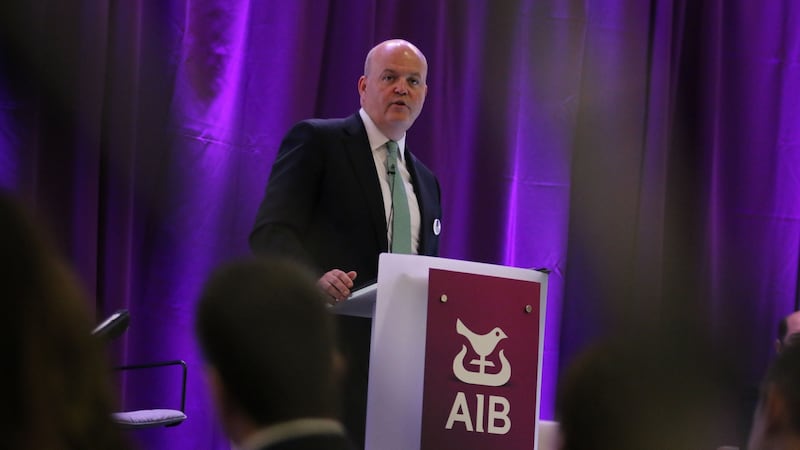
AIB chief executive Colin Hunt has pushed for staff to be back in the office three days a week. Photograph: Nick Bradshaw
The bank is continuing talks with the union under the guidance of a mediator, former Labour Court chairman Kevin Duffy, on concerns and issues around the new hybrid working model.
“AIB believes all employees benefit from in-person time with their own team and broader colleagues,” said a spokesman for AIB. “This enables greater collaboration, connection and innovation that supports our customers. We also recognise the benefits of structured, hybrid working and are committed to continuing to enable it.”
Bank of Ireland chief executive Myles O’Grady also found himself in the crosshairs of the FSU as he proceeded with a plan for employees to work in-person in one of its locations for a minimum of two days a week from September. Both sides remain in discussions on aspects of this six months after it came into effect.
“Our hybrid approach supports collaboration and balances personal working preferences with the needs of our customers, colleagues and the company,” a spokesman for the bank said. “Having a clear plan, while retaining one of the most flexible models among our sector in Europe, ensures our approach to hybrid working can remain enduring into the future.”
State Street, one of the largest international financial services employers in the Republic, with 2,300 staff in offices in Dublin, Kilkenny, Naas, Co Kildare, and Drogheda, Co Louth, is also tightening its office-attendance expectations. The business told its Irish staff late last year it would impose a model of four days in the office per week on a phased basis this year – in line with the rule brought in back at group headquarters in the US in late 2023.
Previously, the Irish unit had a relaxed policy “informed”, as a spokesman said a year ago, “by client need and individual employee circumstances”.
“We have seen great results in various markets where four-days-in-office model has helped accelerate trust, deepen relationships and drive better outcomes,” the spokesman said this week. “Our aspiration is to establish a consistent four-day-in-office model across EMEA [Europe, Middle East and Africa] and APAC [Asia-Pacific], that will position us for success and enables us to achieve our strategy and fulfil our purpose.”
A spokesman for PTSB said that of the 70 per cent of staff eligible for hybrid working, most were on site a minimum of two days a week – unchanged from a year ago. The future policy will depend on who ends up acquiring the bank, which is currently on the block.
Citigroup, which employs about 3,000 in the Republic, has retained its policy of most local staff working to a hybrid schedule of at least three days a week in the office.
Law firms
There has also been a hardening of expectations in the past year in some leading law firms in Ireland on how much time employees spend in the office – either from senior partners in firms or self-imposed by individuals looking to get ahead.
McCann Fitzgerald law firm headquarters on Sir John Rogerson’s Quay in Dublin.
Photograph: Bryan O’Brien
McCann FitzGerald, the fifth-largest law firm in the State by practising solicitor certificates, emerged from the pandemic with a general requirement that its staff be in the office three days a week, but has found in recent years that most choose to go in for four days.
“We are working towards encouraging a greater consistency of approach across the board with all of our staff and expect in-person attendance to find its level at four days per week in a relatively organic way,” a spokeswoman for the firm says. “As we are a firm built on collaboration and training our people, we see the office environment as being central to how we best serve our clients and develop our talent.
“In a firm of our size, we understand that there are different roles within our business, which does not necessarily lend itself to a one-size-fits-all approach or hard-and-fast rules. We are keen to maintain flexibility and agility in how people work. We will continue to engage with our people and clients to ensure our ways of working suit business demand and support colleagues across all levels.”
Matheson, the largest law firm, continues to require hybrid-eligible employees to work from the office for a minimum of two days a week, with partners and heads of business services expected to be in three days.
“Our experience continues to be that more of our people are choosing to spend more time in the office,” says a spokesman for the firm. “Our annual staff surveys demonstrate that a hybrid-working model continues to be preferred by the vast majority of our people. A physical presence in the office helps to maintain and strengthen our culture and values.”
While there was a view that A&L Goodbody, the second-largest firm, would tighten its policy after officially opening its redeveloped Liffey-side offices in Dublin last June, it has continued to ask staff to work in the office a minimum of three days a week with some roles requiring four days.
“Our partners and trainees tend to work four days a week in the office. For trainees, this is so they can benefit from an office environment where they can learn more easily from those around them,” says a spokeswoman, who adds that the new office layout has been “specially designed to foster collaboration, collegiality and wellbeing”.
Arthur Cox’s hybrid policy of allowing staff to work from home up to 50 per cent of the time “is unchanged and working well”, according to a company spokesman. Mason Hayes & Curran continues to see staff working three days a week in the office on average, a spokeswoman said, adding that its “high trust, high flexibility” model is important to employees.
Accounting firms
EY Ireland, which has become the largest accountancy firm on the island of Ireland by revenue in recent years, says it has continued to see “increasing levels of presence in the office and on client sites” in the past year, according to a spokesman.
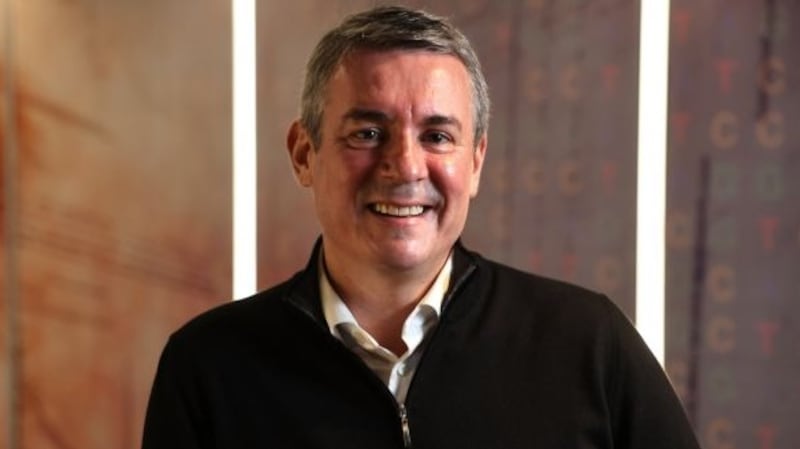
EY managing partner Frank O’Keeffe. Photograph: Dara Mac Donaill
However, he declines to give the average amount of time the firm’s 5,400 people spend in the office or with clients. The firm does not have a set target for office days for staff.
In the post-Covid world, PwC Ireland has sought to have staff either working in one of its offices or on a client site three days a week.
The same goes for KPMG Ireland. “Our approach reflects the fact that hybrid working is a fact of life and typically our teams are in at least three days a week. This combines the clear value placed on being in the office for in-person collaboration, learning and coaching,” a spokeswoman says. “We know that people also like the social aspect of work, and human and business relationships benefit from being together with each other, so we balance this with the need for flexibility in people’s lives.”
A spokesman for Deloitte Ireland says the organisation continues to allow its “teams to make the right choices”, with “the balance of remote and in-person work [varying] depending on client needs and the specific role and team”. Staff typically spend an average of two to three days working on site, he says.
While Grant Thornton Ireland does not impose a minimum number of days for people to attend the office, people attend the office three days per week, on average, depending on the team and business needs, a spokesman said. “We regularly review our approach to ensure that it meets the needs of our people, our clients and our business,” he added.
Forvis Mazars’s managing partner in Ireland, Tom O’Brien, told The Irish Times in a recent interview that the firm’s hybrid working model in the State remains “quite flexible and departmental-specific”. Some areas might require staff to be in the office for five days over two weeks, while others might just be one day every fortnight, he said.
Insurers
Irish Life, the largest life and pensions provider in the market, has seen most staff spend two to three days in the office since the pandemic. However, a spokesman says the group does “anticipate an increased presence on site” when it moves into its newly redeveloped campus on Abbey Street in Dublin from the second quarter of this year, “as many staff are likely to be keen to connect and collaborate in our new workspace”.
Aviva in Ireland, which provides general and life insurance coverage, has the strictest policy among sector players, with staff required to spend at least half their working time in the office, a spokeswoman says. “This supports in‑person collaboration, learning and connection balanced with flexibility.”
Axa Ireland, the largest general insurer in the State, told staff in late 2024 that it expected them to spend the majority of their working week out of their homes and “connecting in person with colleagues, brokers, clients and partners” from September 2025 – up from two days a week, previously.
“We use this wording deliberately as with over 2,500 employees in Ireland and a network of 34 branches, not everyone works from a home office,” said Derval McDonagh, chief people officer with the company. “We have placed a strong emphasis on regular check-ins between leaders and teams to ensure the approach is working for our people, our customers and the long-term needs of the business.”
Allianz headquarters in Munich, Germany. Photograph: Anna Szilagyi/EPA
Allianz Ireland says it is continuing to steer away from setting fixed days across the group – as it continues to be flexible rather than prescriptive. Teams agree their in-office and remote working patterns based on customer needs, the wider business and their own ways of working, says a spokeswoman.
“Regular engagement with staff shows that both employees and management are satisfied with this approach,” she says.
FBD, the country’s only indigenous general insurer, continues to have a policy that hybrid employees work from the office two days a week. “This approach continues to work well for both the business and our people,” says a spokeswoman. “We keep our arrangements under regular review, with a focus on ensuring that we continue to deliver for our customers and stakeholders.”