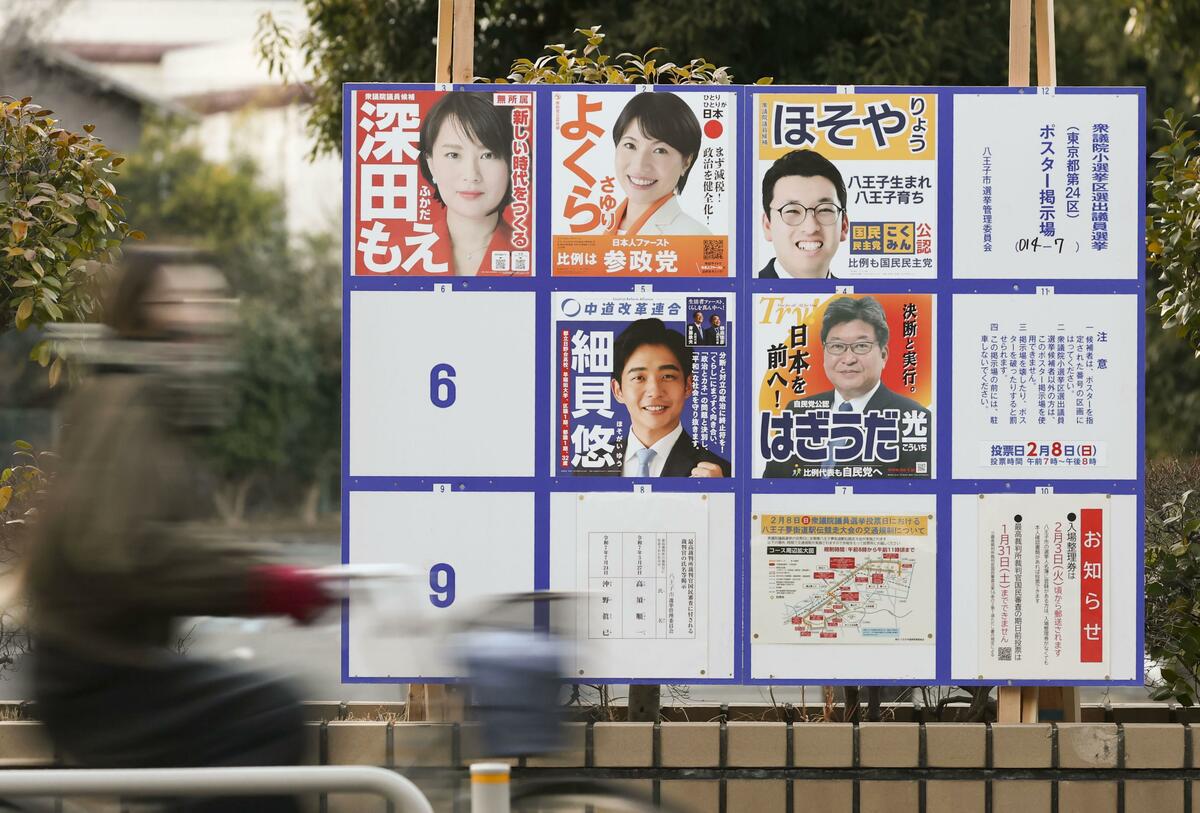
TOKYO – Japan’s ruling and opposition parties are scrambling to attract voters with attention-grabbing, unconventional pledges ahead of Sunday’s general election — from ensuring protection from bears to introducing a new “vacancy tax” or a three-day weekend.
In its campaign platform, the ruling Liberal Democratic Party is vowing to “separate” human and bear habitats, for instance by using more fences, following a recent surge in bear sightings and attacks across a wide swathe of the nation.
The party led by Prime Minister Sanae Takaichi is also seeking to promote consumption of game meat from hunted wild animals such as deer and boar.
Sunday’s general election is the first for the Centrist Reform Alliance, and the party, emerging from two opposition forces, is promising to increase workstyle options as it focuses on people’s livelihoods.
The push for “three days off a week” is one proposal, along with paid leave by the hour and an employment status it calls “full-time workers with shorter work hours.”
While the government has been promoting workstyle reforms in recent years, the country’s work culture is known to be rigid and characterized by long hours.
The Japanese Communist Party is also seeking to reduce time spent working, calling for “seven hours a day, 35 hours a week” of work.
The Democratic Party for the People is zeroing in on speculative real estate purchases by foreigners, seen as a key factor driving up property prices in urban areas.
In its election platform, the opposition party is pledging to introduce a “vacancy tax” targeting such foreign property acquisitions.
The Japan Innovation Party, the LDP’s coalition partner, is aiming to add impetus to its drive for the country to have a “second capital.”
The Osaka-based group plans to draft a bill to enable cities like Osaka, Fukuoka and Sapporo to serve as alternatives to Tokyo, with an eye on addressing the overconcentration of people and other functions in the Japanese capital.
The coalition agreement reached in October between the LDP and JIP also states that they will aim to create a backup system that will disperse the functions and the economic strength of Tokyo.
Among other policy promises among the opposition, Reiwa Shinsengumi wants to make highways toll-free, and the Social Democratic Party promises to reorganize the country’s Self-Defense Forces so that part of them will be tasked exclusively with disaster relief.
The ultraconservative Sanseito party vowed to boost the country’s food self-sufficiency rate, which stood at 38 percent in fiscal 2024, to 100 percent. The Conservative Party of Japan vows to revamp how the education ministry screens and approves school textbooks.
Team Mirai, which has distanced itself from other parties pushing for reducing the consumption tax on food in their campaign promises, floats the idea of child-rearing income tax cuts that depend on the number of children.