
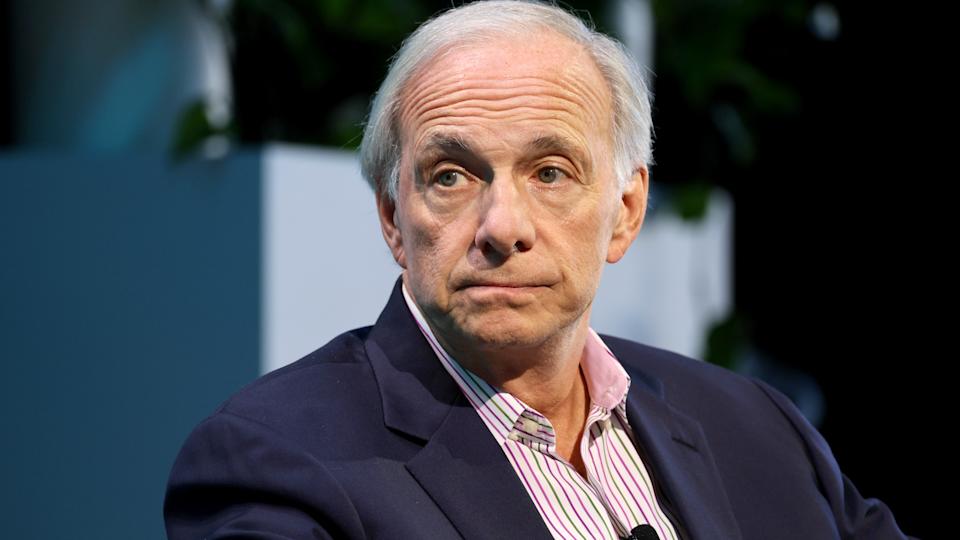
Dia Dipasupil/Getty Images
Moneywise and Yahoo Finance LLC may earn commission or revenue through links in the content below.
The early 1970s were a turbulent time in America — marked by soaring inflation, an oil crisis and a sharp drop in stock prices that left investors scrambling for safe havens.
And, according to billionaire investor Ray Dalio, history may be repeating itself. Surging prices and massive government spending could prompt investors to once again question the value of fiat currencies and the paper assets tied to them.
“It’s very much like the early ’70s … what do you put your money in?” Dalio said at the Greenwich Economic Forum (1). “When you’re holding money, you’re putting it in a debt instrument. And when you have such a supply of debt and debt instruments, it’s not an effective storehold of wealth.”
In fact, Dalio has long warned about the sheer size of America’s national debt, hovering close to $39 trillion and climbing in February 2026 (2). He has described the situation as a potential “debt death spiral” — where the government must borrow just to pay the interest on existing debt. Over time, this process accelerates (3).
If the national debt figure feels abstract, Dalio has a more personal warning.
The asset he’s talking about is something nearly everyone holds in one way or another, whether in bank accounts or under mattresses: the U.S. dollar.
In a post on X, Dalio shared a Q&A he had with the Financial Times (4). When asked what would happen to bonds and the dollar if a politically weakened Federal Reserve were to let inflation run hot, his answer was blunt.
“It would lead bonds and the dollar to go down in value, and if not rectified, would lead to them being an ineffective storehold of wealth and the breaking down of the monetary order as we know it.”
That comment couldn’t have come at a more sensitive time for the Federal Reserve. President Donald Trump has repeatedly attacked Chair of the Federal Reserve Jerome Powell, recently nominating financier Kevin Warsh to replace him. A former inflation hawk, Warsh now favors lower interest rates — aligning with Trump’s aims (5).