
Amid more than 1,400 days of fighting and bloodshed, Ukraine’s children have been displaced, orphaned and killed in Russian President Vladimir Putin’s war.
Some of those who survived have written of their sadness, hope and aspirations.
Others are warning they may yet face a difficult future due to the psychological torment and lack of adequate education they have lived with in recent years.

A 17-year-old Ukrainian girl, Kateryna, pictured sitting at her home in Kyiv after being displaced from her home city of Kharkiv due to the ongoing war with Russia.(Supplied: World Vision)
Kateryna, 17, is from Kharkiv but was forced to move to Kyiv to escape conflict.
She lost her dad, who was fighting for Ukraine.

A 13-year-old Ukrainian boy, Maksym, pictured sitting in Kyiv after being displaced from his home city of Oleshky due to the ongoing war with Russia.(Supplied: World Vision)
Maksym, 13, is from the southern city of Oleshky.
His hometown was among the first to be occupied by Russian forces.
He used to dream about going to school to see friends. Now he longs for a life without wailing sirens.
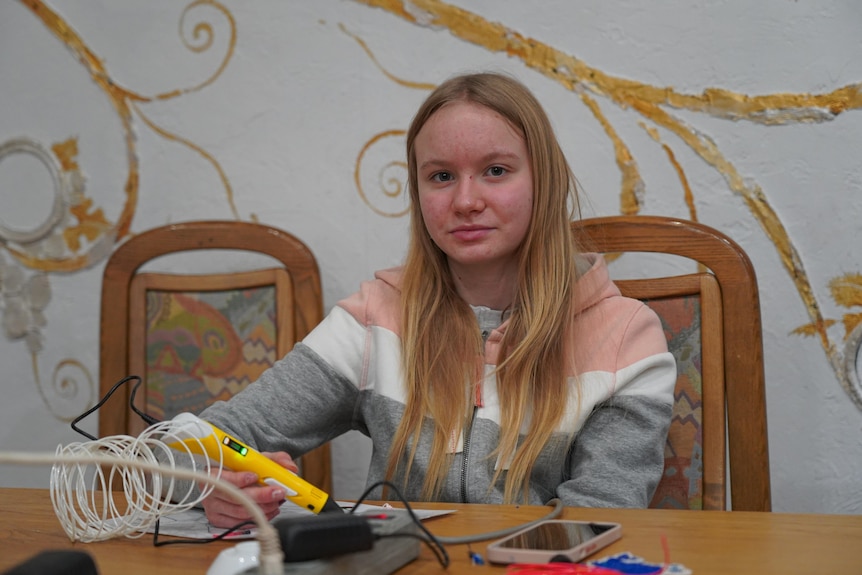
A 12-year-old Ukrainian girl, Gloria, pictured sitting at her home in Boiarka, in Ukraine.(Supplied: World Vision)
Gloria, 12, remembers fleeing her home in Boyarka, near Kyiv, with the sound of fighter jets overhead.
She still wakes frightened at night when her bedroom becomes illuminated by explosive flashes outside.
Kateryna, Maksym and Gloria are among more than two-and-a-half million Ukrainian children displaced from their home cities.
More than 791,000 children still live in Ukraine. Almost 1.8 million others have been forced to seek refuge abroad, according to the United Nations humanitarian aid organisation UNICEF.
Between February 24, 2022 — the day Russia’s full-scale invasion of Ukraine began — and February this year, more than 15,000 civilians died.
At least another 41,000 were injured in the war, the UN Office of the High Commissioner for Human Rights said in a statement.
More civilians were killed and injured in 2025 than in the previous two years of fighting, the OHCHR said.
For many Ukrainians, the conditions of war have persisted far longer than the past four years.
Between February and March 2014, pro-Russian forces began to annex the Ukrainian territory of Crimea.
The OHCHR deemed it illegal and many Ukrainians say it ignited the beginning of the invasion of their homeland.
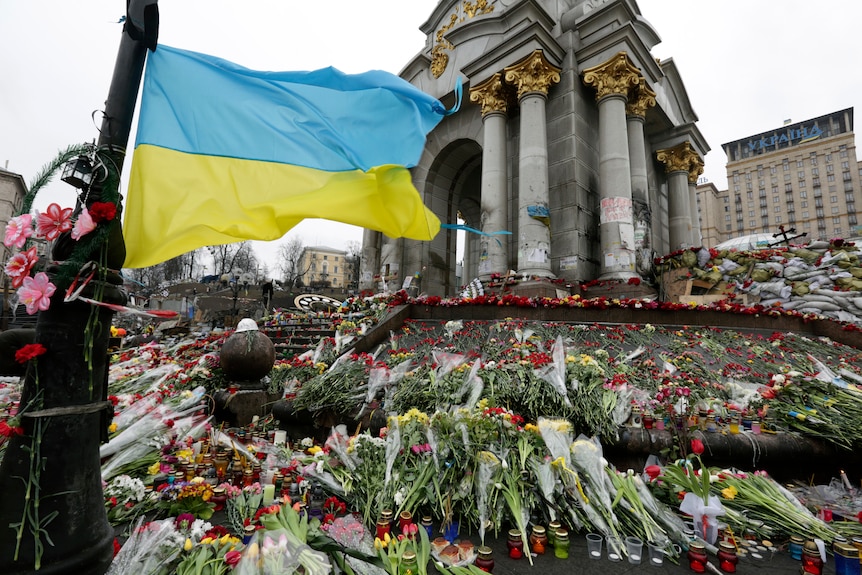
Many Ukrainians say they have lived under the conditions of war dating as far back to 2014, when pro-Russian forces began to forcibly annex Crimea.(Reuters: Konstantin Chernichkin)
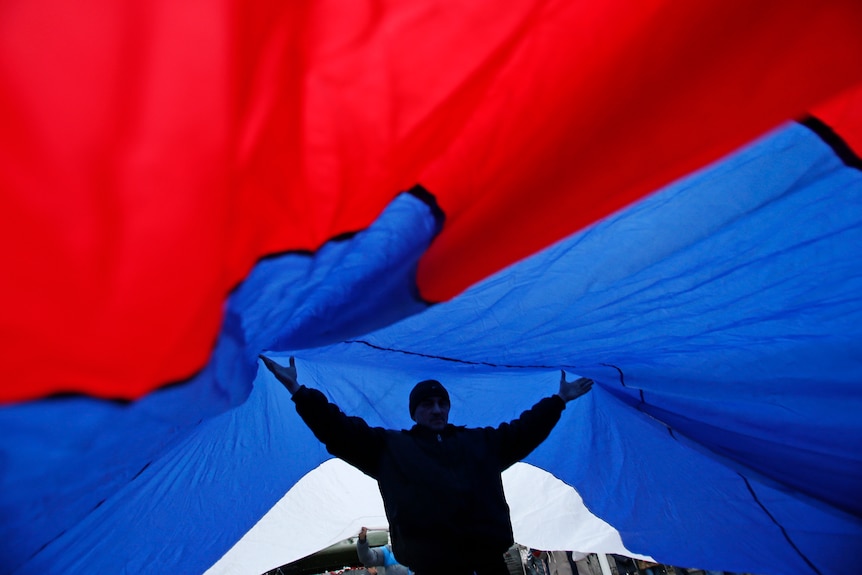
Large crowds of pro-Russian supporters clashed with pro-Ukrainians in the Crimean city of Simferopol during the early days of the annexation.(Reuters: David Mdzinarishvili)

Candle-lit vigils were held in the capital Kyiv, about 1,000km north of the clashes occurring in Crimea in 2014.(Reuters: Konstantin Chernichkin)
By 2024, more than 50,000 Ukrainians were displaced, and more than 100 activists and journalists were forcibly disappeared, the UN department said in a report.
Many Ukrainian children have endured living in a war zone for their entire lives.
In the days leading to Christmas in 2025, some children wrote letters to the international relief charity World Vision that were shared with the ABC.
In them, they described how the war altered their childhoods.
Kateryna wrote of how Ukraine’s invasion reshaped her dreams for her future.

In her letter, Kateryna wrote of wishing for peace by lighting candles on cakes whenever a holiday is marked in Ukraine.(Supplied: World Vision)

Kateryna’s family was displaced from the city of Kharkiv and now lives in the capital, Kyiv.(Supplied: World Vision)
“My dreams used to be so normal: celebrating graduation with classmates, getting a new phone, redoing my room, having lots of money,” she wrote.
“Now, everything’s different. I dream of helping people, becoming a doctor, living to old age, finding someone to love.
“There’s so much I could say, so many horrors of war I could tell. But the one thing I truly want is for other children, in other countries, to never, ever experience war.
“To never have to learn to distinguish what’s flying towards you — a drone, a guided aerial bomb, an S-300, or a ballistic missile.
Every holiday has become a reason to share “hopes and wishes” for the future, she wrote.
“Every candle on a cake, every wish on New Year’s Eve — for victory, for peaceful skies, for our defenders to come home,” she said.
Another boy, 10-year-old Maksym, grew up in the southern city of Mykolaiv. He dreams of becoming a train driver.
Captured by Russians in March 2022, the city is on Ukraine’s Pivdennyi Buh River — an inlet of water that connects to the Black Sea.

Ten-year-old Ukrainian boy Maksym was displaced from his home city of Mykolaiv due to the ongoing war with Russia.(Supplied: World Vision)

In his letter, Maksym wrote of feeling upset about no longer being able to visit the seaside near to his homehown.(Supplied: World Vision)
“These last four years were super hard for me and my family,” he wrote in his letter.
“Before the war, I really wanted to go to school, meet my classmates, and make new friends. Also, I wanted to go to a water park and go to the sea every summer because I love the sea so much.
“But the war stopped all of that. Now I learn from home, and I haven’t been to the sea for four years.
Another girl, Maria, who was eight years old in 2022, wrote about remembering to pack her school bag before bed the night before Russia invaded.

In her letter, Maria says she had prepared to go to school on the day Russia’s faull-scale attacks on Ukraine began.(Supplied: World Vision)

Maria woke to the sounds of explosions surrounding her home in Kharkiv in 2022.(Supplied: World Vision)
“My dream was interrupted by my mum’s gentle, quiet, but worried voice: ‘Wake up, explosions!'” she wrote.
“That’s when my life turned into a ‘before’ and ‘after’.
“We drove to my grandparents’ village. It was scary, and I was thinking about my little bird — we didn’t take him with us.
“Mum comforted me. She said she and dad would be back soon. But we could only go home after half a year. My little bird died.
“In these four years, I’ve changed four schools, four groups of classmates.”

Maria says she dreams of owning her own horse once the war in Ukraine ends.(Supplied: World Vision)
Since moving to Kyiv, Maria said she learned horseback riding and felt hopeful for the future.
“I try to think about good things … I believe everything will be OK,” she wrote.
Before the war, Artemiy, 11, wanted to travel.
His family also relocated to Kyiv from Kharkiv to escape conflict, and so he could continue his schooling.

Artemiy, 11, was displaced from his home city of Kharkiv in the early days of Russia’s occupation of Ukraine.(Supplied: World Vision)
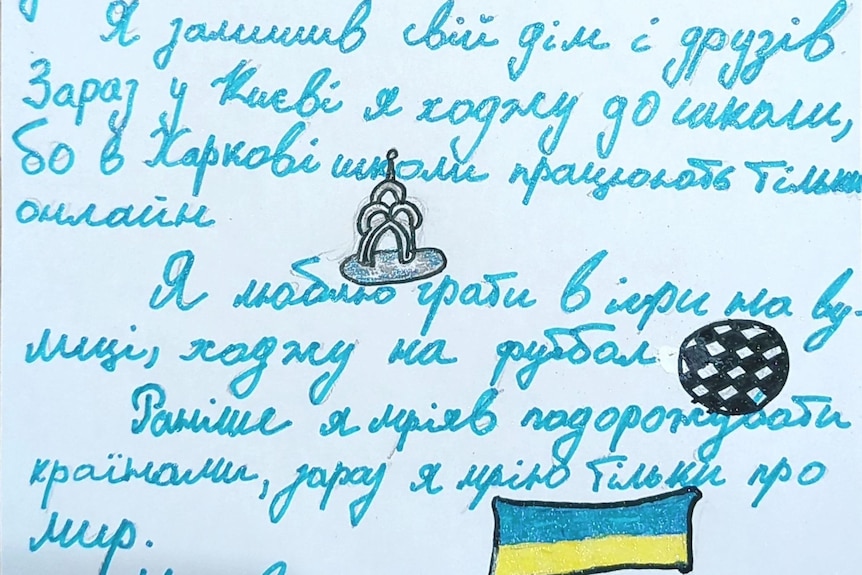
In his letter, Artemiy wrote of once dreaming to travel to other countries before the conflict began.(Supplied: World Vision)
“My life has changed a lot in the last four years,” he wrote in his letter.
“I left my home and my friends … Now in Kyiv, I go to school because in Kharkiv, schools only work online.”
He now only wishes for peace for his homeland.
“I want to go home to see my dad, so that it’s quiet and rockets and drones aren’t flying,” he wrote.
“I believe everything will be okay and the war will end soon.”
When missiles first rained down over Kyiv in 2022, Gloria said her family was instantly gripped by fear.

In her letter, Gloria wrote of becoming accustomed to wartime terms she had never previously heard.(Supplied: World Vision)
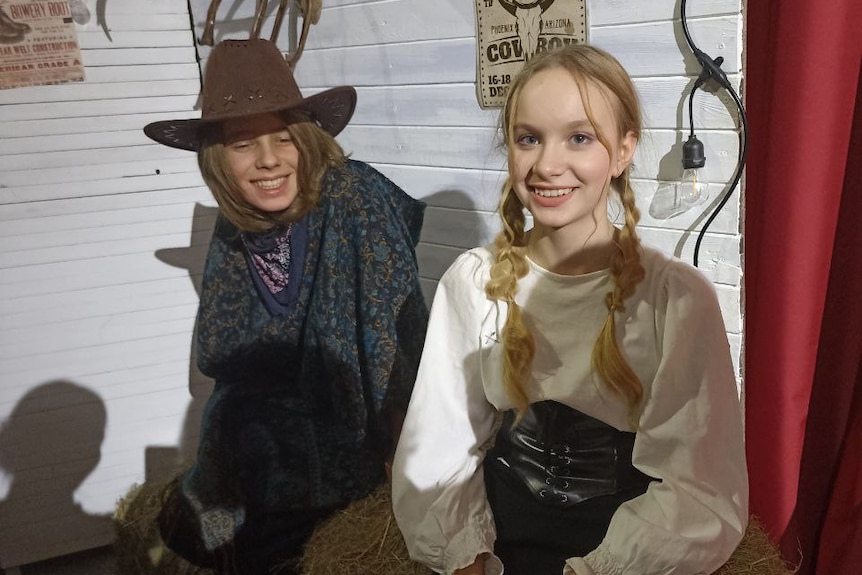
Gloria, pictured right, says her family hid under tables while fleeing her home in Boyarka in 2022.(Supplied: World Vision)
“We didn’t really know where we were going or for how long,” she wrote.
“We packed our things to the sound of jet planes, sometimes hiding under the table with my brother because it was so loud.
“Our hearts were pounding, and the noise made us jump. My mum was worried.”
Gloria’s family joined hundreds of others who fled in the night in cars that became stuck in traffic jams on highways out of Ukraine’s major cities.

In the hours after the Russian invasion of Ukraine began in 2022, lines of hundreds of vehicles were seen snaking out of central Kyiv.(Reuters TV)

Ukrainains who attempted to flee major cities in the country’s eastern regions became stuck for hours on clogged highways.(Reuters: Antonio Bronic)

Many people resorted to abandoning their vehicles and proceeding on foot in a bid to escape.(Reuters: Viacheslav Ratynskyi)
“Around us, there were many tanks, their guns pointed at us,” she wrote.
“The car turned into a forest, and we sped over hills and rough terrain. Behind us, there were explosions and gunfire.
Gloria said she became accustomed to wartime words such as “MiG”, “air defence” and “patriot”.
It also became normal for Ukrainian children to try to enjoy sheltering underground, away from incoming missile strikes, Gloria said

Ukrainian military blockades of major arterial roads around Kyiv were put in place in the early hours of Russia’s occupation.(Reuters: Umit Bektas)

Some vehicles were found incinerated on roads near to Kyiv.(Reuters: Valentyn Ogirenko)

In central Kyiv, the force of the initial wave of missiles blew windows out of their frames in residential buildings.(Reuters: Valentyn Ogirenko)
“We go into the corridor and weave nets for our defenders,” she wrote.
“I hope that soon the war will end, and I will buy a cockatiel and teach it to sing the Ukrainian anthem.
“I wish many children could live peacefully and quietly … and that we never remember sad moments.”
The trauma of Ukraine’s ‘stolen childhood’ laid bare
Alona Sirant is a mum from Kyiv who relocated her family to Australia in March 2022 for safety and to be closer to her husband’s family.
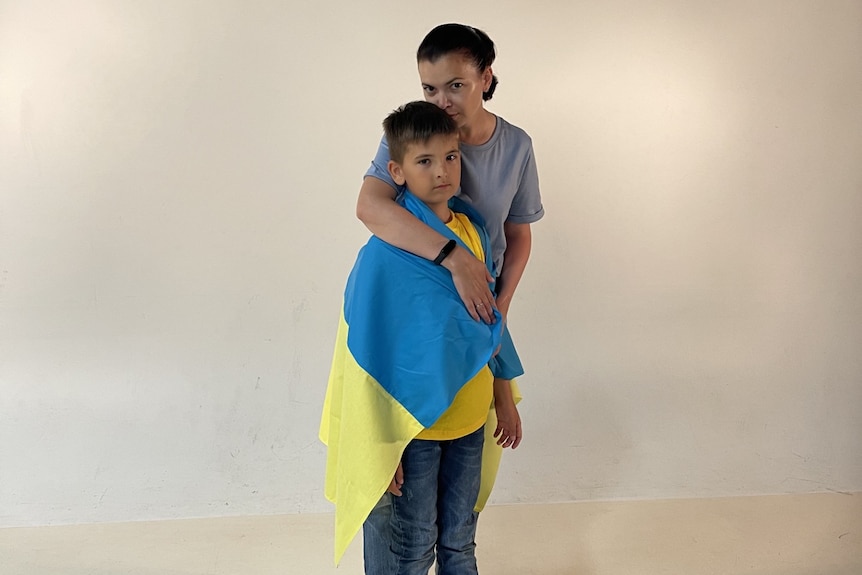
Illia, 13, moved to Australia with his mum Alona in 2022. For three years he was unable to cry and still lives with survivor’s guilt.(Supplied: Alona Sirant)
Her son, Illia, was 10 at the time and continues to live with a heightened sense of survivor’s guilt.
For three years, he did not cry or speak about his emotions, Ms Sirant said.
“In his mind, it was simple: ‘This is war, I must survive, no one will help me,'” she said.
“It’s heartbreaking. Children carry the war with them even to a safe country.
Ms Sirant’s parents, older sister and nieces still live in Ukraine.
She tries to call them daily so Illia can maintain his connection to them.
“He’s so happy to see how they are still alive, but he [gets] nervous,” she said.
“He couldn’t say [to them], ‘Oh my goodness, today I had an ice cream or watched a movie’.
“He says, ‘mum it’s not good because they are not safe’.”
Illia’s experience is not unique.
Ms Sirant said after she arrived in Australia, she held frequent video support calls with displaced and traumatised children still living in Ukraine.
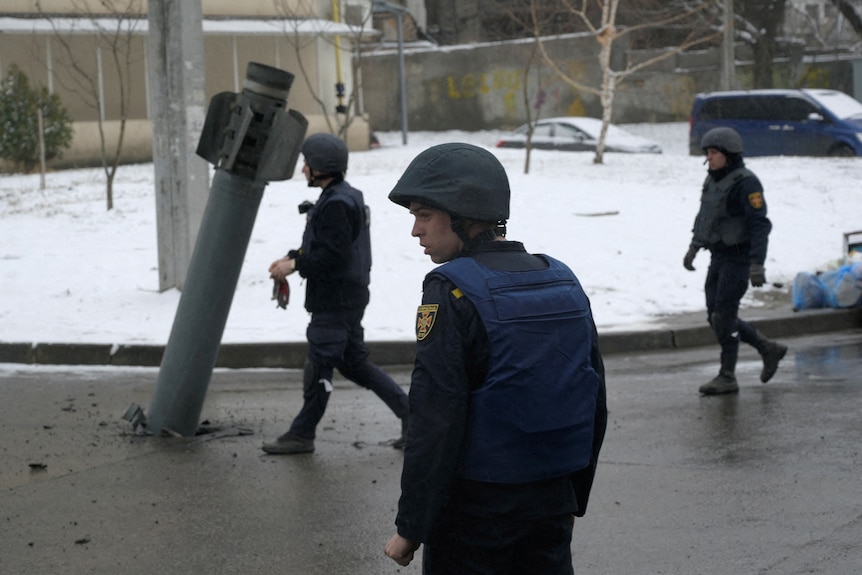
The city of Kharkiv was among the first locations in Ukraine to be occupied by Russian forces in February 2022.(Reuters: Maksim Levin)
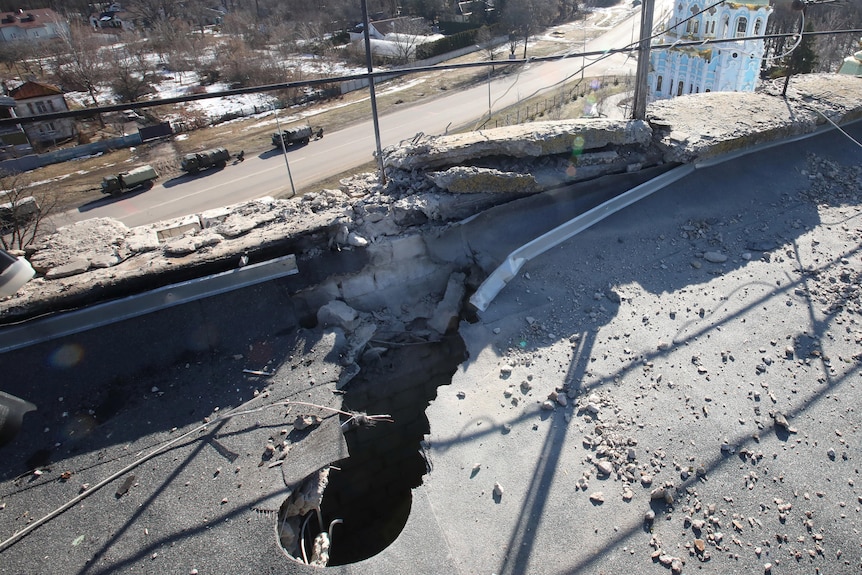
Kharkiv was heavily shelled through the night on February 24, 2022.(Reuters: Vyacheslav Madiyevskyy)
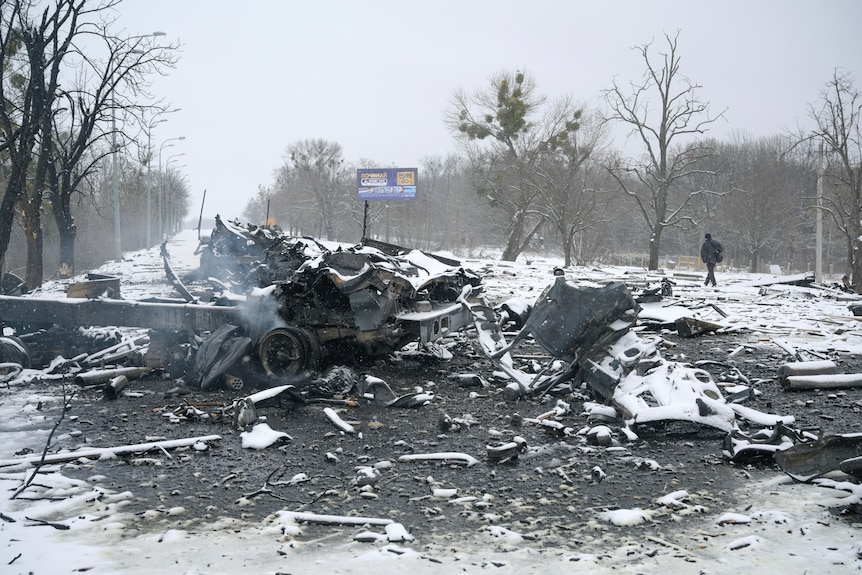
The shelling caused significant damage to buildings, infrastructure and vehicles that were attempting to flee the city.(Reuters: Maksim Levin)
One of the more harrowing cases involved a 12-year-old boy from Kharkiv, she said.
“In our first sessions, we just sat in silence. He just needed someone to be with,” Ms Sirant said.
“He felt he had to protect his parents, so he didn’t sleep at night, he didn’t make friends at school because he was afraid to lose them.
Ms Sirant said she hopes the world does not forget “the human cost of this invasion”.
She now describes the impact of the war as “Ukraine’s stolen childhood”.
“Russia hasn’t just invaded a country; it has robbed an entire generation of their right to be kids,” she said.
“We need to call this what it is: A deliberate attempt to break the future of Ukraine.”
The next danger for Ukrainian children
Ukrainian children now face an additional threat, World Vision Ukraine’s crisis response director Arman Grigoryan said.
Ukrainians without power in temperatures as low as -18C, aid groups say
Ukraine’s children have not properly attended school or received an adequate education since at least 2020 because of the war and COVID-19 restrictions, he said.
It has created a “multiplying effect” on the psychological state of Ukrainian children, he said.
“The children are growing under the current circumstances and situation with all the stressors that are around them … in a much faster way than normally a child would do,” Mr Grigoryan said
In parts of Ukraine, “child-friendly spaces” have been created in shelters and other centres to offer children an opportunity to maintain friendships and speak with teachers and support workers.
Mr Grigoryan said the spaces were designed to allow children to temporarily escape the realities of war.
“There is this moment when we try to distract the kids from the day-to-day to focus on a painting or [by] doing some craft,” he said.
“[So] that they will detach from the current state of reality and go into a mood of creating something positive.
“In that moment, it’s like it’s a different moment, it’s a different time. It’s like they’re not in [the war].”