
Israel came under attack from Iran, Yemen’s Houthis and Lebanon’s Hezbollah on Thursday, as Tehran and its proxies increased their assaults amid the Passover holiday.
Iran on threatened “crushing” attacks on the US and Israel after US President Donald Trump vowed to bomb the Islamic Republic “back to the Stone Ages.”
The war, which erupted more than a month ago with US-Israeli strikes on Iran, has spread throughout the Middle East and roiled the global economy, impacting hundreds of millions of people worldwide.
Iran launched several missiles at Israel overnight Wednesday and throughout Thursday, the first days of Passover, targeting the country’s center and north. Emergency forces responded to several impact sites, as four people were reported lightly injured in the Tel Aviv area.
The IDF said Thursday evening that Iran had launched some 20 ballistic missiles at Israel over the previous day, marking an uptick in the rate of fire compared to recent weeks.
Around half of the missiles were intercepted, and half were allowed to hit open areas, “according to protocol,” the military said. At least two missiles carried cluster bomb warheads, which spread bomblets over wide areas in central Israel, lightly injuring several people and causing damage.
The military assessed that Iran tried to launch dozens more ballistic missiles to coincide with the Jewish holiday, but a wave of Israeli strikes thwarted the plans.
Footage posted to social media showed the moment an Iranian ballistic missile struck the central city of Petah Tikva on Saturday afternoon. No injuries were reported.
Footage shows the moment an Iranian ballistic missile struck the central city of Petah Tikva this evening.
There are no reports of injuries. pic.twitter.com/c21gBIliJd
— Emanuel (Mannie) Fabian (@manniefabian) April 2, 2026
A ballistic missile launched by the Iran-backed Houthis in Yemen at Israel was intercepted on Thursday evening, after sirens sounded in Jerusalem, the surrounding area and near the Dead Sea. No injuries were reported.
Hezbollah fired some 130 rockets at northern Israel during the holiday, lightly injuring four people.
Amid the ramped-up missile launches, Iranian military command center Khatam Al-Anbiya put out a statement carried on state TV warning the US and Israel to expect “more crushing, broader, and more destructive actions.”
“With trust in Almighty God, this war will continue until your humiliation, disgrace, permanent and certain regret, and surrender,” said the statement.
Following an American strike on a major Iranian bridge, Iran threatened to target major highways across Israel, including Routes 1, 2, 4 and 6.
In a prime-time White House address Wednesday night, Trump said the US was “very close” to achieving its objectives but warned attacks would intensify if Iran did not reach a negotiated settlement.
“Over the next two to three weeks, we are going to bring them back to the Stone Ages, where they belong,” Trump said in a 19-minute speech delivered in front of American flags.
In some of the first major strikes since Trump’s speech, the key B1 highway bridge linking Iran’s capital Tehran to the western city of Karaj was hit Thursday by airstrikes, according to state media, which said eight were killed and 95 wounded in the attack. The B1 bridge is considered the Middle East’s highest bridge and was inaugurated earlier this year, Fars added.
Around an hour later, Fars reported fresh airstrikes on the bridge, which it said was hit while “rescue forces were assisting the victims of the first attack.”
The strikes were carried out by the American military. The IDF denied striking the bridge.
ویدیوی دریافتی: ‘حمله دوباره به پل B1 در عظیمیه #کرج حدود ساعت ۱۷:۳۰’
پنجشنبه ۱۳ فروردین #Iran pic.twitter.com/8Lz3tZ2t1l
— Vahid Online (@Vahid) April 2, 2026
Later, Trump shared footage of the strikes in a post on his Truth Social account, saying: “The biggest bridge in Iran comes tumbling down, never to be used again — Much more to follow!”
“IT IS TIME FOR IRAN TO MAKE A DEAL BEFORE IT IS TOO LATE, AND THERE IS NOTHING LEFT OF WHAT STILL COULD BECOME A GREAT COUNTRY!” Trump threatened.
The US had hitherto largely avoided targeting Iranian civilian infrastructure and even warned Israel against hitting Iranian energy sites, as Washington has sought to avoid turning Iran into a failed state.
But Trump appears determined to further ramp up the pressure against the Islamic Republic, even as the latter doesn’t appear poised to accept Washington’s ceasefire demands.
IDF kills ballistic missile commander in western Iran
The Israeli military continued striking regime targets in Iran throughout Thursday, hitting ballistic missile launchers and military financial hubs and killing several top military officials, including the commander of ballistic missile forces in western Iran’s Kermanshah region.
“During the holiday, we eliminated Mukram Azimi, the commander of the ballistic missile unit in the Kermanshah area. Azimi was responsible for many missile launches at Israel,” IDF Spokesman Brig. Gen. Effie Defrin said in a press conference.
Three battalion commanders in Iran’s ballistic missile forces, “who led the fire on Israel” were also killed, Defrin said.
Additionally, the IDF confirmed killing Jamshid Eshaghi, a top Iranian general, in an airstrike in Iran over the weekend.
The military identified Eshaghi as the chief of Iran’s “oil headquarters.” Officially, he served as the head of budget and financial affairs at Iran’s armed forces general staff, a military body that coordinates between the regular army and the Islamic Revolutionary Guard Corps.
Jamshid Eshaghi, an advisor to the chief of staff of Iran’s armed forces, was killed in a targeted attack in Tehran in recent days, along with five members of his family, according to Iranian media. pic.twitter.com/e6BKMoYB64
— Al Arabiya English (@AlArabiya_Eng) March 31, 2026
The military said the oil HQ is an “integral part of the regime’s armed forces, enabling the continuation of their activities and military buildup through profits from oil sales.”
On Wednesday, the IRGC confirmed the killing of Eshaghi following the Israeli strike on Saturday.
The IDF also published footage of a wave of strikes it carried out against ballistic missile launchers in western and central Iran during the Passover holiday, saying it thwarted additional barrages on Israel.
“אלפא משלוש”: תיעוד מהשמדת משגר טילים בליסטיים במרכז איראן על ידי מטוס קרב מסוג ״אדיר״ (F-35i)
במהלך החג צה״ל תקף יותר מ-50 מטרות של מערך הטילים הבליסטיים באיראן
צה”ל ממשיך לתקוף את מערכי האש של משטר הטרור האיראני ברחבי איראן.
ביממה האחרונה, חיל האוויר השלים כ-20 מטסי תקיפות… pic.twitter.com/lP2dW6LBwP
— צבא ההגנה לישראל (@idfonline) April 2, 2026
According to the military, Israeli Air Force fighter jets dropped some 140 bombs on 50 targets of Iran’s ballistic missile array, including launchers.
A video released by the IDF showed an F-35I fighter jet identifying a ballistic missile launcher and striking it before it could be used to attack Israel.
Talks said continuing amid threats
Trump has recently raised the possibility of a deal to end the war, which has pushed up fuel prices in the US and around the world and pushed down his approval ratings.
He said talks could be possible with Iran’s new leadership, which he described as “less radical and much more reasonable” than their predecessors, and warned that if no agreement was struck, Washington had “our eyes on key targets, including the country’s electric generating plants.”
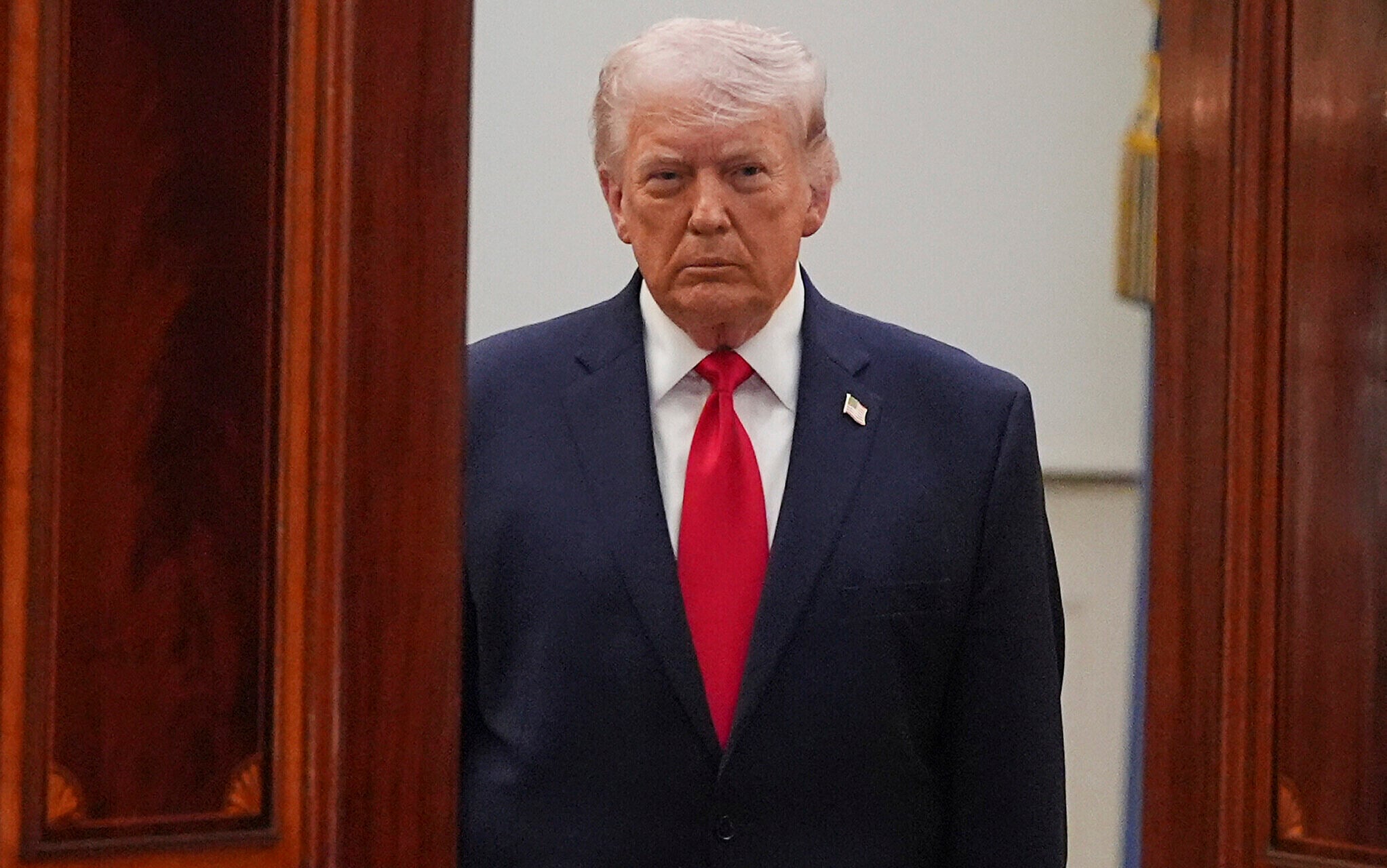
US President Donald Trump arrives from the Blue Room to speak about the Iran war from the Cross Hall of the White House on April 1, 2026, in Washington. (AP Photo/Alex Brandon, Pool)
But Tehran has dismissed Washington’s ceasefire overtures, describing US demands to end the conflict as “maximalist and irrational.”
“Messages have been received through intermediaries, including Pakistan, but there is no direct negotiation with the US,” said Iranian foreign ministry spokesman Esmaeil Baqaei, quoted by the ISNA news agency on Thursday.
According to Channel 12, US Vice President JD Vance is leading the talks for the US, with Iranian Parliament Speaker Mohammad Bagher Ghalibaf representing the Islamic Republic. The negotiations are being mediated by Pakistan’s army chief, Field Marshal Syed Asim Munir, the outlet added.
According to the report, the most recent exchange took place on Tuesday, when Vance allegedly conveyed that Washington is open to a ceasefire if Iran agrees to reopen the Strait of Hormuz – a key US demand amid the ongoing war.
Vance also warned that Trump’s patience is wearing thin, while an American source cited in the report said the US would need roughly two-to-three weeks to strike all previously identified targets – during which time the US is hoping to strike a deal.
Economic pressure continues
Meanwhile, Iran’s two largest steel plants have been forced out of action by several waves of US and Israeli attacks, the companies have said.
“Our initial estimate is that restarting these units will take at least six months and up to one year,” Mehran Pakbin, deputy head of operations at the Khuzestan Steel Company, was quoted as saying by the Mizan Online website on Thursday.
Mobarakeh Steel Company in the central province of Isfahan said that its “production lines have completely shut down following the high volume of attacks.”
Both plants have suffered repeated strikes since last week.
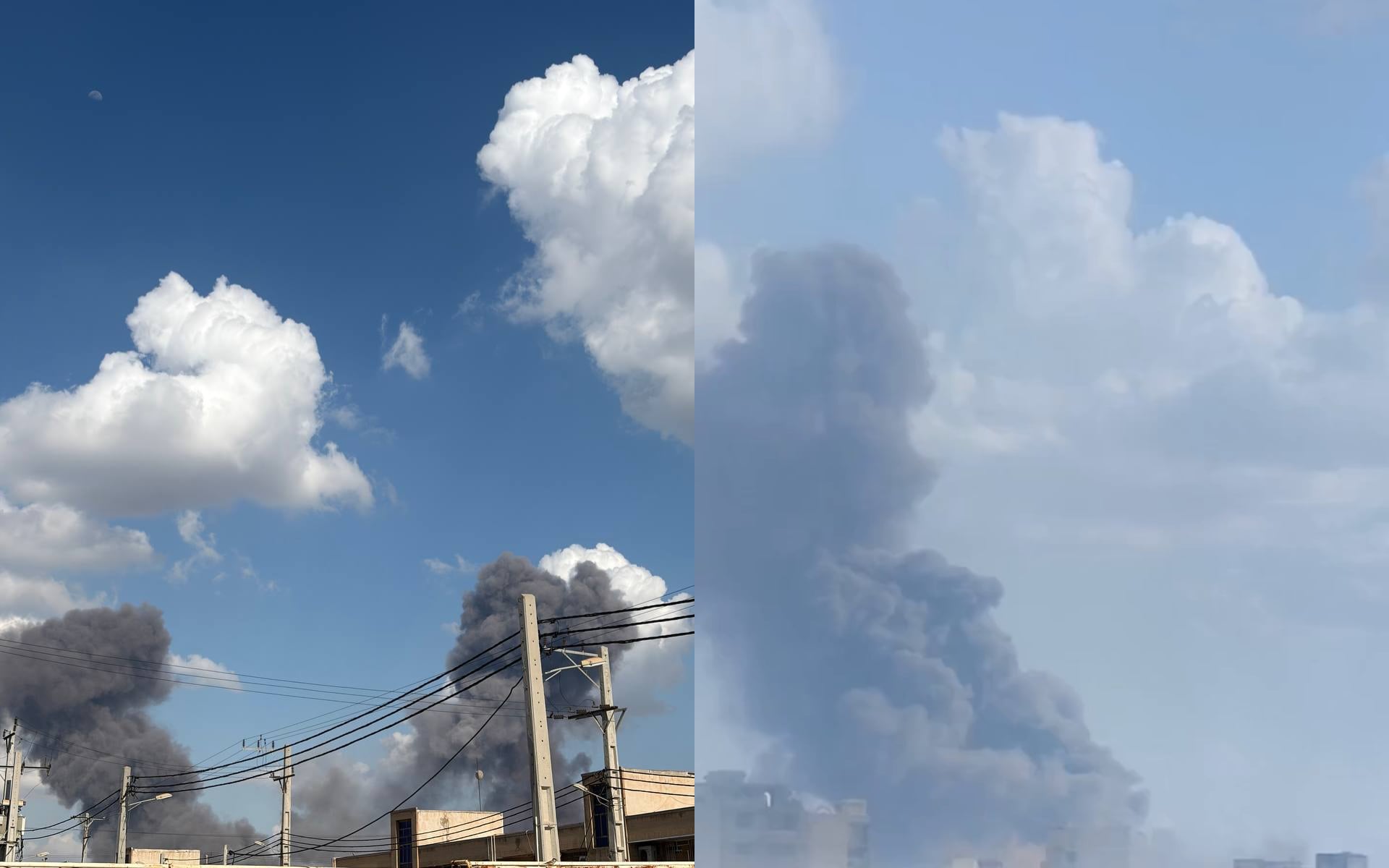
Smoke rises following Israeli strikes on an Iranian steel plant in Ahvaz, March 27, 2026. (X video screenshots)
“All modules and steelmaking furnaces of this industrial complex have been damaged,” Pakbin was quoted by Mizan as saying.
Mobarakeh Steel said late Wednesday on its website that after the attacks, “continuation of operations is not possible.”
Iran’s Revolutionary Guards have launched missile and drone strikes on industrial areas across the region and Israel in retaliation for the attacks on the steel plants, and have threatened further retaliation if such attacks happen again.
The conflict has drawn in Gulf countries once seen as a safe haven in a volatile region, with air defenses in the United Arab Emirates responding to missile and drone threats on Thursday.
Trump vowed the United States would not allow allies in the region — Israel, Saudi Arabia, Qatar, the UAE, Kuwait and Bahrain — to “get hurt or fail in any way, shape or form.”
Despite Trump’s vow to protect the Gulf states, an Amazon cloud computing operation in Bahrain was damaged Wednesday after an Iranian strike, the Financial Times reported, citing a person familiar with the matter.
Bahrain’s Interior Ministry said earlier in the day that civil defense teams were extinguishing a fire at a company facility following what authorities described as an Iranian attack.
On Thursday, the IRGC confirmed that it had targeted the site, according to state media.

Stock market numbers are displayed as traders work on the floor of the New York Stock Exchange during morning trading on April 2, 2026 in New York City. (Michael M. Santiago / GETTY IMAGES NORTH AMERICA / Getty Images via AFP)
Trump’s speech also did nothing to reassure markets, as oil prices spiked and stocks tumbled.
The World Bank’s Managing Director Paschal Donohoe told AFP his institution was “extremely concerned” about the war’s impact on inflation, jobs and food security.