
Shas-backed Rabbi Zevadia Cohen, who currently serves as the head of the rabbinical courts in Tel Aviv, was selected as the new chief rabbi of the city, which has gone eight years without one, the Religious Services Ministry announced Sunday.
Municipal rabbis must be men ordained by the Chief Rabbinate of Israel and be strictly Orthodox. They are meant to serve as the chief religious authority for their city’s Jewish residents, signing off on documents such as marriage licenses and kosher certificates for local restaurants. They also act as a city’s spiritual leader, attending events, meeting the public and appearing in the media.
Cohen was selected by a 64-member committee featuring all the city council members (31 people, including Mayor Ron Huldai); the head of the local religious council; 21 members appointed by the Religious Services Ministry, which organized the election; and 11 members appointed by the city council.
He received 37 votes, ahead of Rabbi Haim Amsalem, who received 22. Once a Shas MK himself, Amsalem, over the past 15 years, has broken with the party and advocated a return to a Sephardic Judaism that, in his view, was once more pragmatic and open. He was supported as the more liberal contender by several factions within the municipal council, both from the coalition and the opposition, including Meretz, Yesh Atid and Religious Zionism.
Cohen, who has served as the head of the rabbinical courts in Tel Aviv since 2016, is considered a respected dayan (rabbinic judge). Among other areas, he is known for his efforts in favor of women “chained” in marriages against their will because their husbands refuse to grant them a divorce (as required by Jewish law to end a marriage).
Get The Times of Israel’s Daily Edition
by email and never miss our top stories
By signing up, you agree to the terms
The new chief rabbi of Tel Aviv is close to the Yosef rabbinical dynasty, and especially to former chief rabbi Yitzhak Yosef, son of the late chief rabbi, Sephardic sage and Shas founder Ovadia Yosef, and brother to current Chief Rabbi David Yosef. Like Amsalem, he currently lives in Jerusalem.
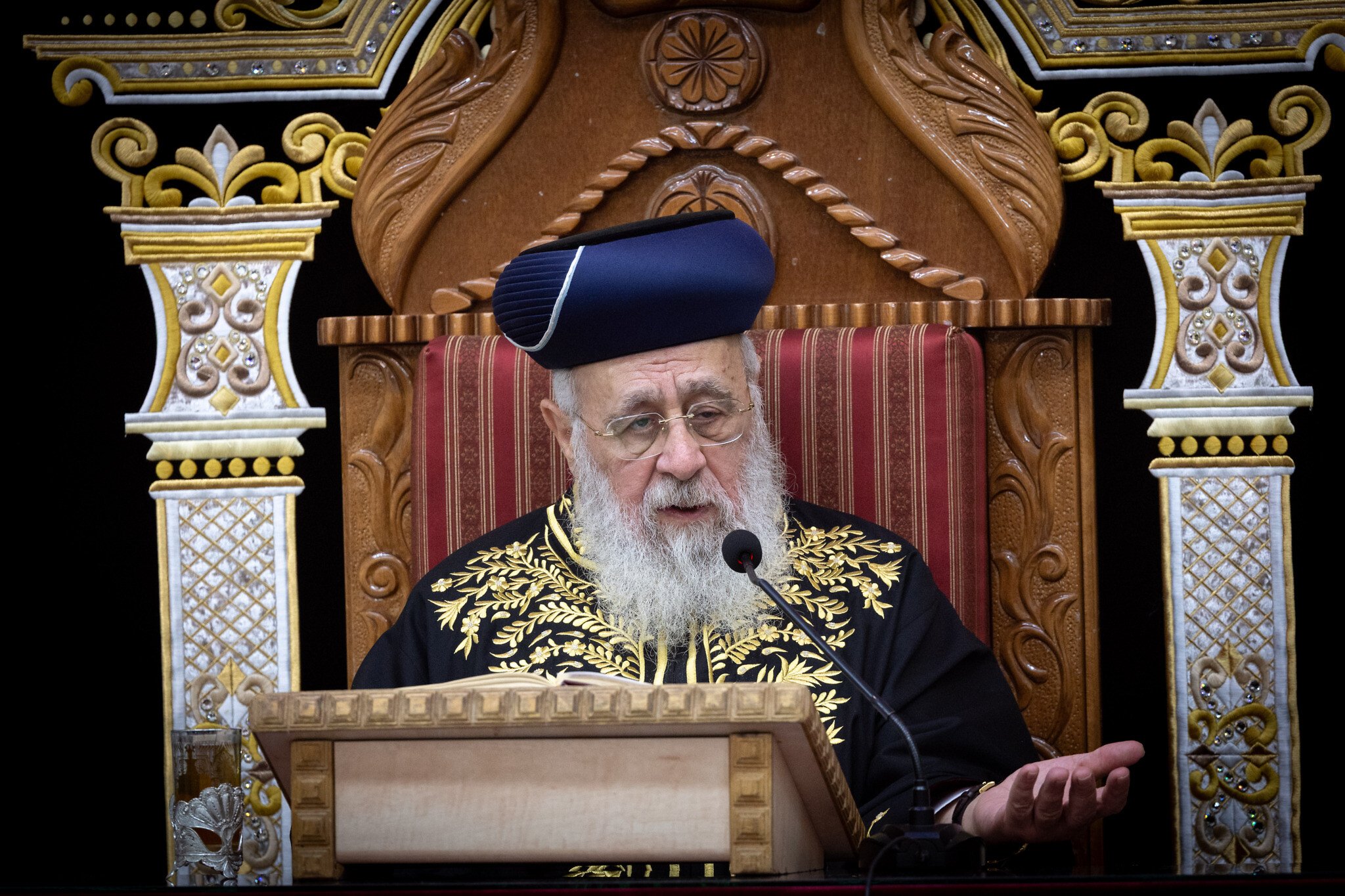
Shas spiritual leader Rabbi Yitzhak Yosef, during a weekly teaching at the Yazdim synagogue in Jerusalem, on June 7, 2025. (Chaim Goldberg/FLASH90)
Neither Cohen nor his children served in the army.
For weeks, rumors had circulated that Cohen would receive the support of Huldai, who did not officially endorse any candidate.
“If Rabbi Zevadia Cohen is elected, he will be an excellent [chief] rabbi,” Huldai said immediately after casting his ballot, according to Hebrew outlet Ynet.
“I want to say clearly, with or without a chief rabbi, Tel Aviv-Yafo is a free, liberal and democratic city, which respects the choices and lifestyles of all its residents — and that is how it will remain,” Huldai wrote in a statement after the election results were officially announced.
“I wish the elected rabbi success in his position, and I am sure that he will act with an understanding of the unique character of Tel Aviv-Yafo and the diverse public that lives there,” he added.
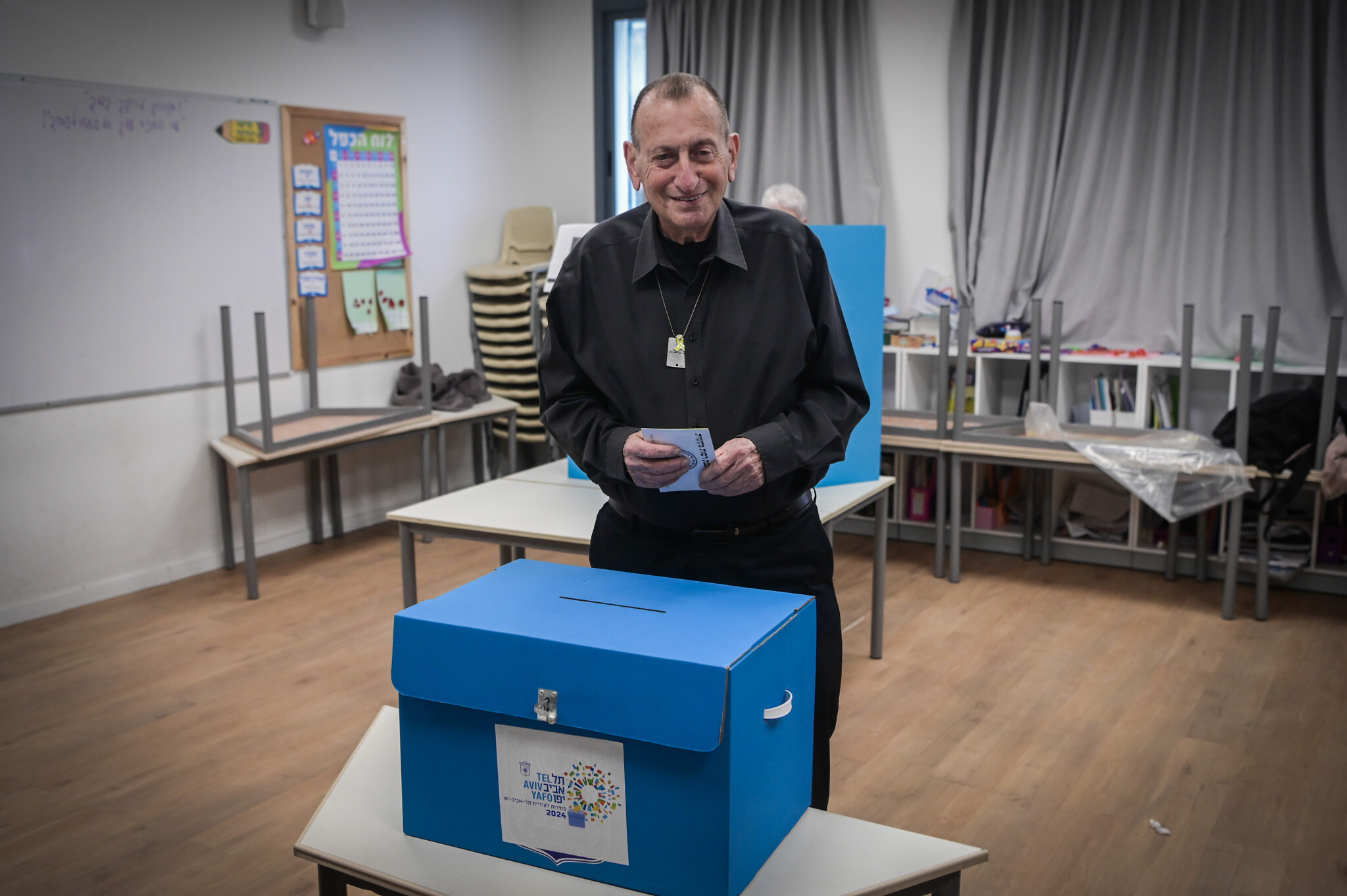
Tel Aviv Mayor Ron Huldai casts his ballot at a voting station on the morning of the Municipal Elections, in Tel Aviv, on February 27, 2024. (Avshalom Sassoni/Flash90)
There are currently dozens of municipalities across Israel without a rabbi, and under the current government, Shas has worked to extend its influence over the appointment process for candidates to the posts.
Last year, then-religious services Minister Michael Malkieli tried to promote a set of regulations that effectively gave his ministry control over the appointment of city rabbis in Israel, before he was forced by the opposition and religious freedom groups to partially roll it back.
A more moderate version of Malkieli’s regulation was eventually approved, increasing the number of members of the election committees (nominated ad hoc for each municipality) appointed by the Religious Services Ministry. Several candidates backed by Shas have already been appointed as municipal rabbis across the country over the past few months, including in secular cities such as Hod Hasharon and Kiryat Ono.
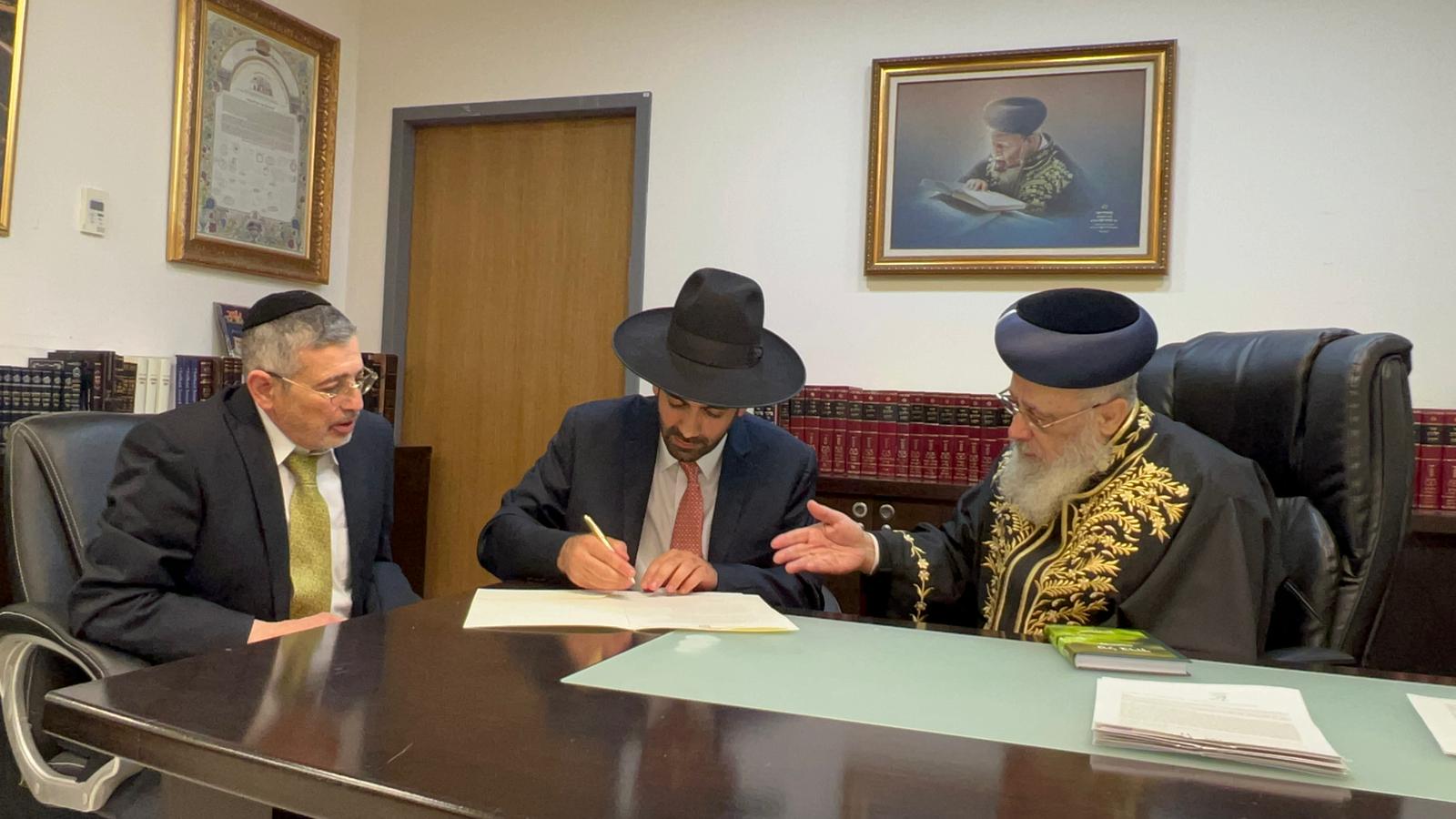
Incoming Religious Services Minister Michael Malkieli signs an order delaying the implementation of a kashrut reform as Sephardi Chief Rabbi Yitzhak Yosef, right, watches, in Malkieli’s office in the Knesset on December 29, 2022. (Courtesy: Michael Malkieli’s office)
Malkieli was present when the Tel Aviv election results were announced.
“The election results show that this is the will of the majority of the city’s residents, who desire tradition and Judaism,” Malkieli said, according to Ynet. “Thanks to the vigorous efforts of [Shas chairman] Rabbi Aryeh Deri, we will continue forward in strengthening and reinforcing religious services in Israel.”
City activists often denounce how difficult it is for mayors to go against the will of Shas, since the party controls key offices in the national government, such as the Interior Ministry, including the powerful national committee for planning and building, which is part of the ministry and has sweeping powers over city-building projects and other municipal issues.
“Huldai did not have a choice,” a source familiar with the issue told The Times of Israel.
You appreciate our wartime journalism

You clearly find our careful reporting of the Iran war valuable, at a time when facts are often distorted and news coverage often lacks context.
Your support is essential to continue our work. We want to continue delivering the professional journalism you value, even as the demands on our newsroom have grown dramatically during this ongoing conflict.
So today, please consider joining our reader support group, The Times of Israel Community. For as little as $6 a month you’ll become our partners while enjoying The Times of Israel AD-FREE, as well as accessing exclusive content available only to Times of Israel Community members.
Thank you,
David Horovitz, Founding Editor of The Times of Israel
Already a member? Sign in to stop seeing this