
A group of prominent Estonian technology entrepreneurs has urged the government to halt planned forestry reforms, warning that Estonia risks over-logging its forests, weakening nature protection and leaving society to carry the long-term costs.
A group of leading figures from Estonia’s technology sector has issued a sharply worded public letter criticising planned changes to the country’s forestry and nature conservation rules, arguing that the proposals risk placing short-term industrial interests above the long-term health of Estonia’s forests, economy and international reputation.
The letter, signed by entrepreneurs including Martin Villig, Kristjan Lepik, Kaarel Kotkas, Sten Tamkivi, Taavet Hinrikus, Markus Villig, Ahti Heinla, Tõnu Runnel, Kadri Tuisk, Triin Hertmann, Ragnar Sass and others, calls on the government to stop the legislative process and commission an independent long-term economic impact analysis.
The signatories say they do not oppose economic activity in forests, nor do they argue that forestry should end. Instead, they say Estonia’s forest policy must be transparent, science-based and economically rational – and that logging volumes should not exceed forest growth.
 Bolt founders Martin Villig (right) and Markus Villig (left) were among the Estonian technology entrepreneurs who signed the public letter criticising the planned forestry reforms. Photo by Bolt.
According to the letter, the signatories collectively manage more than 10,000 hectares of forest land, making them not merely outside observers of the forestry debate, but also forest owners.
“We are not speaking about forestry from the sidelines,� the letter states, “but also as owners who see long-term value primarily in sustainable management.�
Warning over declining forest stock
At the heart of the entrepreneurs’ concern is the claim that Estonia is cutting forests faster than they can recover.
The letter refers to the state’s own forecasts, which the signatories say show that even under so-called “even-use� logging, the growing stock of managed forest would not return to its 2015 level even by 2064. Under higher logging volumes, they warn, forest stock would decline even more rapidly.
By the 2040s and 2050s, the signatories argue, Estonia could reach a point where current logging levels can no longer be physically maintained.
“This means that we are not living off forest growth, but consuming reserves – in other words, living at the expense of the future,� the letter says.
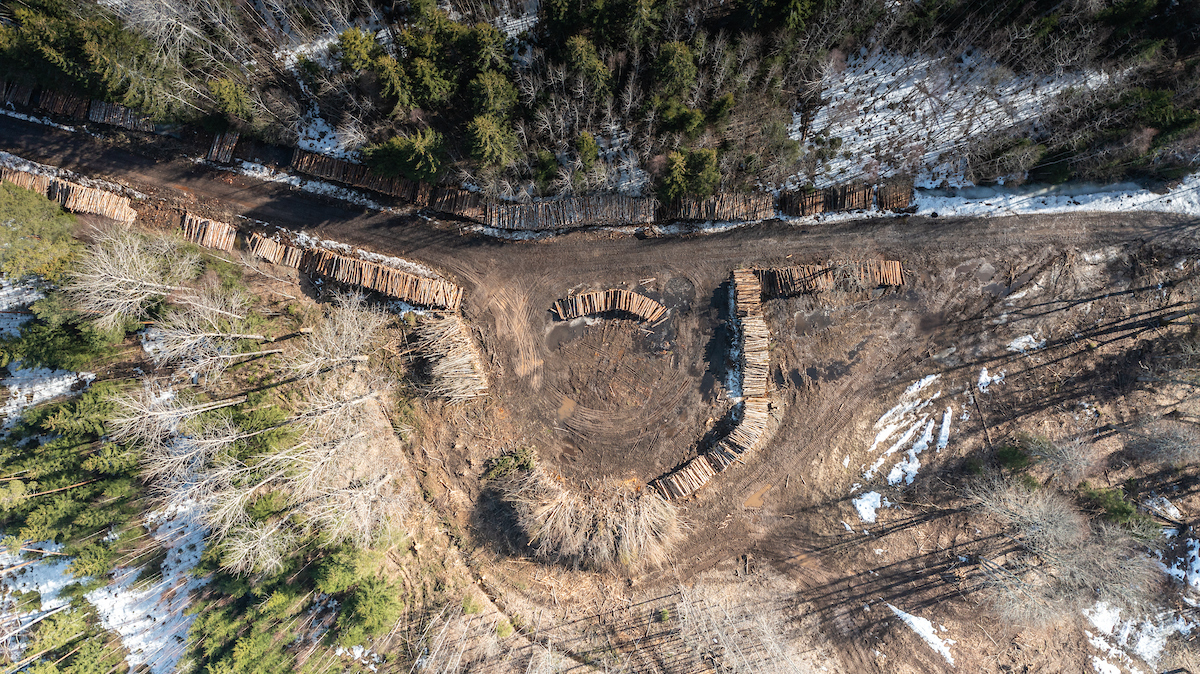
 Felled trees in an Estonian forest. In their public letter, tech entrepreneurs warn that Estonia is cutting forests faster than they can recover, “living at the expense of the future�. Photo by Ken Oja.
The entrepreneurs warn that such a policy would lead to the disappearance of old forests, the fragmentation of valuable habitats and the irreversible decline of forest stock and biodiversity. These impacts, they argue, would not be temporary but would be extremely difficult to reverse even if logging volumes were later reduced.
Nature protection “turned into an economic quota�
The public letter is especially critical of what the signatories see as a shift in the logic of nature conservation.
Until now, they argue, nature protection in Estonia has been based on natural values. Under the proposed changes, they say, it would in effect become tied to an economic quota.
The letter refers to the government’s stated aim of fixing the current share of forests under nature conservation restrictions at nearly 30 per cent. The entrepreneurs argue that this is problematic because forest biodiversity is already deteriorating and Estonia should be increasing, not limiting, protected areas.
 A harvesting machine in action in Estonia. Photo by Save Estonian Forests NGO.
They warn that if Estonia’s total forest area were to decline in future – for example, through land conversion or deforestation – and the share of commercial forest fell below 70 per cent, the state could be forced to remove some areas from protection in order to maintain the legal “balance�.
In the signatories’ view, this would make nature protection less permanent and less science-based.
“Protection would no longer be permanent or science-based, but would become political and temporary under pressure from the economy,� the letter says.
Profits abroad, costs at home
The entrepreneurs also raise concerns about the ownership structure of Estonia’s forestry and timber industry.
According to the letter, a significant share of the largest companies in the sector is owned by foreign capital. The signatories claim that around 70–75 per cent of the profits of the highest-turnover forestry companies go to foreign owners, while only 25–30 per cent remains in Estonia.
They argue that this creates an imbalance: the profits from intensive logging leave the country, while the environmental damage, depleted forests and possible costs linked to EU land-use and forestry climate rules remain for Estonian society to bear.
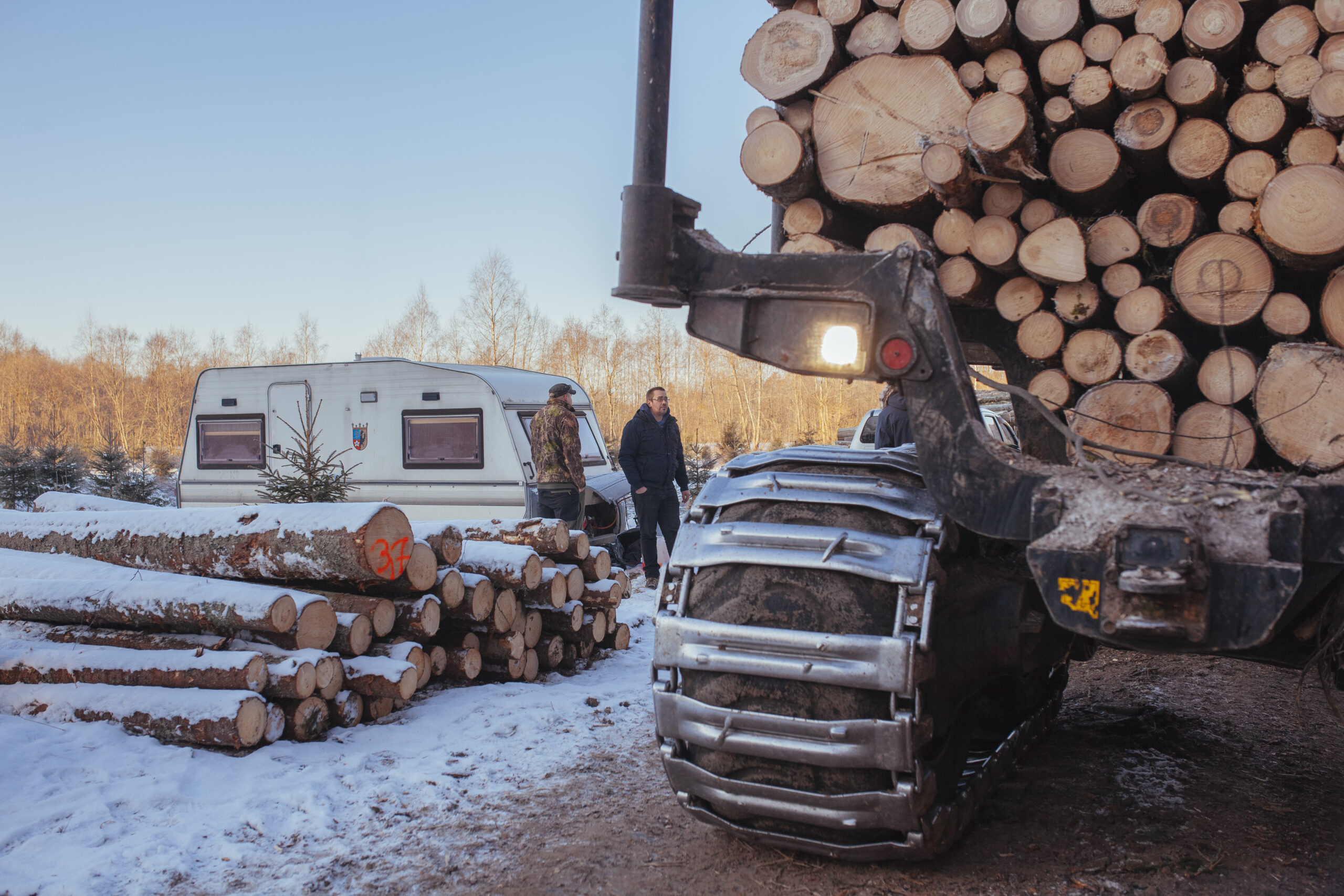
 Timber stacked at a logging site in Estonia. The entrepreneurs warn that much of the profit from intensive logging may flow to foreign owners, while depleted forests, environmental damage and possible EU climate-related costs remain for Estonian society to bear. Photo by Mati Kose.
The letter also points out that Estonia’s timber industry has grown partly on the basis of imported raw material, especially from Russia and Belarus. Since Russia’s full-scale invasion of Ukraine in 2022, that supply has largely disappeared, while Estonia’s industrial capacity has remained the same.
This, the signatories argue, creates additional pressure to increase logging in Estonian forests to replace raw material that was previously imported.
The entrepreneurs pose a broader economic question: should Estonia increase the use of nature beyond sustainable limits in order to match the existing capacity of industry, or should industry adapt to the actual limits of local resources?
A call for a different economic model
The letter places the forestry debate in a wider discussion about Estonia’s economic future.
The signatories argue that Estonia should reduce reliance on lower-added-value sectors with high environmental costs and instead develop knowledge-based, export-oriented industries with stronger domestic value chains.
In the forestry sector, they say, this means focusing on areas that add long-term value to timber – such as wooden houses, design furniture and construction materials – while reducing the one-off use of wood for pulp, pellets and fuel.
 A wooden modular house in Estonia. The entrepreneurs argue that the forestry sector should focus on higher-value, long-lasting uses of timber, such as wooden houses, design furniture and construction materials, rather than one-off uses such as pulp, pellets and fuel. Photo by Renee Altrov.
They acknowledge that replacing fossil fuels with renewable materials is necessary, but argue that this is environmentally sustainable only when wood is used in durable, long-lasting products – not in short-lived goods such as fast fashion or single-use packaging.
The letter also contrasts the proposed reforms with the 2023 election programmes of the Reform Party and Eesti 200 – both currently in government – which, according to the signatories, included commitments to sustainable forestry, biodiversity protection and ensuring that forest stock does not decline.
Entrepreneurs urge government to stop the process
The signatories are calling for the legislative proceedings on the forestry and nature conservation amendments to be halted and for an independent economic impact analysis to be commissioned.
They say such an analysis should assess the long-term impact of the proposed reforms on Estonia’s economy as a whole, including different logging and forest management scenarios, the distribution of economic value between Estonian and foreign owners, the costs of meeting EU climate obligations, the preservation of biodiversity and the effect on Estonia’s reputation in attracting tourists, talent and investment.
 A lynx in Estonia’s forests. Photo: Remo Savisaar.
The letter compares the risk of rushed forestry legislation to what it calls the recent flawed handling of the Gambling Act, arguing that mistakes in lawmaking can be costly and take years to repair.
But in the case of forests, the signatories warn, the stakes are far higher.
“A similar mistake with the Forestry Act would be many times more expensive,� they write, “because we are dealing with a natural resource that is vital to Estonian society – and one whose restoration takes not years, but generations.�
The letter concludes that the Estonian government and the climate ministry appear to be yielding to the economic interests of one sector at the expense of broader social values, environmental protection and the political mandates on which the coalition parties were elected.
For the entrepreneurs, the central issue is not whether forests should be used economically. It is whether Estonia wants to build its future on a model that consumes natural capital faster than it is renewed – or one that treats forests as a long-term national asset.
“Ultimately, this is a choice between short-term gain and long-term sustainability,� the letter says.