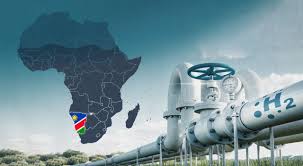
Namibia and the European Union are deepening economic and trade cooperation as both sides seek to strengthen green industrialization, secure critical raw materials, and expand value added industries.
The renewed push for cooperation was highlighted during the second Namibia European Union Business Forum held in Windhoek, where government officials, investors, and business leaders discussed ways to diversify Namibia’s economy and strengthen green supply chains.
The discussions focused heavily on renewable energy, lithium extraction, battery production, green hydrogen, manufacturing, and local industrial development.
The partnership reflects broader global changes as countries race to secure supplies of minerals and technologies needed for the clean energy transition.
Why is Namibia becoming increasingly important to the EU?
Namibia possesses large reserves of critical raw materials and renewable energy potential that are increasingly valuable to global markets.
The country has attracted growing international attention because of its:
Lithium reserves
Rare minerals
Renewable energy potential
Green hydrogen opportunities
Strategic location in southern Africa
The European Union is attempting to reduce dependence on concentrated supply chains for critical materials used in batteries, electric vehicles, renewable energy systems, and advanced technologies.
African countries such as Namibia are therefore becoming strategically important partners.
For Namibia, cooperation with the EU offers opportunities to attract investment, create jobs, improve infrastructure, and expand industrial capacity.
What happened at the Namibia EU Business Forum?
The second Namibia European Union Business Forum brought together policymakers, investors, development agencies, and private sector representatives to discuss economic cooperation and industrial development.
The forum focused on several major themes:
Green industrialization
Renewable energy
Critical raw materials
Trade expansion
Local manufacturing
Investment facilitation
Skills development
Value chain growth
One of the biggest announcements was a new 4 million euro project supporting lithium extraction and battery value chains.
Officials from both sides described the forum as an important platform for strengthening long term economic cooperation.
What is the new lithium project announced at the forum?
One of the forum’s key developments was the announcement of a 4 million euro project involving:
The European Union
The Geological Survey of Finland
Andrada’s Uis Mine in Namibia
The project aims to improve lithium extraction capabilities and strengthen Namibia’s role in global battery supply chains.
Lithium is a critical material used in rechargeable batteries powering:
Electric vehicles
Energy storage systems
Consumer electronics
Renewable energy infrastructure
The project seeks to make lithium extraction commercially viable while supporting Namibia’s participation in higher value industrial activities connected to battery production.
Why is lithium so important globally?
Lithium has become one of the world’s most strategically important minerals because of the global transition toward cleaner energy systems.
Demand for lithium has surged due to rapid growth in:
Electric vehicle production
Battery manufacturing
Renewable energy storage
Consumer electronics
Energy transition technologies
Countries and companies are competing intensely to secure stable lithium supplies because batteries are central to future transportation and energy systems.
This has transformed lithium into a key geopolitical and economic resource.
What are green value chains?
Green value chains refer to industrial and economic systems connected to environmentally sustainable products and technologies.
These include activities linked to:
Renewable energy
Electric vehicles
Battery production
Hydrogen energy
Sustainable manufacturing
Recycling
Clean technology
Instead of exporting only raw materials, countries seek to participate in multiple stages of production and processing.
For example, rather than simply exporting raw lithium, a country may seek involvement in:
Mineral processing
Battery component manufacturing
Battery assembly
Technology development
Industrial services
This allows countries to capture greater economic value and create more jobs domestically.
Why does Namibia want to move beyond raw commodity exports?
Many African economies have historically relied heavily on exporting raw materials with limited local processing.
This often means much of the economic value is captured elsewhere.
Namibia is attempting to change that model by developing stronger domestic industries and value added production.
Officials say the country wants to build local value chains in sectors including:
Critical minerals
Agribusiness
Manufacturing
Renewable energy
Green hydrogen
Industrial processing
The goal is to create more sustainable economic growth, generate skilled employment, and reduce dependence on volatile commodity markets.
What is green industrialization?
Green industrialization refers to industrial growth based on environmentally sustainable technologies and low carbon development.
This includes industries related to:
Renewable energy
Electric mobility
Hydrogen fuel
Battery technologies
Clean manufacturing
Resource efficiency
Sustainable mining
For Namibia, green industrialization offers a chance to develop modern industries while benefiting from global demand for clean energy technologies.
The European Union strongly supports green industrialization because it aligns with its climate and economic strategies.
What role does green hydrogen play in Namibia’s plans?
Namibia has emerged as one of Africa’s most promising potential producers of green hydrogen.
Green hydrogen is produced using renewable electricity, typically from solar or wind energy, to split water molecules into hydrogen and oxygen.
Unlike conventional hydrogen production, green hydrogen produces little or no carbon emissions.
Namibia’s advantages include:
Strong solar resources
Large open land areas
Wind energy potential
Access to export routes
The country hopes green hydrogen projects can attract billions of dollars in investment and help establish new industrial sectors.
The EU views hydrogen as a major future energy source and is seeking reliable international suppliers.
Why is the EU diversifying supply chains?
The European Union has become increasingly concerned about dependence on concentrated global supply chains for critical raw materials and industrial components.
Recent geopolitical tensions, trade disruptions, and growing global competition have highlighted vulnerabilities in supply networks.
The EU is particularly focused on securing supplies for:
Battery production
Electric vehicles
Renewable energy systems
Semiconductors
Industrial technologies
Hydrogen infrastructure
Partnerships with countries such as Namibia are therefore becoming strategically important.
The EU hopes diversified supply chains will improve economic security and industrial resilience.
What is the significance of the Namibia EU Strategic Partnership roadmap?
The renewed Namibia EU Strategic Partnership roadmap has been extended for the 2026 to 2030 period.
The roadmap is expected to strengthen cooperation in areas such as:
Renewable hydrogen
Critical raw materials
Investment promotion
Skills development
Industrial value addition
Trade facilitation
Green industrialization
Infrastructure cooperation
Officials say the roadmap will provide a long term framework for economic collaboration between Namibia and the European Union.
What is the SADC EU Economic Partnership Agreement?
The Southern African Development Community European Union Economic Partnership Agreement is a trade framework signed in 2016.
The agreement aims to improve trade relations between the EU and southern African countries, including Namibia.
According to Namibian officials, the agreement has helped:
Expand exports
Improve market access
Increase trade cooperation
Strengthen business confidence
Encourage investment
European officials say the agreement has opened opportunities for Namibian businesses to participate more actively in European markets.
How could ordinary Namibians benefit from these partnerships?
Supporters of the partnership argue that stronger economic cooperation could bring several benefits to Namibia, including:
Job creation
Skills training
Industrial growth
Infrastructure investment
Technology transfer
Export expansion
Economic diversification
Renewable energy development
If value added industries expand domestically, more economic activity could remain inside the country instead of depending solely on raw material exports.
What challenges could Namibia face?
Despite strong opportunities, Namibia also faces important challenges.
These include:
Infrastructure limitations
Skills shortages
Financing needs
Industrial capacity constraints
Global market volatility
Environmental concerns
Competition from larger producers
Balancing foreign investment and national interests
Managing sustainable mining practices
Successfully moving up global value chains requires significant long term investment and policy coordination.
Are environmental concerns part of the discussion?
Yes. Green industrialization and mineral extraction raise important environmental questions.
Although critical minerals are essential for renewable technologies, mining operations can also create environmental risks if not properly managed.
These may include:
Water usage concerns
Land degradation
Pollution risks
Waste management issues
Community impacts
Both Namibia and the EU emphasize sustainability and responsible resource management as part of their cooperation.
Why are battery supply chains becoming strategically important?
Battery technologies are central to the global transition toward cleaner energy systems.
Electric vehicles, renewable energy storage, and portable electronics all depend heavily on advanced batteries.
Countries and companies are now competing to secure access to:
Lithium
Cobalt
Nickel
Graphite
Rare earth minerals
This competition has made battery supply chains a major geopolitical and economic issue.
Nations with valuable mineral resources are increasingly important in the global energy transition.
Could Namibia become a major player in global green industries?
Many analysts believe Namibia has strong potential because of its natural resources and renewable energy advantages.
The country could emerge as an important supplier of:
Lithium
Green hydrogen
Renewable energy
Critical minerals
Battery related materials
However, long term success will depend on whether Namibia can build domestic industrial capacity rather than remaining solely a raw materials exporter.
This is why local value addition has become such a major focus.
How does this fit into broader Africa EU relations?
The Namibia EU partnership reflects wider efforts to reshape economic ties between Europe and Africa.
Historically, many African economies exported raw materials while importing finished industrial goods.
Today, African governments increasingly seek partnerships that support:
Industrialization
Technology transfer
Infrastructure development
Skills training
Value added manufacturing
Sustainable development
The EU also wants stronger partnerships as it competes globally for resources, markets, and political influence.
What industries are expected to grow in Namibia?
Several sectors are attracting growing attention from investors and policymakers.
These include:
Renewable energy
Green hydrogen
Mining
Battery materials
Agribusiness
Manufacturing
Logistics
Industrial processing
Clean technology
Officials hope these industries can help modernize the economy and create long term growth opportunities.
What does this mean for the future of global trade?
The Namibia EU partnership highlights how global trade is increasingly being reshaped by the green energy transition.
Countries rich in critical minerals and renewable energy resources are becoming strategically important.
At the same time, industrial powers are trying to secure resilient supply chains for future technologies.
This could lead to:
New investment patterns
Stronger Africa Europe cooperation
Greater focus on sustainable industries
Expanded green manufacturing
Intensified global competition for resources
Growth in renewable energy trade
The clean energy transition is therefore influencing not only climate policy but also geopolitics, industrial strategy, and international trade.
Bottom line
Namibia and the European Union are seeking to deepen cooperation in green industrialization, critical raw materials, renewable energy, and value added manufacturing as both sides pursue economic diversification and stronger supply chains.
The partnership reflects broader global changes driven by the clean energy transition and growing competition for strategic resources such as lithium.
For Namibia, the cooperation offers opportunities to expand industrial capacity, create jobs, and move beyond dependence on raw commodity exports.
For the European Union, the partnership supports efforts to diversify supply chains and secure access to materials essential for future green technologies.