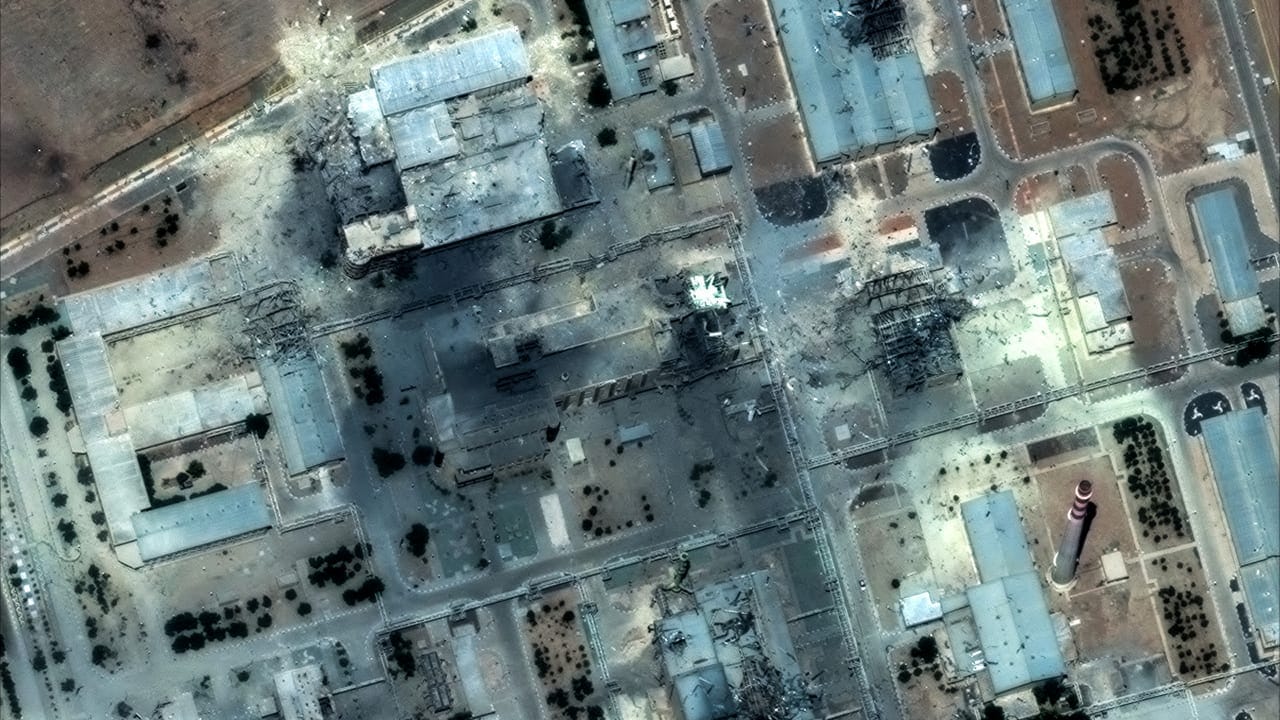
The US is lobbying other countries on the UN nuclear watchdog’s Board of Governors to back a draft resolution ordering Iran to inform the agency of the fate of its nuclear sites, which Israel and the US bombed in June 2025 and again in early 2026, specifically regarding the 60% highly enriched uranium that was stored there.
Top Israeli and US officials have told The Jerusalem Post that they have their eyes fixed directly on Isfahan, Fordow, and Natanz, where huge mounds of rubble have covered the uranium and left Iran unable to access it to date.
The text of the US draft resolution seen by Reuters on Sunday and circulated ahead of this week’s quarterly meeting of the 35-nation board could either help pressure Iran into a new nuclear deal with the Trump administration after two months of a deadlock in negotiations, or lead to the Islamic regime digging in its heels since it bristles at resolutions against it at the IAEA.
One trick that Iran cannot try this time, which it had done in the past after some past condemnations, would be to increase its uranium enrichment, since, after Israeli and American attacks, it currently has no functioning centrifuges with which to enrich uranium.
Last week, IAEA Director-General Rafael Grossi continued to echo a message he has said for years, and more intensely since June 2025, that Iran must restore his inspectors’ access to the nuclear sites.
 International Atomic Energy Agency (IAEA) logo and Iranian flag is seen in this illustration taken June 16, 2025. (credit: REUTERS/DADO RUVIC/ILLUSTRATION/FILE PHOTO)
In fact, the immediate precursor to Jerusalem and Washington attacking Tehran in June 2025 was an extended period of years if Iran ignoring its IAEA obligations and blinding the inspectors’ to its nuclear progress, leading to the IAEA Board issuing a public condemnation.
Also, in September 2025, the JCPOA 2015 Iran nuclear deal parties declared Iran to be in material violation of the nuclear deal, leading to the snapping back of UN global sanctions against it.
Iran hoping for windfall from Strait of Hormuz closure
Despite all of these events, Tehran has resisted making a new deal with the Trump administration to date, hoping it can emerge winning a financial windfall from its move to close the Strait of Hormuz during the recent US-Israel-Iran war.
Iran has even bizarrely criticized the IAEA for holding it to account for years of nuclear violations, accusing Grossi of being a political tool for the West, instead of recognizing the years that it ignored his pleas to cut a new nuclear deal prior to the June 2025 attacks.
While Iran is correct that it would be challenging for the IAEA to reach the 60% enriched uranium covered in the rubble from its bombed nuclear facilities, both the IAEA and the US have the capacity to do so if given sufficient time.
Rather, most nuclear analysts have said Iran has avoided IAEA inspectors to either keep the world blind to any new nuclear progress it might make, to withhold how badly its program has been hit, so it can continue to inspire nuclear fear worldwide as a bargaining chip to receive nuclear sanctions relief, or a combination of the two.
Iran unable to deny nuclear program after Mossad unveiling
Iran’s nuclear program violations were exposed in 2018 when the Mossad seized original copies of its secret nuclear archives, unveiling them to the world.
This made it difficult for Iran to continue to deny the existence of its nuclear weapons program and essentially forced the hand of the IAEA to demand more complete access and answers from Iran regarding the nuclear program, which the regime has refused continually.