
This trip was made possible by Visit Greenland and Icelandair.
One of the first things visitors notice in Greenland is how difficult it is to get around—and not in a way that a highway could solve. There are no roads between towns. Travel is by boat or plane, and weather—not itinerary—determines where and how you go.
Yet the country is becoming easier to visit. In April 2026, Qaqortoq, the largest town in South Greenland, opened its first airport, with daily service to Nuuk and four weekly Icelandair flights to Keflavik, Iceland, in the summer.
Read More on Travel
Tourism has been growing fast since 2019 and, in 2024, accounted for 4.9 percent of Greenland’s GDP, supporting about 1,800 jobs. The question is: Who benefits from this growth?
The national government passed a tourism law in 2024 to help keep the industry local and ensure Greenlanders have a larger role in telling their own stories. Under the law, tourism operators must meet local ownership and control requirements, including having at least two-thirds of capital and voting rights held by people who live in Greenland and are fully tax-liable there. Existing operators have until January 1, 2027, to comply, a change aimed at a sector with a history of foreign ownership, including Danish and other European operators.

Nicknamed “Arctic Patagonia,” Tasermiut Fjord in South Greenland is an imposing, Yosemite-like mountainscape of granite walls and fog-covered peaks. Standing at the bottom feels like being in a vast ceramic bowl, with hues of blue, green and gray in all directions.
Henrik Hansen of NTS Boat Charter sails us through turbulent waves toward the glacier at the fjord’s head, barely glancing at his GPS. He points out a summer house his family built on a western bank, where Arctic char abounds in warm weather, and a sheep farm hidden in the nearby valley, Tasiusaq, reciting names of the families who live there and friends who have moved on.

“You cannot own land in Greenland,” Henrik explains. Homes, sheep farms, even prospective mines all sit on collectively owned land. This is more than a law; it is a reflection of Greenlanders’ connection to place and how it shapes life and tourism.
Over a bowl of lamb stew at Café Thorhildur, Naasunnguaq Karen Lund, co-owner of Riding Greenland Hostel in Qassiarsuk, says instead of trying to recreate a luxury experience, hospitality is built around everyday life here: farm stays.
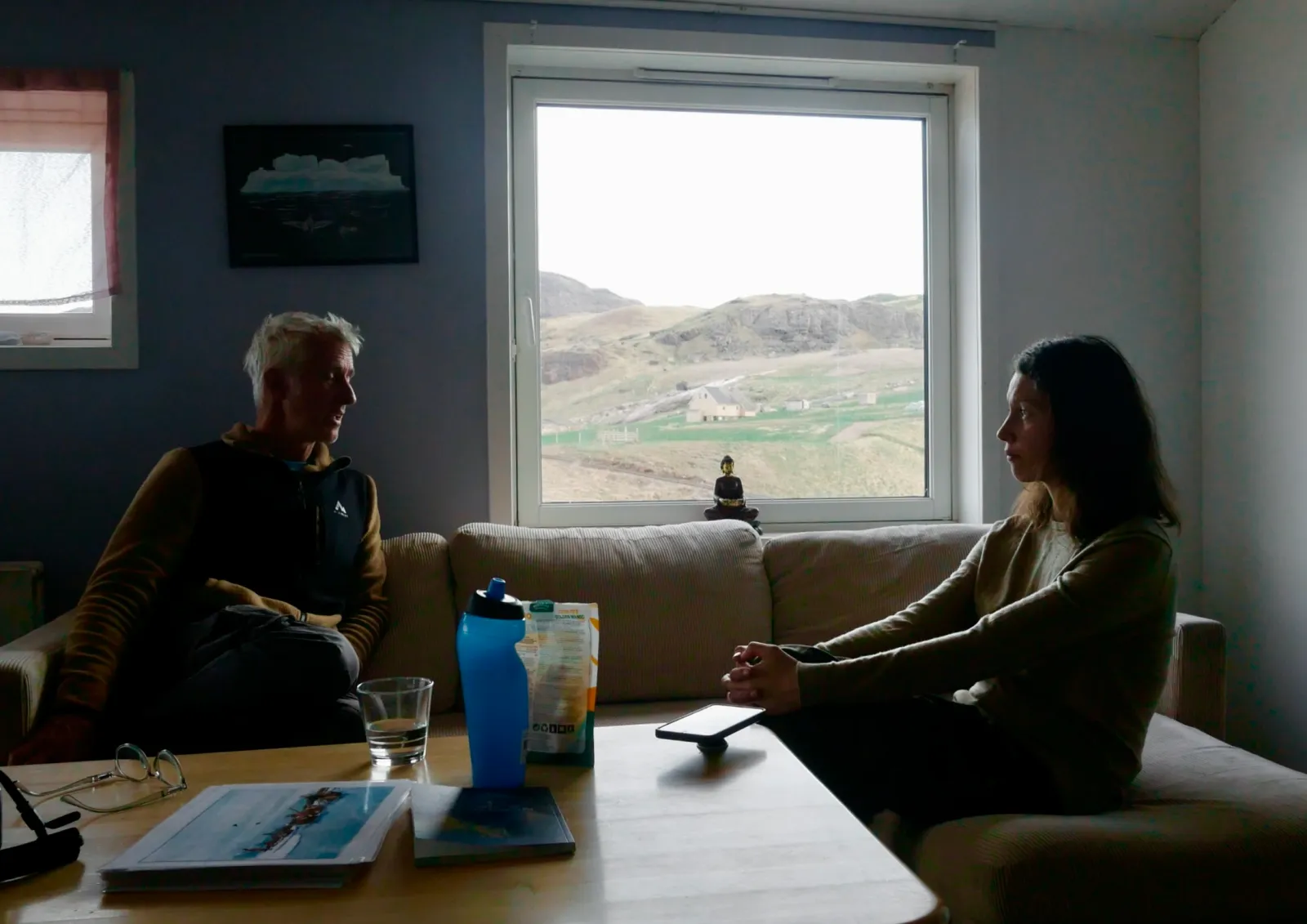
“We are down-to-earth, ordinary people who do their best for guests to experience South Greenland [the way we think is coolest].”
Guests sleep on working farms, joining communal meals with host families based mostly around lamb and freshly caught fish, and rather than competing for customers, the hostels in Qassiarsuk work in tandem, passing guests from one to the next as they continue their journey.

Alongside weeklong horseback excursions, Riding Greenland now offers day tours on e-bikes. Naasunnguaq’s husband Piitaq leads us up the 7-kilometer dirt road to Tasiusaq for a hilltop view of the inner ice cap. The red stone gravel slips beneath our gummy tires while the long evening sun beats down on us. Icebergs idle in the bay.
The next morning, Salik Parbst Frederiksen, co-owner of Local Greenland, sails us along Tunulliarfik Fjord toward Qinngua, where his family has been raising sheep for generations.

We offload onto a grassy knoll where a small forest grows. “These are some of the only trees in all of Greenland,” Salik grins, adding that this region inspired Erik the Red to call the country Greenland centuries ago.
In a tiny red cabin jutting out of endless green, Salik prepares locally grown potatoes, dried seal, whale blubber, prawns, cod liver with crowberries and pickled angelica for lunch. The meal captures the philosophy of Local Greenland, which hires only local captains, chefs and guides, making Indigenous expertise and ingredients the foundation for designing guest experiences in Greenland.

Greater access to South Greenland may connect more tourists to the striking landscape and remoteness, but what is clear about the future of tourism here is that the people who call it home make the journey worthwhile.
