
There is a patch of sea off Norway’s west coast that captains treat like a closed road.
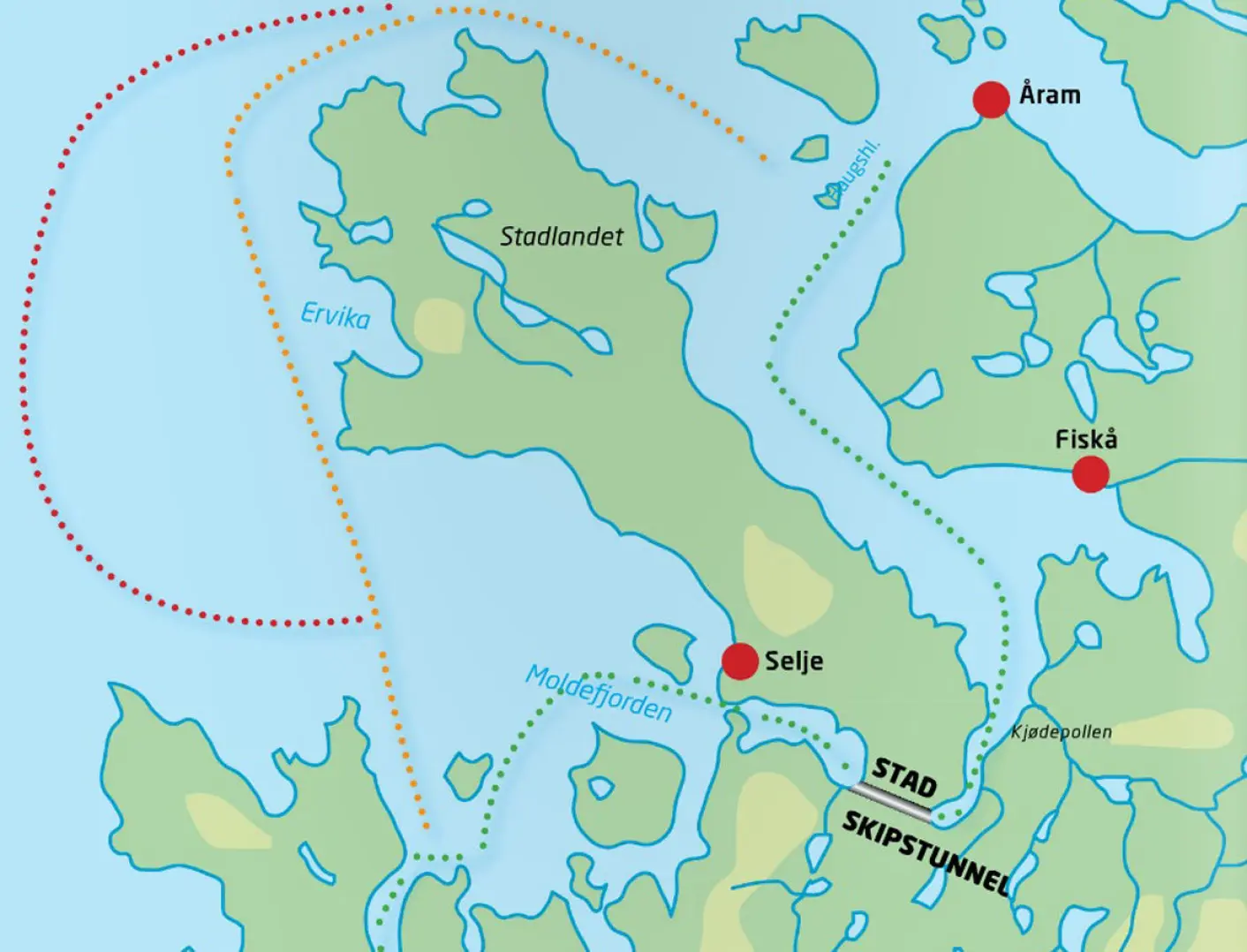
Stadhavet, the open water beyond the Stad peninsula, gets hit by storms on around 100 days a year, and swells there can build to 30 metres, arriving from several directions at once, as documented by New Atlas. Vessels carrying live salmon, feed and fresh catch drop anchor and wait for the sea to let them past.
Sometimes that wait runs into days.

Norway has now committed to a workaround nobody has attempted at this scale. On 17 August the Norwegian Coastal Administration, known as Kystverket, signed the construction contract with the Norwegian contractor AF Gruppen for the Stad Ship Tunnel, a 1,700 metre passage blasted through the peninsula so ships can pass beneath the weather instead of fighting it. Director General Einar Vik Arset called it a historic day for a project argued over across several decades. Tunnel work starts early in 2027 and should run about five years.
Why ships stop at Stad
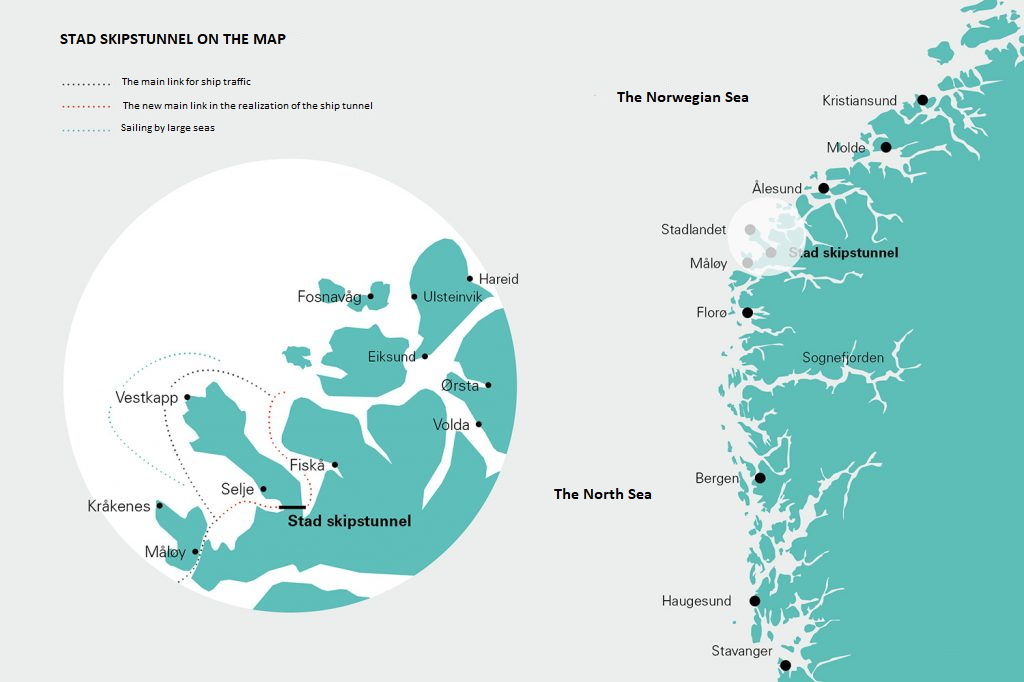
Unusually for that coastline, the peninsula has no outlying islands to break the swell. Currents make it worse, because this is roughly where the North Sea meets the Norwegian Sea. Engineering and Technology, the trade magazine published by the IET, reports that 33 people have died in maritime accidents in the area since the Second World War.
The commercial argument is less dramatic and more persuasive. Tore O. Sandvik, county mayor in Trøndelag, put it plainly in comments carried by New Atlas: salmon held up at Stad in bad weather turns up on the continent as fermented fish rather than sushi.
How big the hole actually is

Kystverket’s published figures put the tunnel at 50 metres from floor to ceiling and 36 metres wide, with 33 metres of clearance above the waterline and a cross-section of 1,661 square metres. AF Gruppen, which developed the design with consultant Norconsult, describes that opening as about 20 times the size of a road tunnel’s.

Getting there means taking out about three million cubic metres of solid rock, which swells to 5.4 million cubic metres once blasted, the equivalent of roughly 750,000 lorry loads. Crews will excavate the upper portion the way they would a road tunnel, then blast downwards layer by layer, a method called bench blasting. Plugs of unexcavated rock stay in place at both ends throughout, which keeps the cavern dry below sea level while the work goes on.
Traffic lights for ships
A passage this tight needs choreography.
Kystverket’s project FAQ sets out red and white signal lights at the portals and time slots issued by the vessel traffic service, much the way controllers space aircraft. Around 400 metres will separate one ship from the next, which works out to about five an hour.

Clearance is snug. The widest vessels allowed through, at 21.5 metres, get 2.5 metres of water on either side, a margin tested in a model tank and a simulator before anyone signed off on it. Speed inside will probably sit near five knots for most traffic and eight for faster boats, putting transit at around ten minutes. No toll will apply, though vessels over 70 metres long need a pilot aboard unless they hold a pilotage exemption certificate.
The price kept moving
Parliament approved the tunnel in 2021 within a budget of 4.09 billion kroner. By late 2025 the estimate had climbed far enough that the government proposed halting the project, and for several months it looked finished. A revised national budget revived it, and on 19 June the Storting approved a fresh cost ceiling of 8.588 billion kroner including tax. Engineering News-Record puts the full project cost near 870 million US dollars. AF Gruppen values its own share of that at around 560 million.

Government estimates suggest the tunnel could cut fuel burn and emissions by as much as 60 per cent on affected voyages. That figure comes from the project’s own business case, and no published study has tested it.
What the first charge starts
Boats have been going through hills for a long time. Canal tunnels date to 1679 and the Malpas Tunnel on France’s Canal du Midi, but every one since has served sheltered inland water and canal barges. Nothing at Stad’s scale exists for seagoing traffic, so there is no comparable build to copy and no benchmark to argue costs against.
Collaboration meetings between Kystverket and AF Gruppen began the day after signing. Detailed design, site offices, road upgrades and temporary access routes fill the months before the first charge goes off in the new year.
Whether the tunnel earns its 8.588 billion kroner will not be settled by the engineering, which Norwegian contractors have had decades of practice at. It gets settled by fish trucks, ferry timetables and skippers who currently plan their working week around a forecast.