
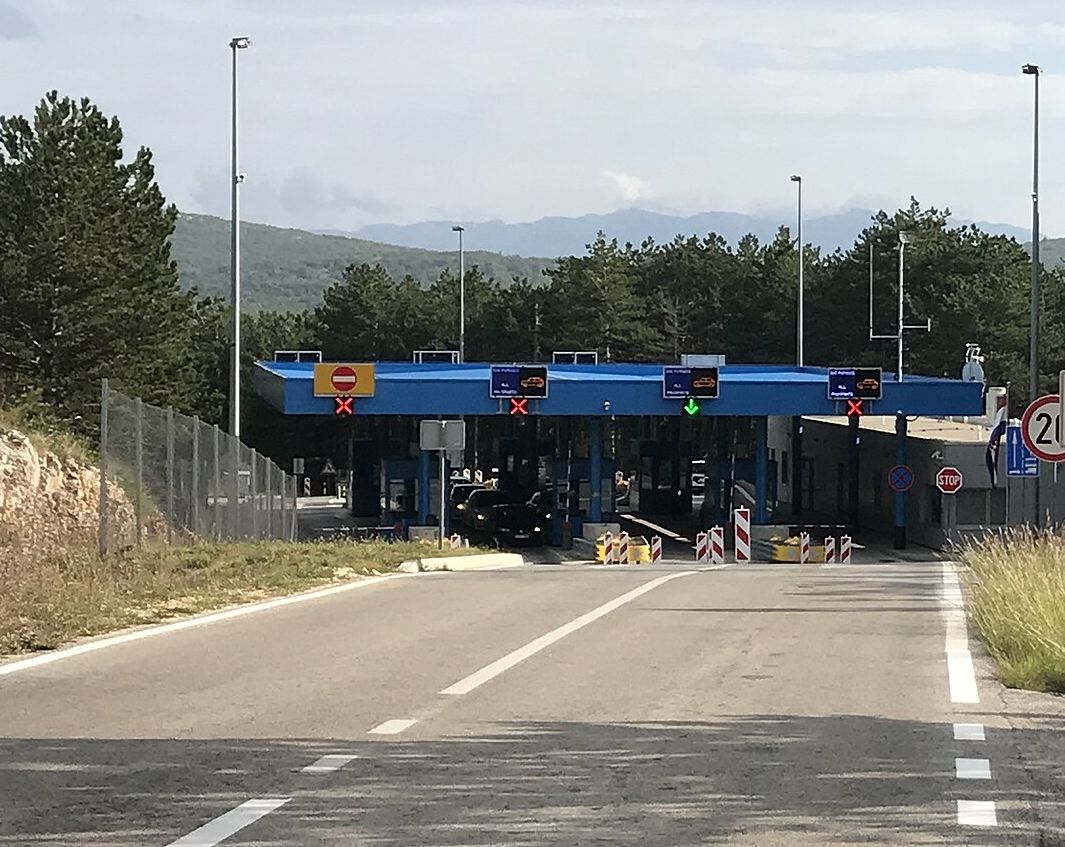
Illustration (Photo: Petr Vilgus/CC BY-SA 4.0)
SARAJEVO, 23 August 2026 (Hina) – The border crossing between Croatia and Bosnia and Herzegovina at Gradiška has become a new symbol of the administrative disputes hampering the functioning of Bosnia and Herzegovina, after part of the old bridge collapsed and a new, modern crossing was opened on a temporary basis.
The new crossing was initially authorised for three months, until 19 August, following the collapse in May of part of the old bridge over the Sava River. The damage disrupted traffic at one of the busiest international border crossings between Croatia and Bosnia and Herzegovina, used daily by thousands of vehicles and passengers.
Built to modern standards and in line with Schengen requirements, the new crossing was opened as an alternative. However, its long-term legal status remains unresolved, meaning traffic continues to operate under a temporary arrangement.
The issue has also exposed wider disagreements between Bosnia and Herzegovina’s two entities, the Federation of Bosnia and Herzegovina and Republika Srpska.
Bosnia and Herzegovina’s Deputy Security Minister Ivica Bošnjak described the situation as “very irresponsible”, telling Banja Luka-based Nezavisne novine that on 19 August it was still unclear until the evening whether traffic would be allowed to continue through the new crossing after the temporary authorisation expired.
Before the deadline, the Council of Ministers considered a proposal to formally close the old crossing, which would have allowed the new one to be activated automatically. The proposal was supported by ministers from HDZ BiH, while Bosniak and Serb ministers opposed it for different reasons.
As no decision was reached, the Council of Ministers called on the relevant authorities to take action within their legal powers to prevent negative consequences for passengers and the economy and ensure the uninterrupted flow of international traffic between Bosnia and Herzegovina and Croatia.
The Indirect Taxation Authority (ITA) subsequently announced that the new crossing would remain open. It said the legal basis for its continued operation could be found in an international agreement with Croatia that defines the crossing’s status.
However, while its status may be clear at the international level, questions remain within Bosnia and Herzegovina itself.
Zijad Krnjić, a member of the ITA Governing Board, said he would continue to condition his approval of changes to the regulations governing customs offices on the repayment of debts owed by Republika Srpska to the Federation of Bosnia and Herzegovina.
Krnjić said the debt, arising from VAT-related calculations, exceeds €60 million.
“I support opening the new modern border crossing and adopting the regulations, but we first have to make decisions that are in accordance with the law,” he told public broadcaster BHT 1.
For now, customs officers from the old crossing continue to work at the new facility, where they have been temporarily relocated. This arrangement is expected to remain in place until the old bridge over the Sava is repaired.
That, however, presents another legal complication.
The old bridge is closed under entity-level legislation applicable in Republika Srpska, but its status is not the same under legislation at state level – another issue that the Council of Ministers attempted to address this week.
“Under the Border Control Act, it is open. But it is closed under a decision of the Ministry of Transport in Republika Srpska,” Bošnjak said.
He argued that the confusion was partly a result of the large number of regulations in force in Bosnia and Herzegovina, which can be interpreted differently by different authorities.
Asked which interpretation ultimately prevails, even the deputy security minister acknowledged the uncertainty.
“Five lawyers, six opinions,” he concluded.