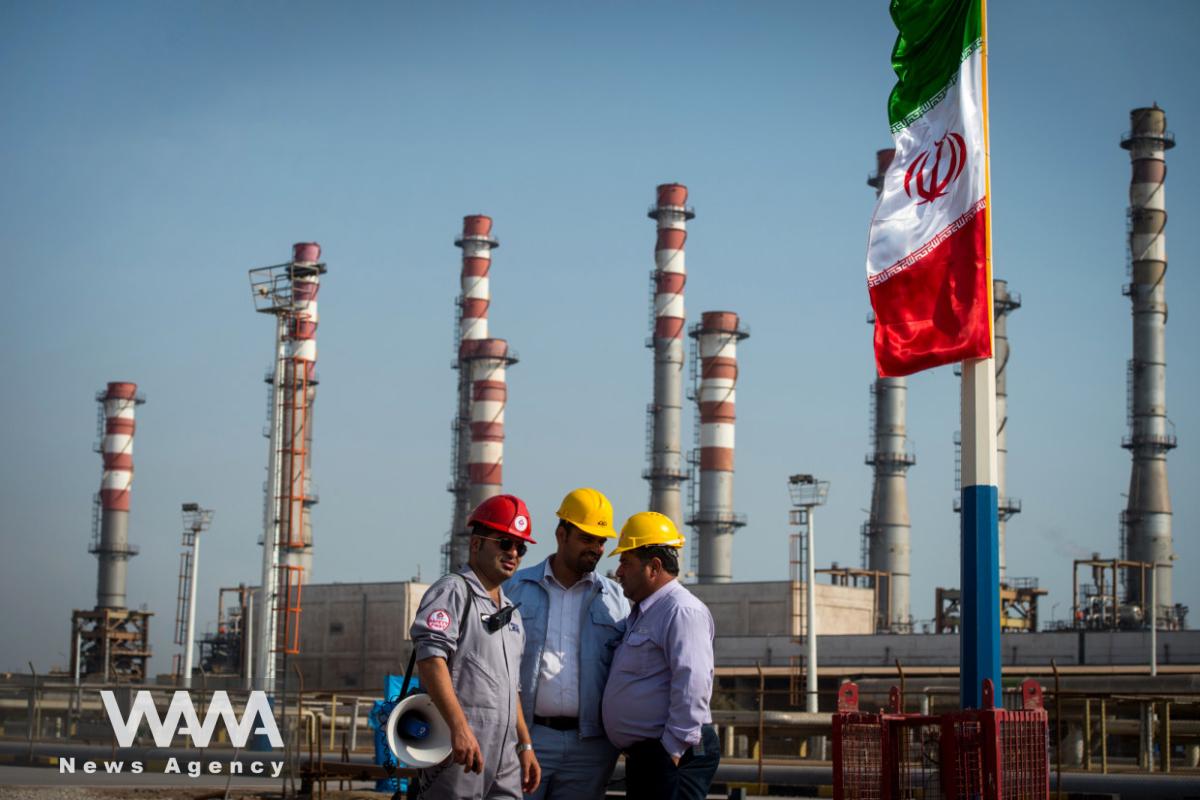
WANA (Aug 29) – Despite intensifying pressures and claims by U.S. military and economic officials regarding the complete blockage of Iranian export routes, new data from Iran’s Ministry of Petroleum and international tracking intelligence reveal that Iran retains a strong foothold in the global oil market.
By activating new export paths and strategic countermeasures, Tehran has successfully neutralized physical constraints, securing sufficient oil reserves to fulfill sales and fully fund the country’s upcoming Budget of the Iranian Year 1405 (2026 – 2027).
The financial performance of the first four months of the current Iranian year validates this upward trajectory, with projected oil revenues in the state budget achieving a 99% realization rate. In line with this, the Ministry of Petroleum has already delivered $7.5 billion in oil-derived foreign currency to the Central Bank.
According to financial consumption patterns, this liquidity completely covers all government foreign exchange expenditures and obligations from July through January of this year.
On the operational and logistical front, while the U.S. Central Command (CENTCOM) claims extensive monitoring and escorting of tankers in the Persian Gulf, assessments by international analytical firms indicate that Iran’s export architecture has shifted toward ship-to-ship (STS) transfer zones in the Sea of Oman and adjacent regional waters.
The Minister of Petroleum previously confirmed that Iran has moved its cargo delivery processes outside territorial waters to remote maritime locations, completely bypassing the physical blockade of domestic ports.
Energy research institutes report that the country’s oil and LPG export flows remain highly resilient through parallel and unofficial corridors using dark-fleet tactics, rendering Western military tracking data ineffective at stopping this capillary network.