(Bloomberg) — Andy Burnham wants to row back the era of private companies running public services. Britain’s asylum system presents a difficult target.
Most Read from Bloomberg
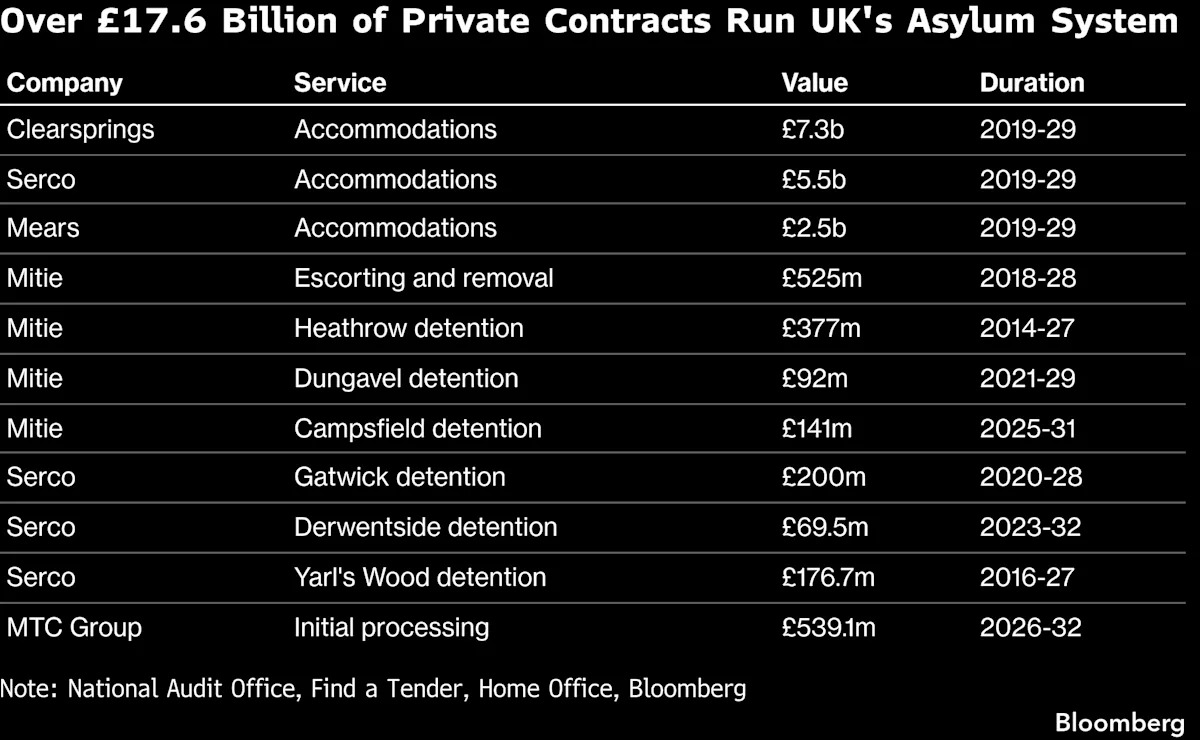
From processing new asylum seekers to deporting failed applicants, firms including MTC Group, Clearsprings Ready Homes and Mitie Group play a dominant role in a system that cost an estimated £4.9 billion ($6.6 billion) in 2024-25. The majority is spent on accommodation and support for people while their bids to remain in the UK are being assessed.
Critics say housing contracts have wasted public money and placed an unfair burden on poorer communities, prompting many to call for local councils to be given responsibility for sourcing homes. However, while Burnham has signaled he supports the idea, a quick transition appears unlikely.
The new prime minister faces major obstacles. Local authority budgets are under pressure and affordable housing is in short supply. Moreover, councils now controlled by the anti-immigration Reform UK party are resistant to taking in any more asylum seekers at all.
“Replacing it entirely is difficult,” said Nuni Jorgensen, a researcher at the University of Oxford’s Migration Observatory. “Councils and regional bodies would need time, funding, staff and expertise to take over responsibilities currently handled by large providers and their networks of landlords.”
The pressure for change is part of a broader movement in the governing Labour Party to curb outsourcing after a series of scandals spanning security issues at the London 2012 Olympics, the 2018 collapse of Carillion Plc and health contracts awarded during the pandemic. Unions say workers would get a better deal if directly employed by the state.
Burnham wants to bring more of the £400 billion the government spends on procurement each year back in-house. And his ambitions go beyond outsourcing, with the former Greater Manchester mayor also pledging to extend public control to areas such as housing, energy and water.
In the asylum system, criticism has been heavily focused on the use of hotels to house asylum seekers, a flashpoint for community tensions in recent years.
With tens of thousands of people continuing to make the journey across the English Channel each year, Britain has had to resort to relatively expensive contingency accommodation to meet the demand for beds. Hotels alone cost more than £2 billion in the year to March 2025, when around 34,000 people on average were living in over 200 lodgings across the country.
Story continues
Together, Clearsprings Ready Homes, Serco Group and Mears Group have 10-year accommodation contracts worth around £15 billion, triple the amount they were initially expected to cost. They account for almost all active asylum contracts, according to Bloomberg calculations.
Mears said they provide a service that takes on “substantial” risk on behalf of the UK government. Serco declined to comment and Clearsprings did not immediately respond.
The privatization model was launched by the then Conservative-led government in the wake of the financial crisis. At the time, the Home Office believed private firms could deliver accommodation more cheaply and would be better able to scale up if migration flows surged.
However, the parliamentary committee that scrutinizes the Home Office has accused the department of presiding over mismanagement that has “squandered” billions of taxpayer pounds. Ministers failed to use their powers to impose financial penalties for poor performance and reclaim excess profits, according to the Home Affairs Committee.
Burnham has vowed to end the use of hotels by 2029. But experts say an immediate exit would be difficult because councils do not have the housing or financial resources to take over. There are no signs the Home Office is ready to trigger break clauses to bring the deals to an end.
“It appears that the Home Office is not yet confident it is able to replace the current flawed contracts, and it is unclear when they will be in a position to do so,” Karen Bradley, the Conservative lawmaker who chairs the Home Affairs Committee, told Bloomberg.
In a statement, the Home Office said overall asylum costs have fallen by £1 billion since the general election, pointing to a decrease in asylum applications, the amount of support received and the number of people in hotels.
Britain has nonetheless yet to see a significant reduction in the number of asylum seekers. While the government is processing claims more quickly, most people whose initial application is refused choose to lodge an appeal. By the end of March, the backlog of appeal cases had risen to almost 90,000.
The high cost of accommodation means most asylum seekers are sent to poorer areas where rents are cheaper. Home Secretary Shabana Mahmood has said she wants the responsibility spread more fairly so “no one type of community is bearing the brunt,” a policy that would increase asylum costs for the Home Office and face opposition in wealthier districts.
In another challenge for Burnham, Nigel Farage’s Reform UK party, which now controls 24 local councils in England and is the largest party in nine others, has said it would refuse to take in any additional asylum seekers.
“Britain has taken quite enough asylum seekers. As for asylum accommodation, the system is financially and logistically out of control,” a Reform spokesperson said in response to questions from Bloomberg.
It’s not clear that other municipal authorities want the responsibility either. The government told the Home Affairs Committee that local councils showed “limited interest” in having more control, Bradley said.
The Local Government Association referred to a statement it made in May in response to government plans to tighten the immigration and asylum system.
“The LGA remains committed to working in partnership to develop an asylum system where the Home Office engage with and obtain the consent of councils well in advance of any decisions to open or close asylum accommodation and one which minimises homelessness and destitution,” it said.
With resources under pressure, any transition to local authority control “would also need to be accompanied by progress in reducing the number of people requiring asylum accommodation and by credible contingency capacity to respond to fluctuations in demand,” said Lucy Mort, principal research fellow at the Institute for Public Policy Research think tank.
–With assistance from Lucy White.
Most Read from Bloomberg Businessweek
©2026 Bloomberg L.P.