One week. Two alarming climate science reports. And one common denominator.
Both the United Nations Environment Programme (UNEP) and Environment and Climate Change Canada told it like it is on a cascading, global climate emergency. But then they left us hanging, with scant coverage of the steps we can still take to limit the damage and begin rolling back the crisis of our lifetimes.

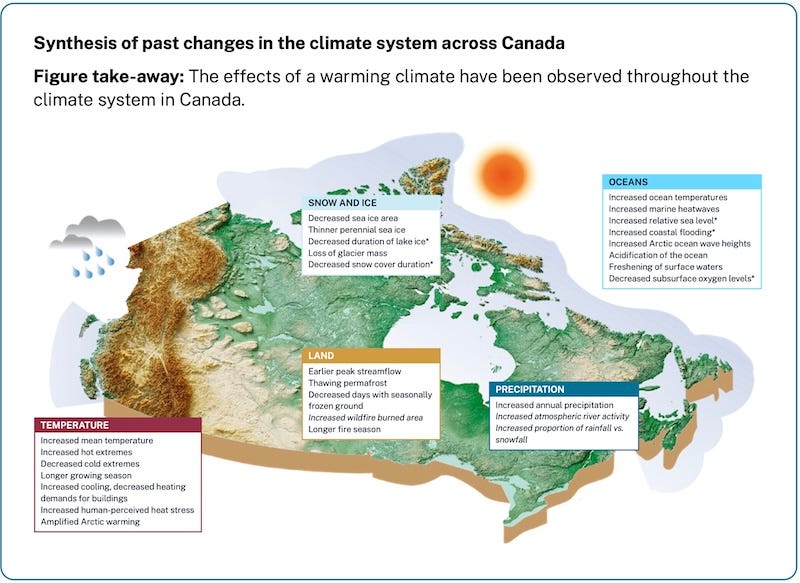
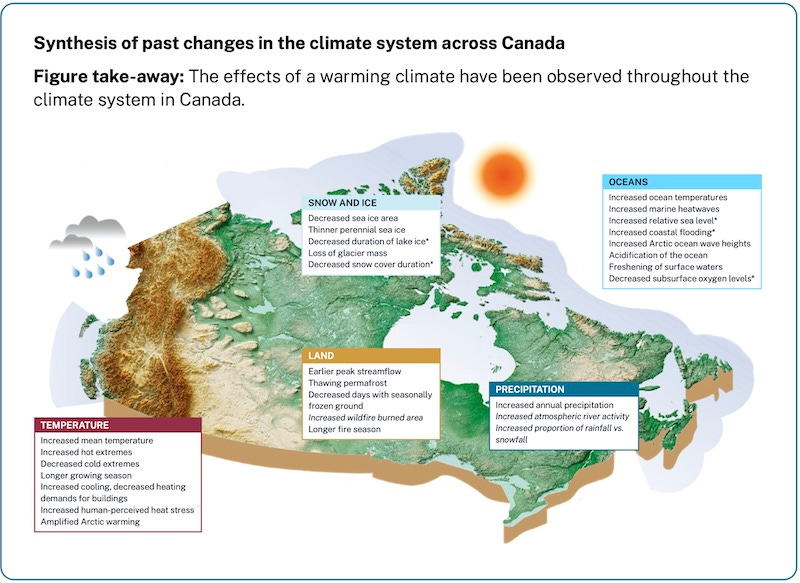
UNEP confirmed what we’ve known for a long time. The Paris agreement target of limiting average global warming to 1.5°C is out of reach, and we’re now on track to a world of at least 1.8°C by mid-century, compared to 1.4°C today. The federal government said Canada has already seen average warming of 2°C, 2.6° in the Arctic, and will add another 1° of “unavoidable warming” by 2040, with our current fossil-fuelled practices putting us on a trajectory to 5°C by 2081, 10° in Nunavut.
That is—and here’s the crucial piece that neither UNEP nor Environment Canada said out loud—if governments, industries, and all the rest of us don’t do something about it.
In their sharp and on-point critique of the UNEP analysis, our friends at Climate Analytics in Berlin agreed with the UN agency’s assessment of the problem, but warned that the report failed to properly address the solutions to the climate emergency.
“Although UNEP does a good job of describing the hole we’ve dug ourselves into, it does a poor job of showing us that there is a way out,” CEO Bill Hare said in a release. “Ultimately, the report’s neglect of some fundamentally important mitigation analysis risks turning it into a call to apathy rather than a call to arms.”
CBC inadvertently bore out that assessment by writing its own headline for the Associated Press coverage of the report: “Climate change past the point of no return, UN says, as worst impacts are now unavoidable.”
The foreseeable result of this reporting, scientific and journalistic, is not exactly apathy—more like paralysis, dread, and despair. All the things the fossil industry wants you to feel as it rolls on to make those worst fears a self-fulfilling prophecy.
The Canadian scientists fell into the same trap. Here’s Julia Levin, associate director, national climate at Environmental Defence Canada, in reaction to the Environment Canada report:
This report should be a call to action. What the future looks like for our children depends on the policy choices being made today. The worst impacts of climate change are far from inevitable.
However, the only way to avoid those impacts is to quickly transition away from producing and burning oil, gas, and coal. The good news is that many of Canada’s peers are doing exactly that. Yet PM Carney is moving Canada in the opposite direction by recklessly doubling down on fossil fuels. Canada is falling behind.
And yet, yet again—incredibly—Ottawa saw fit to schedule a monumentally significant announcement just hours before the last long weekend of the summer. “A critically important analysis of how climate change is affecting Canadians is released quietly on the Thursday before a long weekend, with no news conference, no briefings, and no minister available,” retired CBC journalist Laura Lynch wrote on LinkedIn. “Guess what? The picture it paints isn’t pretty and without action on emissions now, it will get worse.”
The picture is dire, globally and in Canada.
“Instead of giving up, scientists and UN officials recommend trying to limit excessive warming and then bring the temperature back down to the agreed-upon threshold,” AP wrote last week, in its account of the UNEP report. “But it still will mean decades of increased weather-related disasters, rising seas, extinctions, and melting ice and glaciers.”
Ryan Ness, adaptation research director at the Canadian Climate Institute, painted a picture of what unchecked global warming would mean at home.
Continuing down the path we’re on, Canada will face average temperature increases of 5°C by 2100, and still be warming. In that scenario, glaciers in Western Canada would virtually disappear; winter warming would top 10 degrees across much of Nunavut and Nunavik; and the southern Prairies will face up to five times as many severe droughts compared to today. If, instead, global emissions begin declining immediately and reach net zero in the 2070s, average warming in Canada would level out at 3.5°C.
That’s the prognosis based on “the world as it is”, reflecting the latest peer-reviewed science on the mounting havoc that climate change will continue to wreak. Without a level of response that we aren’t seeing today, particularly in Canada and the United States, accelerating climate chaos will be more than enough to derail all the new directions and best strategic intentions that Carney laid out in the Davos speech from which the quote is drawn.
Related: On Sept. 10 at noon ET, the Canadian Climate Institute is hosting an Ask Me Anything session on the Environment Canada report. Sign up here.
But the 67-page summary report from Environment Canada appears not to disclose its underlying assumptions about the pace of future fossil fuel burning, the speed of the transition off carbon, and carbon removal options that have legitimate potential to make a real difference, in contrast to the carbon capture fantasies we hear from the fossil industry. Those are all factors that will shape or misshape future greenhouse gas emissions and the warming they produce.
The team at Climate Analytics had the same concern about the UNEP release. Their critique listed three major gaps in the report, most significantly that it:
…sidelines analyses showing that many sectors of the economy can reach ‘real zero’ emissions by mid-century, and that if governments act with the highest possible ambition on cutting emissions now, they can halt global warming by mid-century and bring it back well below 1.5°C by the end of the century
None of this undercuts the basic message about the moment we’re in. Each of the reports delivered well, to the extent that getting the science right is the cornerstone of anything we ever hope to get done on climate change and the energy transition. (And we’ll only have time to get those things done by refusing to engage with fossil-funded mis- and disinformation about what that sentence actually means.)
But both agencies should have known better than to leave it at that. Look no farther than an epidemic of climate despair for evidence that if all we do is shout about an emergency that most people already know we’re in, without also pointing to the solutions within our grasp, we shut down conversation and action rather than motivating it.
If you listen to veteran climate scientist and climate communicator Katharine Hayhoe, you learn that it amounts to science denial to hammer away at crisis messaging without also helping people find the “efficacy” of knowing what to do about it.
And you know what that means. It begins with phasing down and out the fossil fuel production responsible for 75% of the greenhouse gas emissions that are baking the Earth’s systems. And speeding the shift to renewable energy and energy efficiency choices that are already practical, cheaper and more reliable then oil and gas, and beginning to scale up despite gale-force opposition from the Mad Dictator in the White House.
As Hayhoe wrote on Facebook just a couple of weeks ago:
The headlines this summer make it easy to feel as if nothing can be done: record heat and wildfires continue, while fossil fuel companies rake in billions. But feeling powerless is exactly the trap.
The alternative—really, the only alternative—is to make the leap from what to how. To pick up the pace on solutions like energy transition and methane controls that can most easily bend the curve on emission reductions, apparently beyond what the scientists at UNEP and Environment Canada included in their research.
That’s particularly true if you take away another unmistakable conclusion from the two studies: that climate change mitigation is the new adaptation.
Through decades of delay and performative messaging, we’ve created the urgent need to adapt to the effects of climate change—and, while we’re at it, to compensate the world’s most vulnerable countries for irreversible loss and damage brought on by global heating. But it’s a grievous error—potentially a civilization-ending error—to argue that all is lost on emission reductions, that all the funding must now be diverted to adapting for as long as we still can. For one simple reason:
If we’re having this much trouble coping with 2°C warming in southern Canada and 2.6° in the North, in what universe do we think there any adapting to 3°, 3.5°, 5°, or more?
As we pointed out in this weekend’s edition of our LinkedIn newsletter, The SHIFT:
It’s not rocket science. It isn’t even high school functions or trigonometry. But for too many of our leaders and all of Canada’s relentless fossil fuel lobby, we get it.
Math is hard.
Spoiler alert: the solution is the same in every case: shift investment to clean energy projects that support sovereignty, affordability, and employment. Not to mention lowering emissions significantly enough to change the path…
Part of the problem here is “greenhushing”—but not in the way we usually mean it.
When the language of greenhushing first began to appear, it meant high-emitting companies staying quiet about their climate strategies—to avoid being called out for missing their emission reduction targets, or being accused of greenwashing. “If somebody asks about their climate goals, they decline to answer,” the Corporate Governance Institute wrote. “If nobody asks, they don’t do anything.”
Now, something different is going on. Even with one of the world’s most influential economies still in the hands of a gangster regime that goes out of its way to undercut the energy transition, there’s still a lot of work going on. Many companies and their investors know that solar and wind, energy storage and energy efficiency are the most practical, affordable choice available to them.
They just can’t or won’t say it out loud, for fear of triggering the Mad Dictator.
If it’s even possible for an unspoken message to come through loud and clear, we saw it happen at the end of June, when the International Energy Agency brought its annual energy efficiency conference to Montreal. During the conference, nearly three dozen countries pledged to pick up the pace on energy efficiency improvements, and many of the companies onsite were already getting on with it. Yet much of the top-line messaging was about energy security, as seen through the lens of increased oil and gas exports—even after the IEA demonstrated how powerfully energy investment and production were running in a new and better direction.
The strangest thing of all is that this is still better than it used to be.
For too many years before The Energy Mix launched, I worked in an industry that did a fabulous job of trumpeting its sustainable achievements—and only rarely lifted a finger or provided serious resources to deliver on the promises it was making. It wasn’t even that front-line managers were actively greenwashing—they were being greenwashed. But they genuinely wanted to believe the messaging, so they bought it and amplified it.
It took me a while to track the pattern. But as it eventually became clear, I can remember arguing long and loud that all the leadership was coming from the PR team, when it really needed to start out in the project management office and the engineering department. Some 15 years later, I hear tell that that’s beginning to happen.
But that history makes it harder to complain now that many businesses and governments are taking practical, concrete steps on both mitigation and adaptation, just not talking about it. We need them to shout it proudly from the rooftops—of course we do. But with Trump still firmly in control and U.S. midterm elections still eight weeks away (possibly with debatable effect), we’re still in a spot where it’s tougher for institutions to talk out loud about the climate solutions we need.

Mitchell Beer traces his background in renewable energy and energy efficiency back to 1977, in climate change to 1997. Now he and the rest of the Energy Mix team scan 1,200 news headlines a week to pull together The Energy Mix and The Energy Mix Weekender.

Smith Tells Albertans to ‘Lock In’ Power Prices Before Meta Data Centre Joins Grid
West Coast Pipeline Won’t Recoup Its $43.7B Cost as Global Oil Demand Weakens
Post-Approval Battle Lines Form Over Trans Mountain
Coal Extension Will Cost Saskatchewan 2x as Much as Renewables: Report
‘Call to Apathy, Not to Arms’ as UN Warns Climate Overshoot Is Inevitable, Downplays Fossil Phaseout
What a Supercharged El Niño Could Mean for Canada
26M Canadians in 930 Communities Faced Climate Impacts So Far This Year, New Map Shows
Opinion: With Impact Assessment Rules Rolled Back, Public Risk Assessment May Be the Next Best Thing

Industry can weather tariff storm by improving energy efficiency (The Hill Times)
Northern Manitoba chiefs raise new objections to corporation intended to enable Churchill port expansion (Canadian Broadcasting Corporation)
U.S. diesel hits record $5.85 a gallon as Iran war drags on (Washington Post)
The car industry didn’t see this coming (Jan Rosenow/Bright Spots)
Canadians care ‘very deeply’ about nature conservation, even at the expense of economic development: poll (The Hill Times)
Nepal calls for ‘global effort’ to address climate change after devastating flash floods (British Broadcasting Corporation)
Solar Surpasses Coal as China’s Top Source of Power Capacity (Bloomberg)
PJM drops Oklo advanced nuclear project from interconnection study cycle (Utility Dive)
Climate action fairness a sore spot in German regional votes (Clean Energy Wire)
Oil-Rich Azerbaijan Bets Big on a Clean Energy Boom (OilPrice.com)
Sault Ste. Marie council agrees to interim moratorium on data centres (Soo Today)
Rethinking Indonesia’s electricity economics to reach the 100-GW solar target (Institute for Energy Economics and Financial Analysis)