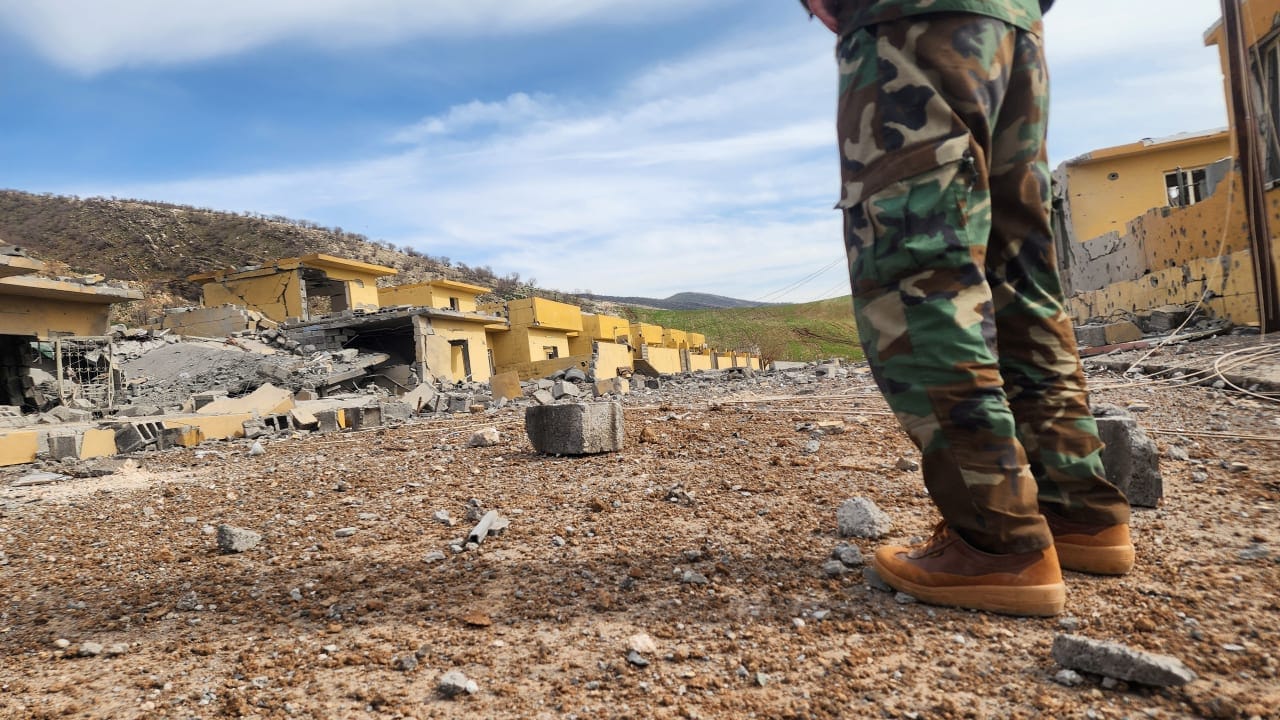
Iran carried out a new attack on a Kurdish Iranian opposition group in the Kurdistan Region of northern Iraq, one of more than 1,000 Iranian drone and missile attacks on the Kurdistan Region since February 2026.
In February, the US and Israel began attacks on Iran. Iran has targeted Kurdish groups. The attack comes amid numerous reports in Kurdish media that the US is withdrawing from Iraq, including forces in the Kurdistan Region. This includes reports of air defenses being withdrawn. Iran may be emboldened by these reports.
Rudaw noted on September 7 that “Iran launched a drone attack on one of the bases of an Iranian Kurdish party in Sulaimani province’s Surdash subdistrict early Monday, setting part of the base on fire, according to the group.”
The report noted that Amjad Hussein Panahi, head of relations for the Komala of the Toilers of Kurdistan, said in a statement sent to Rudaw that three drones targeted the group’s positions at around 4:50 am. They called it a “heavy attack.” Video online showed buildings burning.
Rudaw noted that Panahi “also said that Komala Peshmerga were unharmed because of ‘safety’ measures taken by the group, which has come under dozens of drone and missile attacks by Tehran since the US and Israel launched an aerial offensive against Iran late February.”

The local authorities in Sulimaniyeh also confirmed the attack. They noted that “a refugee camp in Surdash was attacked by three drones.” Panahi added, “According to Komala statistics, since the outbreak of the conflict between Iran and the United States to date, the number of missiles and drones used to target Komala’s headquarters and camps has exceeded 108.” Other Kurdish groups have reported similar numbers of attacks. The KRG has said that there have been more than 1,000 attacks.
The Kurdistan Region of Iraq has become a key front in Iran’s confrontation with Kurdish Iranian opposition movements. For decades, Tehran has viewed these groups as a threat. Iran’s regime waged a brutal crackdown in the 1980s. It also targeted Kurdish dissidents for assassination abroad.
Since the US-Iran conflict intensified in early 2026, Iran and Iranian-backed militias have dramatically expanded their campaign of drone, missile, and rocket attacks against opposition camps and bases across northern Iraq. The strikes have targeted not only bases of the groups but also compounds housing the families of opposition members,
The attacks have also placed increasing pressure on the Kurdistan Regional Government, which has sought to avoid being drawn into a wider regional conflict while protecting its autonomy. Iranian-backed militias in Iraq have echoed Tehran’s accusations that the opposition groups cooperate with foreign powers, using these claims to justify continued attacks.
The campaign reflects Iran’s broader strategy of projecting power beyond its borders while suppressing potential challenges to the regime. It also shows how Iran sought to set Iraq ablaze and move the front to Iraq. Iran views Iraq as a soft underbelly and also views Baghdad as a center of Iranian influence. This makes Iraq a buffer state, a kind of “near abroad” for Iran.
In February 2026, five of the largest Kurdish Iranian opposition organizations announced the formation of the Coalition of Political Forces of Iranian Kurdistan, marking one of the most significant efforts at Kurdish political and military unity in decades. The founding members included the Democratic Party of Iranian Kurdistan (PDKI), the Kurdistan Free Life Party (PJAK), the Kurdistan Freedom Party (PAK), the Organization of Iranian Kurdistan Struggle (Khabat), and Komala of the Toilers of Kurdistan. A sixth organization, the Komala Party of Iranian Kurdistan, joined the coalition shortly afterward. Komala has three branches. One Komala branch did not join. The alliance pledged to coordinate politically and militarily while advocating self-determination for Iran’s Kurdish population and democratic change in Iran.
The formation of the coalition coincided with a sharp increase in Iranian attacks. Tehran employed ballistic missiles, armed drones, and other precision-guided weapons against bases belonging to the PDKI, Komala, PJAK, PAK, and other groups in the Kurdistan Region. Iran wants to pre-empt these groups from organizing resistance to the Iranian regime. In March there were reports that the US wanted to support and even arm the Kurdish groups.