
The President of the French Bishops’ Conference, Cardinal Jean-Marc Aveline, along with other bishops, present details of Pope Leo XIV’s upcoming apostolic journey to France from September 25 to 28 at a press conference. They speak about the budget, the organizational efforts, the Journey’s motto, the Pope’s meeting with survivors of abuse and more.
By Salvatore Cernuzio
He does not want to take credit and repeatedly speaks of teamwork, but if Pope Leo XIV is going to France from September 25 to 28, a country where there is “a great spiritual thirst,” it is certainly thanks in part to Cardinal Jean-Marc Aveline’s persistence and ability to seize the opportunity.
“I proposed the idea of a visit to France to the Holy Father very early on,” said the Cardinal, who is Archbishop of Marseille and President of the French Bishops’ Conference (CEF). He was speaking at a press conference on the Apostolic Journey, held along with other bishops on the morning of September 8, at the CEF headquarters.
Cardinal Aveline explained he believed the Pope was interested in coming to France but the problem was finding a date. He was initially told that 2026 was too soon and that the Pope’s schedule was already full, but he insisted on trying to organize the journey this year.
“It was an enormous challenge: only four months to prepare everything. I went to speak with the person who manages the Pope’s schedule, and at a certain point a week became available because a planned trip to Peru had been cancelled. I said: ‘Then forget Peru, let’s do France. I’ll take care of the rest’,” the Cardinal underlined.
That is how Pope Leo XIV’s fifth international Apostolic Journey – and the third to a European country – came about.

A tight timeline and a major organizational effort
The bishops explained that this is why the timeline was so tight as there were only four months to organize everything. This included securing key locations in Paris, arranging a prayer vigil at the Stade de France stadium, preparing public and restricted areas in Lourdes, and managing the small squares and churches of the city of Metz.
Above all, the organizers wanted to ensure the best possible welcome in all three locations.
The motto of the journey: a message for life
During the press conference, Cardinal Aveline also explained the origins of the motto of the Journey: “That the world may have life.”
The expression is inspired by the Gospel of John, and some have interpreted it as a reference to the debate surrounding the assisted-suicide bill approved by the French Parliament in July.
Cardinal Aveline ruled out any political interpretation, but did not deny that the motto is a message for the “defense of the dignity of human life.”
Initially the bishops thought about a motto regarding peace, but then they realized that their idea was similar to the motto for the Pope’s November/December 2025 Journey to Lebanon.
Then, during a visit to Rome, inspiration struck: “We let the idea mature, and that evening I wrote the Pope a short email: ‘Here is an idea that came to us.’ The next morning the Pope replied: ‘Yes, this is a good one’,” Cardinal Aveline explained.
When one reads the encyclical Magnifica Humanitas, he noted, “you can see that it is about defending the dignity of human life in all situations in which that dignity may be threatened. And there are many such situations today. The defense of the dignity of human life is at the heart of Pope Leo’s message.”
Large numbers, both in budget and attendance
Pope Leo’s journey across France is therefore expected to be intense in terms of organization, content, and also the large numbers of participants and costs. The total estimated budget for the visit to France is approximately €27 million.
At the press conference, Sylvain Guillebaud, Deputy Secretary General in charge of resources at the CEF, explained that €5.5 million have been raised so far and the fundraising continues and donations can also be made through the official website.
The initial estimate had been lower, but now expectations were adjusted, also because of the large number of faithful expected.
Indeed, reservations and registrations already point to around one million people who will participate, not only from France but also from neighboring European countries—particularly in Metz. There is also interest from people of all ages, backgrounds and, in some cases, religions.
“There is enormous enthusiasm, but there is also a tremendous organizational and logistical challenge: welcoming every faithful person and everyone who wants to see or meet the Pope in the best possible way,” emphasized Guillebaud.
The most emblematic areas of Paris
Archbishop Laurent Ulrich, of Paris, also described the undertaking as an “incredible challenge.”
The Archbishop said he was “passionate” and “absolutely confident” with regards to how preparations are going, thanks also to a team of volunteers and collaborators and the support of the Gel Evans agency, which was specifically brought in for the occasion.
It is certainly not easy, but every effort will be made “to welcome every person who comes so that they can see the Pope not on a giant screen, but in person,” he continued.
In Paris, the Archbishop said, “the most emblematic places” have been chosen, including two symbols of the city: Place de la Concorde and the Champs-Élysées Avenue.
This has prompted some objections from the strongest supporters of the lay state, both politicians and others. “It is important to remember that we are in a lay Republic. The state does not recognize any religion, but it guarantees that different faith communities can publicly express their faith,” Cardinal Aveline explained.
“When a religious event is organized in a public space, authorization must be requested from the competent authorities. We have followed the established procedure and are not crossing any boundaries.”
The meeting with survivors of sexual abuse
Above all, the bishops emphasized the dimension of encounter that will characterize the papal journey.
There will be large public meetings, such as in stadiums or Cathedrals, but also more private encounters with smaller groups, such as a meeting with those who are sick in Lourdes or also with a group of survivors of sexual abuse.
“From the beginning, it seemed that the Pope wanted to meet survivors of sexual abuse,” Bishop Pierre-Antoine Bozo, spokesperson for the CEF and coadjutor bishop of La Rochelle noted.
“It is necessary to care for these victims while at the same time remaining extremely vigilant about prevention, so that the Church may be the safe home we want it to be.”
Given the context within both the Church and society, such a meeting was “obvious,” according to the bishop. The question was rather “what form it should take.”
“What determined the choice,” he explained, “was the Holy Father’s own desire that this be a truly interpersonal encounter. That required a limited number of participants, so a group of seven people was chosen.”
They were chosen by the French Bishops’ Conference and the Conference of Religious Men and Women in France after consultations with around forty groups and individuals.
Everyone offered suggestions about how the meeting could be conducted.
It “will last about an hour” and “will be of considerable importance,” Bishop Bozo said.
“The people,” he emphasized, “were selected in a balanced way. There are men and women who experienced abuse both as minors and as adults, in school and parish settings.”
The organizers sought to ensure “the fairest possible representation,” he said, but this inevitably “generated some frustration among those who were not selected.”
What they ultimately wanted to prioritize, however, “was the quality of the encounter with the Holy Father, so that a genuine exchange could take place,” which with larger numbers, would have been difficult.
In any case, anyone among the groups or individuals contacted by the bishops who wishes to communicate something to the Pope will be able to do so by sending “a written statement that will be delivered to the Holy Father.”
A pilgrim in Lourdes
Although the bishops would like everyone to have the opportunity to come into contact with the Pope during those four days, there are certain limits.
Lourdes, for example, “is a place constrained by the limited space of a mountain town and by a river flowing at the foot of the grotto,” explained Bishop Jean-Marc Micas of Lourdes.
“All these constraints impose limits on capacity, permits and authorizations. We are doing everything possible to enable those who wish to come to do so in the best possible conditions.”
He however also pointed out the “great excitement” surrounding this stop, following the visits of John Paul II in 1983 and 2004 and Benedict XVI in 2008.
As many as 50,000 people will arrive in Lourdes over the weekend alone, with many more expected for the Pope’s visit.
The municipality, prefecture, law-enforcement agencies and Shrine volunteers are all “rolling up their sleeves to welcome all these people in excellent conditions, so that they can experience a pilgrimage with a special pilgrim: the Pope,” the Bishop said.
Indeed, Pope Leo will present himself precisely as a pilgrim at the famous Marian shrine, and he will go to the Grotto of the Apparitions: “He will touch the rock, drink the water, light a candle, kneel down and pray in silence, as pilgrims do in Lourdes.”
Then, as “shepherd,” he will preside over the Marian candlelight procession and celebrate Mass.
The interreligious dimension
The interreligious aspect is also an significant theme of this Apostolic Journey.
“Beyond the circles of believers, the journey is already something magnificent simply because of its preparation and the enthusiasm it has generated among so many people,” said Bishop Benoît Bertrand of Pontoise, the French Bishops’ Conference coordinator for the journey.
Meanwhile, Étienne Guillet, Bishop of Saint-Denis—the diocese on the northern outskirts of Paris where the Stade de France stadium is located, and where the youth vigil will take place—reported that almost 80,000 young people from across the country have registered to attend the evening event.

These same young people have invited Jewish, Muslim, Sikh and Hindu friends. “They live together throughout the year and felt the desire to share this great moment,” the Bishop highlighted.
“We are very attentive to ensuring that no young person is excluded from this gathering.”
Among those in the stands will also be sick people and young people living in socially difficult circumstances, as well as young people from Catholic schools and from less religious environments. Around thirty artists from a traveling circus—“Christians and non-Christians”—will also be present to greet the Pope.
From Metz, a message to Europe
The interreligious dimension will also be important in the city Metz, the last leg of the Pope’s Journey and where he will meet representatives of different faiths.
“Religions that engage in dialogue can contribute to building peace,” emphasized the Bishop of Metz, Philippe Ballot.
“For this reason, we feel that the day in Metz, while emerging from a local and national context, takes on a European and international dimension.”
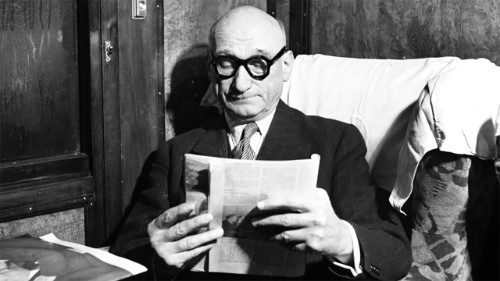
Metz is truly the “heart” of Europe, not only geographically but also because of its history, which is intertwined with that of one of the founding fathers of the European Union: Robert Schuman, who was declared Venerable by Pope Francis in 2021.
Schuman experienced “the complexity of belonging to different nationalities and the tragedy of seeing those nationalities fight one another,” the Bishop explained.
“For this reason, reconciliation was always at the center of his life,” he continued.
In the spirit of reconciliation, Pope Leo will pay tribute to Schuman by delivering a message to all of Europe.
“When a Pope visits a country, his visit does not concern only that country but can offer something to the universal Church,” Aveline said.
“For this reason, we must be attentive and listen to what the Pope will have to say and understand what we are called to change. We can receive from his words a roadmap.”