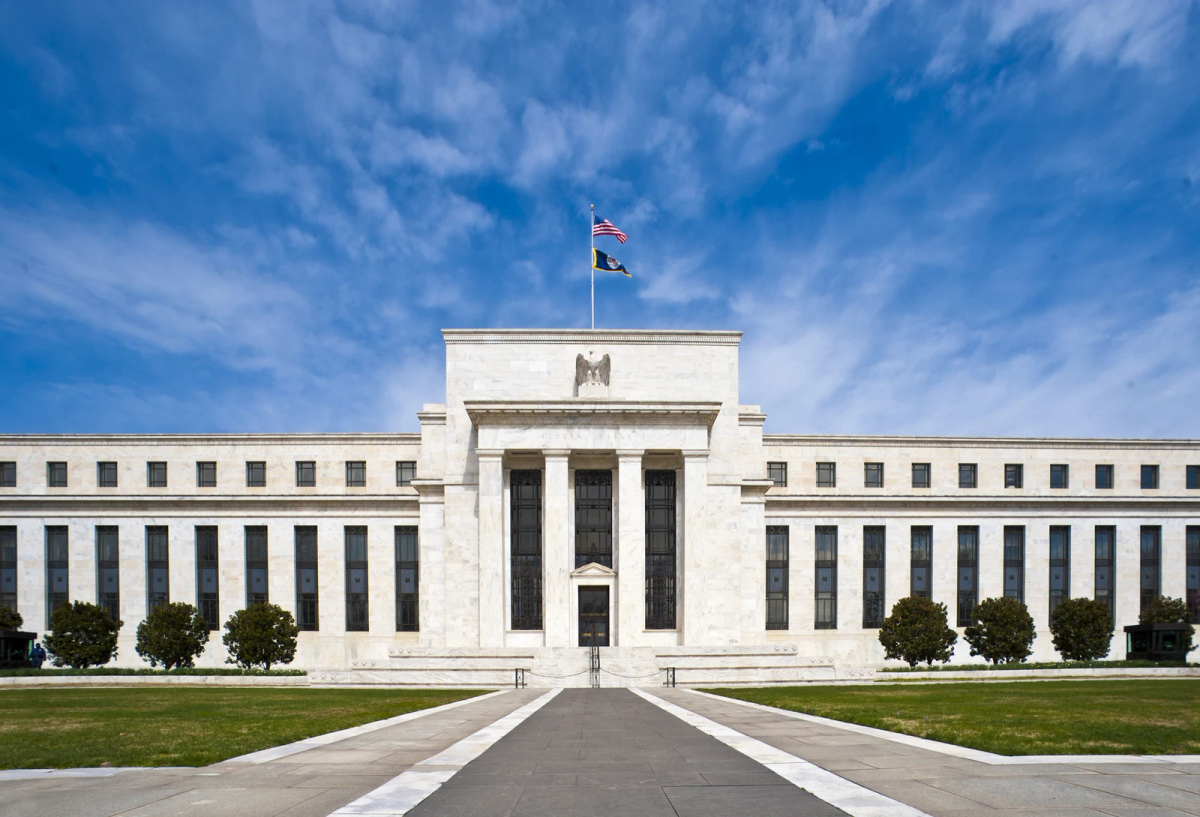
President Donald Trump continues to pressure Federal Reserve board members he views as hostile forces within the central bank, with potential targets numbering as many as three: former Chair Jerome Powell, Governor Lisa Cook, and Governor Michael Barr. Yet a succession of investigative reports and court rulings suggests that any attempt to remove these three from the Fed would face layer upon layer of legal obstacles—and could even backfire by entangling Trump’s own policy agenda.
The Federal Reserve’s Office of Inspector General on Wednesday released a long-awaited investigative report on the Fed headquarters renovation project, whose costs ballooned by approximately $1 billion (about NT$32 billion). The report concluded that while numerous management deficiencies existed, it found no criminal basis warranting referral to prosecutors, nor evidence of administrative misconduct.
Trump appointed Powell as Fed chair during his first term but quickly soured on his policy direction. After his chairmanship ended, Powell took the unusual step of remaining on the Board as a governor—a move that thwarted Trump’s long-running effort to remove him on grounds of the renovation cost overruns. Following the inspector general’s report, Trump voiced sharp displeasure, publicly blasting Powell as “a disaster” and saying he should not remain on the Fed Board.
He has already asked Attorney General Todd Blanche to review the inspector general’s report. A spokesperson for Jeanine Pirro, the U.S. Attorney for the District of Columbia, said her office is simultaneously reviewing the document. Pirro previously led a criminal investigation targeting Powell, but a judge quashed the subpoenas she issued in that matter, noting their “primary (if not sole) purpose was to harass and pressure Powell.”
Notably, the retrospective report did not attribute the cost overruns to Powell or any single governor. Instead, it described systemic deficiencies in project management, contracting practices, and the Fed Board’s governance and oversight structures. The inspector general’s office noted that the Board delegated relevant responsibilities to staff—consistent with how large organizations typically handle construction projects. The report even acknowledged in a footnote that better management “does not necessarily mean the overall project cost would have been lower.”
Scott Alvarez, former general counsel of the Federal Reserve, put it bluntly: “My personal view is that this renovation report is not enough for a court to remove Powell for cause. It clears him on the criminal side, but it also says they found no administrative misconduct.”
Powell’s term as governor runs through January 2028. In March, he publicly stated he would remain on the Board until the legal threats are “truly and completely resolved, with transparency and finality.” In January, Powell took the rare step of issuing a statement asserting that the subpoenas tied to the renovation case were “not about my testimony last June, and not about the renovation of the Fed building—those were pretexts.”
Beyond Powell, Trump has also trained his fire on two other governors. Cook is embroiled in a mortgage application dispute, with the administration seeking to remove her on grounds of alleged misrepresentations in her home loan application. The Supreme Court ruled in June that Cook has the right to remain in her position while litigation proceeds, and required the government to first notify her of the allegations and provide an opportunity to respond. As of August, Cook had received notice and completed her response—removing one procedural hurdle to her removal—but the executive branch must still demonstrate to the court that it has met the “for cause” threshold, which will likely require another Supreme Court review.
In an interview with Time magazine published Thursday, Trump again complained about Cook, referencing new Fed Chair Kevin Warsh as being in some way “controlled” by the Board, and adding: “We have Lisa there.” The Cook case is currently before U.S. District Judge Jia Cobb, who has ordered both parties to submit a joint status report by November 6 outlining how the litigation should proceed—a date that falls shortly after the midterm elections.
As for Barr, he is tied to the 2023 collapse of Silicon Valley Bank. According to a preliminary report released by outside investigative firm Starling Advisory Group, Fed bank supervisors should have been aware of the risks a full year before the bank’s failure. The preliminary investigation did not assign personal responsibility to Barr. The White House has largely blamed him for the episode but has not moved to seek his removal.
Alvarez’s analysis suggests that if the government does act against any of these three governors, it could actually work against Trump. “They all have reason to sue and stay. If they all stay, and Trump keeps pushing, then all he’s doing is hurting his own political agenda.”
From a timeline perspective, the Fed is scheduled to announce its latest rate decision on October 28—just days before the November 3 U.S. midterm elections. Any legal battle could drag on for months and may prompt Trump’s targets to postpone any plans to leave the Fed. Even if Trump does pursue further legal action and disrupts the Fed’s institutional framework, his ability to force the central bank to reverse its recent rate-hike decisions appears limited.
Some inside the Fed believe Trump has already demonstrated that the executive branch is willing to act on thin evidence. But viewed through the lens of recent court rulings, the cases involving Powell, Cook, and Barr each lack the evidentiary basis needed to convince the judicial system to sanction their removal. If Trump presses forward, he may find himself mired in a protracted legal war—one whose outcome may not go his way.