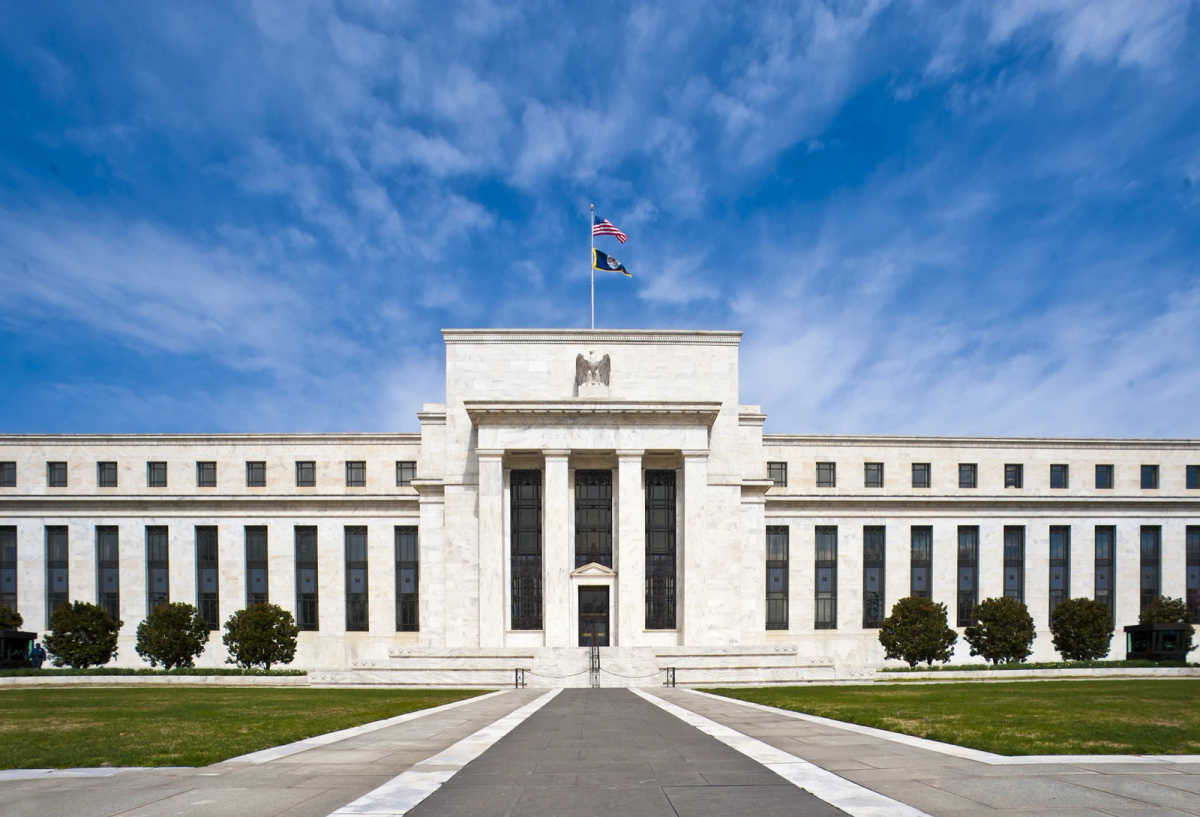
The U.S. midterm election results are rewriting the balance of power between the Federal Reserve and the White House. With Democrats winning control of the Senate, the Trump administration’s path to expanding influence over monetary policy through personnel appointments has run into a substantive obstacle. The Senate holds the power to confirm Federal Reserve governors, meaning the president can still put forward nominees but cannot bypass congressional review.
The Federal Reserve Board has seven seats, with governors serving long terms—a design intended to reduce direct interference in monetary policy from political cycles. Trump had hoped to gradually install officials sympathetic to the White House and ultimately form a majority on the Board to exert influence over interest rate decisions. With Democrats retaking the Senate, realizing that vision has become significantly harder.
The key gatekeeper for personnel confirmations is the Senate Banking Committee. According to Bloomberg, Massachusetts Democratic Senator Elizabeth Warren is expected to chair the committee, succeeding current Chairman Tim Scott, a Republican from South Carolina. Warren has long advocated stronger accountability for Wall Street and financial regulators, while also explicitly supporting the Fed’s independence from political interference in setting interest rates. Nominees seen as overly catering to White House policy demands may see the Democratic-led committee refuse to advance their review process.
Current Fed Chair Kevin Warsh, though nominated by Trump, has not fully complied with the president’s stance in favor of sharp rate cuts. The Fed raised rates by 25 basis points in September this year and held rates steady in October, indicating that policymakers continue to prioritize inflation risks. An analysis by economists at Monetary Policy Analytics argues that Warsh did not win Democratic support during his chair nomination process, and his operating style of reduced external communication and diminished transparency could expose him to more hostile questioning before a Democratic-controlled committee.
Warren’s concerns also include whether Warsh was sufficiently transparent in handling hundreds of millions of dollars in assets during his path to the Fed chairmanship. Democrats campaigned heavily on cost-of-living issues, giving them an incentive to press Warsh over the central bank’s inflation-fighting mandate; the Senate Banking Committee has broad investigative authority over matters it deems important.
Trump previously seized on the unexpected resignation of Governor Adriana Kugler in August 2025 to quickly push White House economic adviser Stephen Miran onto the Board. Miran advocated for larger rate cuts at all six policy meetings he participated in, until Warsh replaced him in May this year. With Democrats controlling the Senate, similar personnel arrangements will be harder to replicate.
The seven-member Board currently has no vacant seats. Former Fed Chair Jerome Powell did not leave the Board after stepping down as chair in May this year, as convention might suggest, but instead remained as a governor through January 2028—depriving Trump of an additional governor appointment opportunity tied to the chair transition. Three of the Board’s seven members were appointed by former President Biden. Fed Vice Chair Jefferson’s term as vice chair expires in September 2027, though his governor term can extend longer; even if the vice chair position turns over, the White House would still face a confirmation process in a Democratic-controlled Senate.
Trump’s effort to remove Governor Lisa Cook is still underway. According to Reuters, the White House administrative process is expected to begin within weeks, laying the groundwork for arguing that errors in Cook’s mortgage applications before she became a Fed governor constitute “cause” for removal. The move will likely trigger litigation; the Supreme Court has previously ruled against Trump’s attempt to exclude Cook. Even if removal ultimately succeeds, the odds of a Democratic-led Senate approving a successor are extremely low.
Institutions under Republican control have also previously rejected Fed personnel arrangements seen as extreme. This year, North Carolina Republican Senator Thom Tillis temporarily stalled Warsh’s nomination until the administration withdrew a criminal investigation into Powell. After pressure from Trump, Tillis declined to seek reelection, and the state’s Senate seat was won by Democrat Roy Cooper.
Market participants are divided on the effectiveness of institutional constraints. Mark Spindel, portfolio manager at Potomac River Capital, believes Democratic control of the Senate will provide a stronger institutional line of defense for the Fed against presidential pressure and will change the confirmation environment for future nominees. He also noted that the Fed’s independence “has always depended in part on Congress,” and that institutional support from the Senate affects the extent to which policymakers base decisions on inflation and employment rather than political pressure.
Vincent Reinhart, chief economist at BNY Mellon Investment Management, said that even during Republican control of the Senate, some lawmakers opposed the White House’s handling of the Powell issue, and the midterm results will subject the executive branch to stricter constraints. Michael Strain, director of economic policy studies at the American Enterprise Institute, believes a Democratic victory can reduce some political risks, but the real concern remains whether the executive branch uses tools such as judicial investigations to influence monetary policy.
Daleep Singh, chief global economist at PGIM, noted that a weakened Trump influence over Congress and the Fed could give Warsh more room to address inflation pressures. But stronger Fed independence does not mean interest rates will automatically decline. With U.S. inflation persistently above the 2% target and rising energy prices adding to price pressures, the future rate path still depends on economic data.
Beyond the Senate, the House Financial Services Committee will also be controlled by Democrats, which could introduce uncertainty for banking and regulatory reforms pushed by the White House and current Vice Chair for Supervision Michelle Bowman. The Fed is drafting rules to implement the stablecoin regulatory “GENIUS Act,” and Bowman recently proposed consolidating the Fed’s bank supervision structure.
The new Congress will not be sworn in until January 2027, and the immediate power shift is first reflected in expectations for personnel appointments. Democratic control of Senate confirmation will create substantive limits on personnel arrangements and institutional oversight, but whether it can fully prevent the executive branch from pressuring current officials still depends on judicial proceedings and the evolution of the inflation situation.