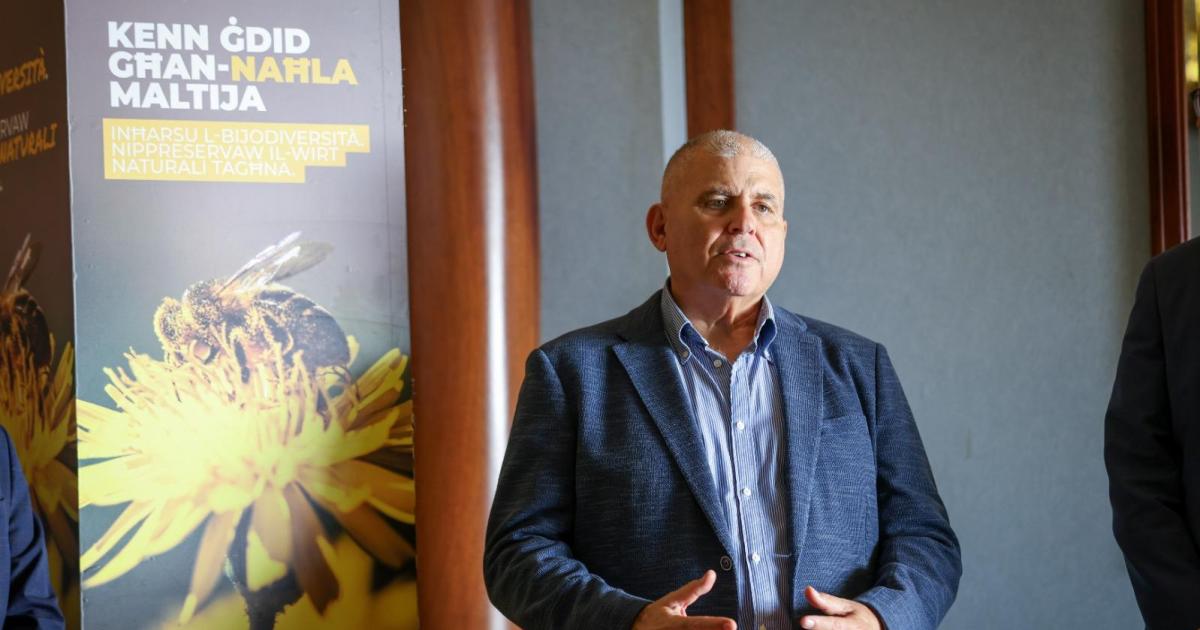
Comino will become a protected area for breeding Malta’s native honeybee according to new regulations to be published on Friday.
The Maltese Honeybee Conservation Area Regulations will control the keeping, breeding and movement of bee colonies on the island to protect the genetic integrity of the Maltese honeybee, Apis mellifera ruttneri.
They are intended to reduce the risk of crossbreeding with other honeybee varieties and the spread of disease.
The regulations will also establish a registration and authorisation system for colonies kept on Comino, together with monitoring, inspection and verification mechanisms.
A Maltese honeybee colony may only be kept as a permanent resident within the protected area following written authorisation from agriculture director.
Agriculture Minister Anton Refalo said the regulatory framework will help strengthen the beekeeping sector.
The regulations define a “Maltese honeybee colony” as one with a genetic purity of at least 90% attributable to Apis mellifera ruttneri.
The scientific methodology, criteria and administrative procedures used to determine genetic purity will be established through technical guidelines.
The framework also provides for transitional measures concerning non-native bee colonies already present on Comino, as well as limited authorisations for their temporary and seasonal introduction, subject to conditions relating to biosecurity, traceability, movement and the genetic integrity of the resident bee population.
The protected area for breeding the native honeybee on Comino will complement the Maltese Honeybee Conservation and Expansion Programme, “combining action with protection”, Refalo added.
As part of the programme, a ministry-owned building on Comino will be used to establish and operate a structure Maltese honeybee breeding programme, with the participation of a local non-governmental organization active in the field.
The ministry will also provide financial support for the programme, with the aim of establishing sustainable breeding capacity and producing high-quality queen bees for Maltese beekeepers.
Sign up to our free newsletters
Get the latest stories and updates from Times of Malta delivered straight to your inbox.