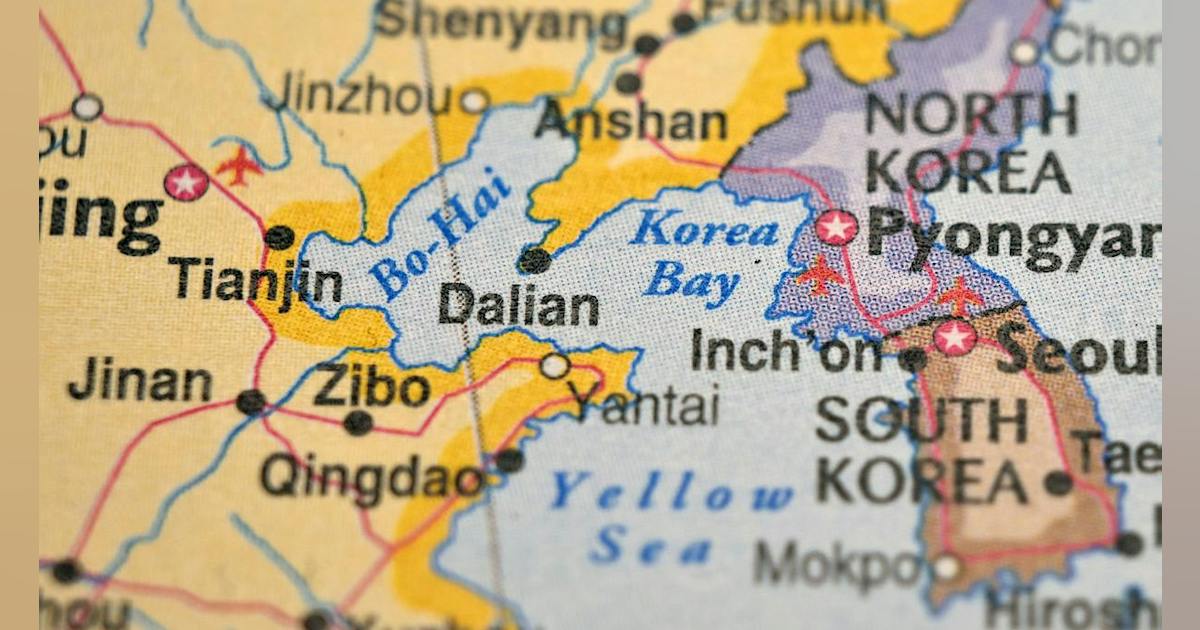
CNOOC has discovered oil and gas in ultradeep volcanics in the central Bohai region offshore eastern China.
The location is adjacent to the hydrocarbons-rich Bozhong Sag, with the well encountering 120 m of gas pay zone in volcanic formations at depths of more than 5,000 m, before being completed at a depth of 5,770 m.
During testing it produced about 28 MMcf/d of gas.
The geology of these formations in Bohai complicate reservoir prediction, the company said.
To determine the prospectivity, it has developed deep multi-source broadband 3D seismic exploration technologies and techniques for predicting good-quality reservoirs in ultradeep buried hills.
These led to the pinpointing of the promising ultradeep volcanic natural gas enrichment zones in the Bozhong Sag.
Xu Changgui, chief scientist and chief geologist at CNOOC, said the company had worked in recent years “to strengthen theoretical innovation in deep and ultradeep oil and gas enrichment in basins with high heat flow and strong activity, and to intensify research on key technologies.”
“The success of this well has opened up a new play for offshore ultradeep natural gas exploration and expanded the scope of deep oil and gas exploration in Bohai,” he continued. “It is of positive significance for accelerating the ultradeep exploration process in Bohai and for building a major gas province of 1 Tcm in Bohai.”
Why volcanic reservoirs matter
Volcanic reservoirs can contain significant hydrocarbons but are notoriously difficult to image and characterize.
CNOOC credited deep multi-source broadband 3D seismic technology for identifying the target and improving reservoir prediction.