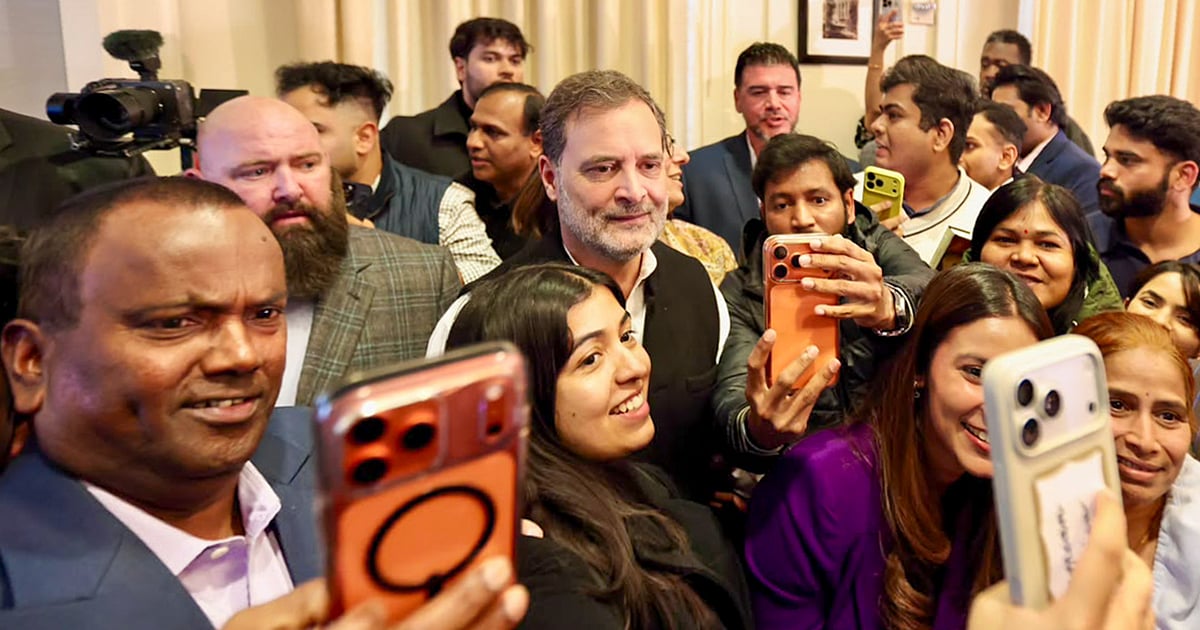
He also raised concerns over limited private investment and alleged that economic growth was increasingly concentrated among a few large corporate groups, particularly the Adani and Ambani business empires.
The Congress leader alleged that wealth and political power were becoming increasingly concentrated, affecting farmers, tribal communities, Dalits and minorities.
Referring to protests across the country, he said they reflected growing dissatisfaction among different sections of society over economic and political marginalisation.
Rahul Gandhi also questioned the electoral process, alleging irregularities and calling for reforms to restore public confidence in democratic institutions. He said removing chief election commissioner Gyanesh Kumar was among the steps needed to address these concerns.
Responding to questions about tighter US immigration policies and their impact on Indian students, Rahul Gandhi said the issue was relatively small compared with India’s larger employment challenges.
He stressed the need to improve agricultural productivity, rebuild manufacturing and make education more effective and affordable.
Despite his criticism, Rahul Gandhi said he remained optimistic about India’s potential but warned that another five to 10 years of inaction could put the country in serious difficulty.
His remarks at Columbia University focused primarily on unemployment, manufacturing, wealth concentration and electoral reforms, alongside concerns about India’s economic direction.
With PTI inputs