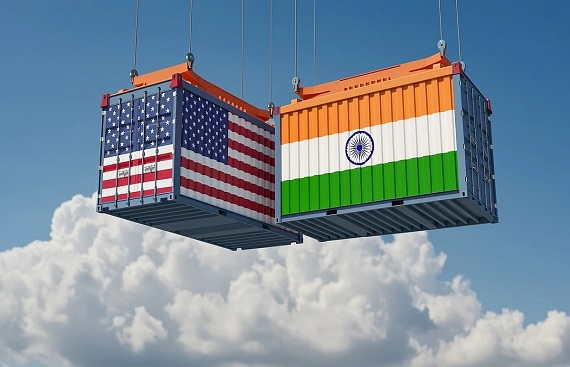
The Trump administration is preparing fresh tariffs on India and 15 other economies over alleged industrial subsidies, potentially complicating ongoing India-US trade negotiations.
The Donald Trump administration is preparing a fresh round of tariffs on India, China and 14 other major economies over alleged industrial subsidies, according to a report by The Wall Street Journal. The proposed move could increase trade tensions and further delay the India-US bilateral trade agreement.
The investigation examines whether government subsidies and financial assistance allow foreign manufacturers to produce goods at lower costs and gain an unfair advantage over American companies.
The investigation covers China, India, Japan, South Korea, the European Union and 11 other economies. Washington argues that government support encourages excessive industrial production, allowing manufacturers to sell goods at lower prices in international markets.
According to the report, the proposed tariffs could cover most products imported from these economies. However, steel, aluminium and automobiles may be excluded as they already face separate duties on national security grounds.
Japan, South Korea and the European Union could face tariffs of 15% or lower, while India and Vietnam may encounter comparatively higher rates. China is expected to face particularly steep duties.
The administration is also considering provisions to increase tariffs if industrial overcapacity rises or countries fail to introduce policy changes.
The proposed action comes as India and the US continue negotiations on their bilateral trade agreement. On February 7, 2026, both countries announced an interim framework under which Washington agreed to reduce reciprocal tariffs on Indian goods from 25% to 18% and withdraw an additional 25% penalty linked to India’s Russian oil purchases.
However, the US Supreme Court’s February ruling against the earlier reciprocal tariffs created uncertainty around the arrangement.
“The challenge that you need to appreciate is that the deal (framework for the first tranche of the bilateral trade agreement) was announced (in February) in the background of executive tariffs that were existing at that point of time. Those tariffs have been struck down by the Supreme Court there. Now a new tariff architecture is being created by the US,” Agrawal said.
The ongoing Section 301 investigations into industrial subsidies and overcapacity add another layer of uncertainty. India wants clarity on these investigations before finalizing the agreement, even as both governments seek to conclude negotiations.