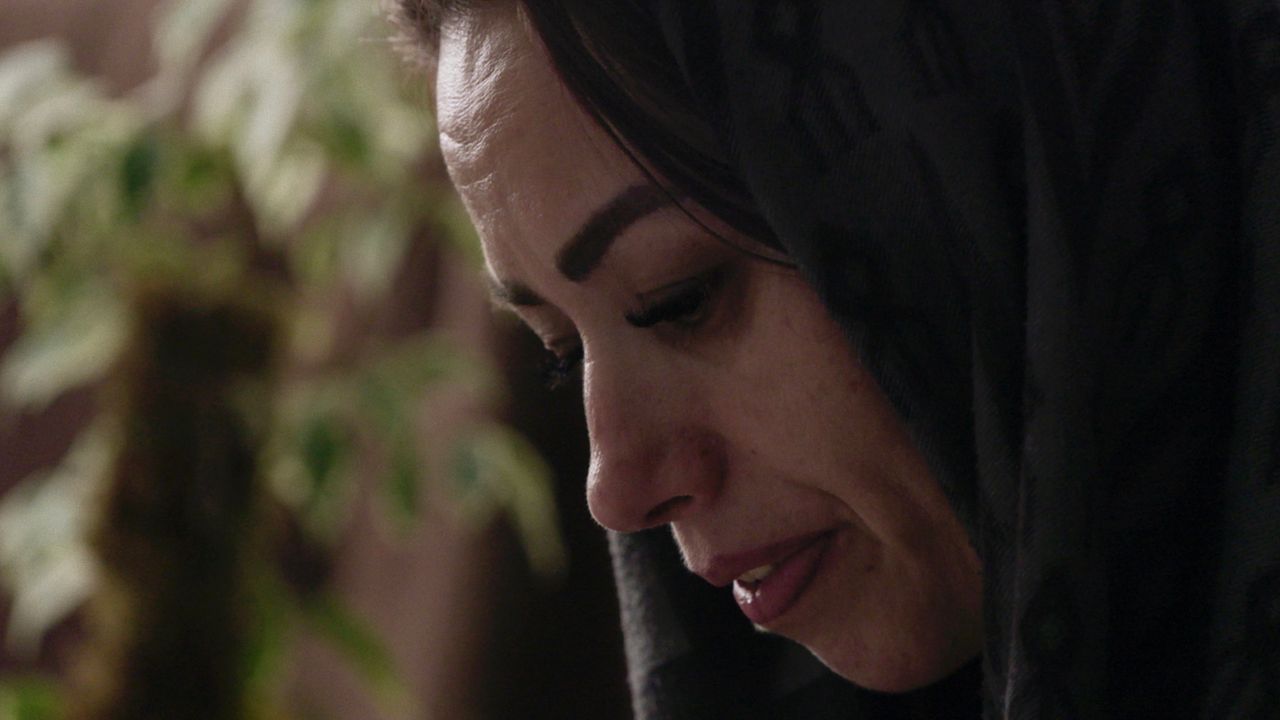
Mohsen told me that the family finally concluded that “his no longer existing was better than his existing.” One night, Hossein returned early from his job on a construction site. Tahereh says that her daughter urged her to take action: “No one knows he’s with us. Let’s do it. Let’s kill dad.” Tahereh, a fan of detective shows, thought about managing the evidence: she worried that spattered blood would give them away. So, she recalls in the film, she sneaked up on Hossein and choked him with her hands.
Roughly twenty-one hundred people were executed in Iran last year, more than twice as many as in 2024. Among countries that reliably disclose their statistics (a group that notably excludes China), Iran is by far the world’s leading executioner. International attention tends to focus on executions carried out by the state: protester crackdowns, morality-police violations. Last week, the U.S. State Department accused Iran of using capital punishment to squash public dissent. Yet, as a panel of human-rights experts told the United Nations last month, most executions are related to drug offenses, which can carry capital sentences, or to qisas, meaning “retribution-in-kind.”
For unintentional killings and injuries, a judge determines the verdict, but in cases of premeditated murder the survivors are left to decide a punishment. Amnesty International has condemned the Iranian justice system, saying that it “perversely seeks to place the responsibility” for sentencing on “those who have lost their next of kin to murder.” The custom of blood money also results in a two-tiered system: wealthy offenders can buy their freedom, while the poor are often hanged.
In the film, Tahereh laments, “The decision is up to my brother-in-law. If he wants to seek the death sentence, it’s over. I’ll be executed.” Mohsen, who is now twenty-five, resented the control that his uncle and grandmother had over his mother’s life. “Her fate was in their hands, and all they wanted was money,” he told me. “I could see the price on her life going up and down with the country’s inflation.”
The case was unusual in that, as a local reporter tells the filmmakers, “Everyone claimed responsibility.” As a child, Mohsen told investigators that a man—someone with whom Tahereh appears to have been involved—had been in the apartment on the day of the murder. (Mohsen later said that the statement had been coerced.) Mohsen’s sister, Somayeh, initially said that she took part in the killing, and she was imprisoned before Tahereh stepped in to insist that she acted alone. The case against Somayeh was eventually dropped, but she was sent to a correctional facility in Tehran. There, she met Jabarzadegan, the activist, who took on the family’s case.
Jabarzadegan, a chemist by training, had begun volunteering in youth facilities twenty years ago, after she heard that minors were being sentenced to death. (Girls as young as nine and boys as young as fifteen can be tried as adults, and in recent decades human-rights organizations have documented dozens of executions of children under eighteen.) She told me that the first murder case she helped to negotiate was over a coat. Two teen-age boys had got into a fight, which ended with one of them stabbing the other in a roadside ditch. The dead boy’s parents eventually pardoned the killer in exchange for a nominal amount. “Back then, people were realistic,” Jabarzadegan said. These days, “it’s gotten crazy.”
Since the U.S. and Israel went to war in Iran, in February, the country has been beset by soaring food prices, power shortages, and rising unemployment—an economic downturn so harsh that even the usually dismissive regime was forced to admit it. The crisis has contributed to a spike in cases of marital violence, Jabarzadegan said. “As stress in Iran goes up, like the sanctions and the financial pressure, so have these behaviors.”