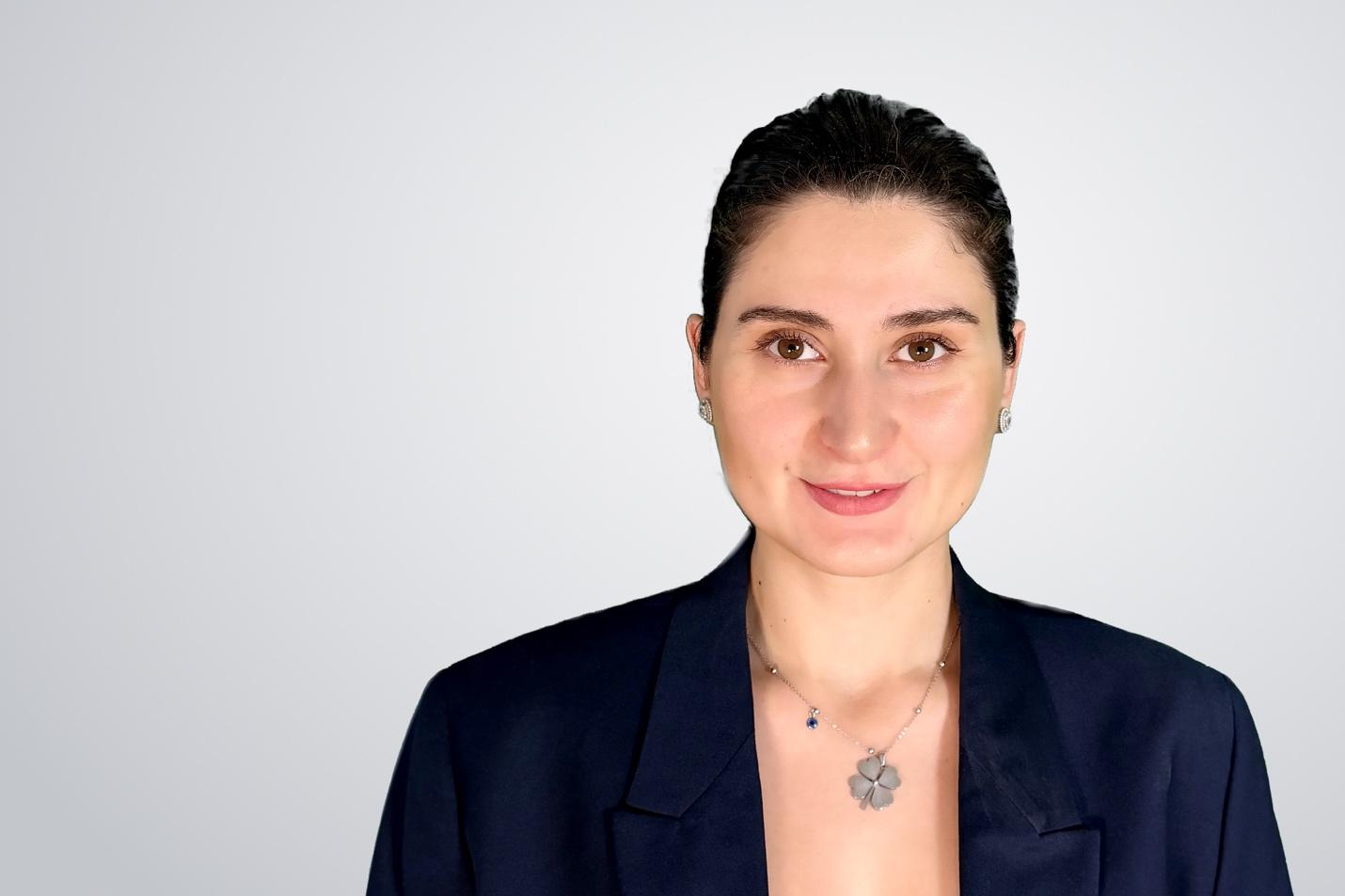
In early 2021, Sevindik hosted live business broadcasts on Clubhouse for Dünya and wrote news stories for the newspaper based on those conversations. Moving a live discussion into a written report meant working with the same material in two editorial forms. That experience offers a practical starting point for understanding her approach to multimedia journalism.
Her work spans the preparation, editing, and presentation of news in written, audio, and video formats. Today, her independent coverage of U.S. policy and economic developments draws on that experience, with source analysis informing the script and the visual presentation.
Before establishing her U.S.-based reporting operation, Sevindik trained in journalism at Marmara University, graduating in 2014. Undergraduate internships at TRT Documentary and CNN Turk in 2013–2014 introduced her to newsroom production; later roles at Haberturk and Turkuvaz Media Group gave her responsibilities in digital editing and social media.
She added graduate-level coursework in Advertising and Brand Communication at Bahcesehir University to that journalism foundation. At Grossmont College, she earned an Associate in Arts in Art/Digital Art, received Spring 2025 Vice President’s Honor List recognition, and participated in a student art exhibition. Her education brings reporting and visual composition into the same professional practice.
During 2020–2021, she worked for Nasıl Bir Ekonomi, which then published Dünya, Türkiye’s first daily economics newspaper. She now manages research, scripting, editing, and publication through Gulcan Sevindik Media LLC in the United States.
Establishing digital journalistic credibility
Sevindik’s bylined technology report “What Was Unveiled at CES 2016?” (“CES 2016’da Neler Tanıtıldı?”), published by Haberturk.com on January 12, 2016, is an early example of her written reporting. Her same-day video report from Maçka Park on July 30, 2017, concerned a story that became national news within hours. Both assignments preceded her current work explaining U.S. developments.
In decentralized digital environments, independent reporters face unique challenges in building sustained viewer confidence. Sevindik addresses this industry hurdle directly: “In digital journalism, an independent reporter must establish consistent trust with their audience.” By implementing structured verification processes, she notes, “When reporting on U.S. political and economic developments, I prioritize credibility through transparency and editorial consistency.”
Structuring visual policy narratives
At Haberturk, she was the voice and editor of Gündem24, Haberturk.com’s daily animated video news bulletin, launched in June 2017. The role placed spoken delivery and editing within a recurring visual news format. Her current account of document analysis and visual synthesis describes how she organizes material for that kind of presentation.
Her workflow organizes policy information before visual production begins. Outlining this specific methodology, Sevindik states, “My workflow follows three distinct steps: Document Analysis, Narrative Structuring, and Visual Synthesis.” Emphasizing that visual assets must be grounded directly in primary source material, she explains, “Second, I structure a factual narrative identifying the central mechanisms, policy context, and measurable implications.”
Preparing interviews and verifying public data
Her reporting responsibilities also extended to interview production. On October 14, 2019, she interviewed Arda Ayten for Turkuvaz Media Group; the interview received 35,063 views. That assignment sits alongside her written reporting and bulletin editing as a concrete example of the formats she has worked in.
Integrating traditional verification into digital-first models is essential for maintaining professional accuracy. Sevindik affirms this operational discipline: “The core principles of traditional reporting—source verification, public record analysis, and editorial scrutiny—remain the bedrock of my digital workflow.”
She describes cross-checking records before scripting: “When examining U.S. policy decisions and market data today, I adapt traditional investigative rigor by systematically cross-referencing public registries, Congressional budget analyses, and official datasets before scripting, ensuring that digital reports are anchored in public records and documented evidence.”
Sourcing global economic indicators
Sevindik’s approach to economic indicators begins with identifying the institutional source and placing the figures in context. Historical timelines, inflation measures, and trade data help her explain the relationship between policy decisions and global market conditions.
Primary institutional sources provide figures that viewers can trace to their origin. “I source financial indicators from institutional databases, such as Federal Reserve Economic Data (FRED), the IMF, and official government statistical bureaus,” Sevindik notes. She explains how she adds context to those figures: “To present this data clearly without oversimplifying economic realities, I focus on contextual comparison: examining historical timelines, inflation metrics, and trade data to illustrate how policy decisions interact with global market conditions.”
Producing interviews and visual reports
In 2019, she edited and presented “FLASHBACK with Gülcan Sevindik” (“Gülcan Sevindik ile FLASHBACK”) for Woman TV; its first full episode received 34,809 views. The program added a longer interview format to her experience with short news bulletins. Her later Art/Digital Art studies give her another basis for considering how a program’s images, text, and spoken content fit together.
“Ms. Sevindik belongs to a rare group of producers I have seen carry a program single-handedly from initial idea to broadcast, leaving seasoned industry professionals wondering how she managed it.” — Ali Güven, Columnist, tv100.com; former General Manager, Woman TV
She says that the design of a chart or video should support the facts being reported. Sevindik observes, “In news broadcasting, visual presentation serves an informational purpose: to convey data accurately without creating visual confusion.” She describes her use of graphics: “I apply design mechanics to develop high-contrast, structured graphics and clean video layouts that guide the viewer’s focus toward verifiable facts, ensuring that visual assets support editorial clarity rather than serving merely decorative or sensational purposes.”
Explaining global policy and economic risks
Her March 2026 oil-geopolitics analysis, which received 36,709 views, illustrates the subjects she now addresses from the United States. The national daily Yeniçağ covered her Türkçe Dünya (formerly ZoomyaTV) analysis on March 9, discussing her assessment of oil-supply risks and a possible Brent-price increase. The coverage provides a specific example of her analysis reaching readers beyond the original broadcast.
Explaining the roles of different U.S. authorities helps international viewers follow a policy report. “A frequent challenge in international reporting is conveying the decentralized nature of the U.S. political, regulatory, and monetary systems,” Sevindik notes. Utilizing detailed visual mapping clarifies these complex boundaries: “To explain how U.S. governance actually operates, I utilize visual breakdowns—such as structural diagrams, process maps, and split-screen comparisons—to delineate the independent authorities of the Federal Reserve, federal legislative procedures, state-level jurisdictions, and judicial oversight.”
Balancing broadcast diction digitally
FLASHBACK required her to work as both editor and presenter; her current Türkçe Dünya (formerly ZoomyaTV) role similarly combines editorial responsibility with spoken explanation. Across these assignments, presentation is one part of producing the report, alongside preparing the material and deciding how it will appear on screen.
Her on-camera approach combines speech and diction training with visual documentation. “Combined with formal speech and diction training, this background supports an articulate, measured on-camera presentation,” Sevindik explains. She describes how she times the graphics to the narration: “I balance on-screen presence with motion graphics by using visual data as synchronized documentation: charts and cited texts appear to support specific spoken points, maintaining a professional balance where graphical information reinforces the spoken reporting.”
She is country editor and presenter of a weekly program on U.S. developments for Türkçe Dünya (formerly ZoomyaTV). Her pre-recorded video reports from the United States place her on-camera work within an ongoing international reporting assignment.
The future of visual journalism
The next stage of Sevindik’s work builds on a varied production record: animated bulletins, edited interviews, live business discussions, and independent policy analysis. Each format calls for decisions about what to retain, what to explain, and how to make the source of a claim clear to the audience.
For concise video reports, she emphasizes clear structure and source documentation. “The evolution of international visual reporting requires maintaining strict journalistic standards while adopting clearer visual communication methods,” asserts Sevindik. She describes the responsibility this places on visual journalists: “As digital audiences seek concise reporting, the responsibility of visual journalists is to communicate verified facts through clear charts, structured timelines, and transparent data sourcing.”
Sevindik’s career connects written reporting, animated news bulletins, and the programs she edits and presents, showing how reporting moves between formats. Her YouTube channel, Türkçe Dünya (formerly ZoomyaTV) program, and newsletter provide direct access to her current work.