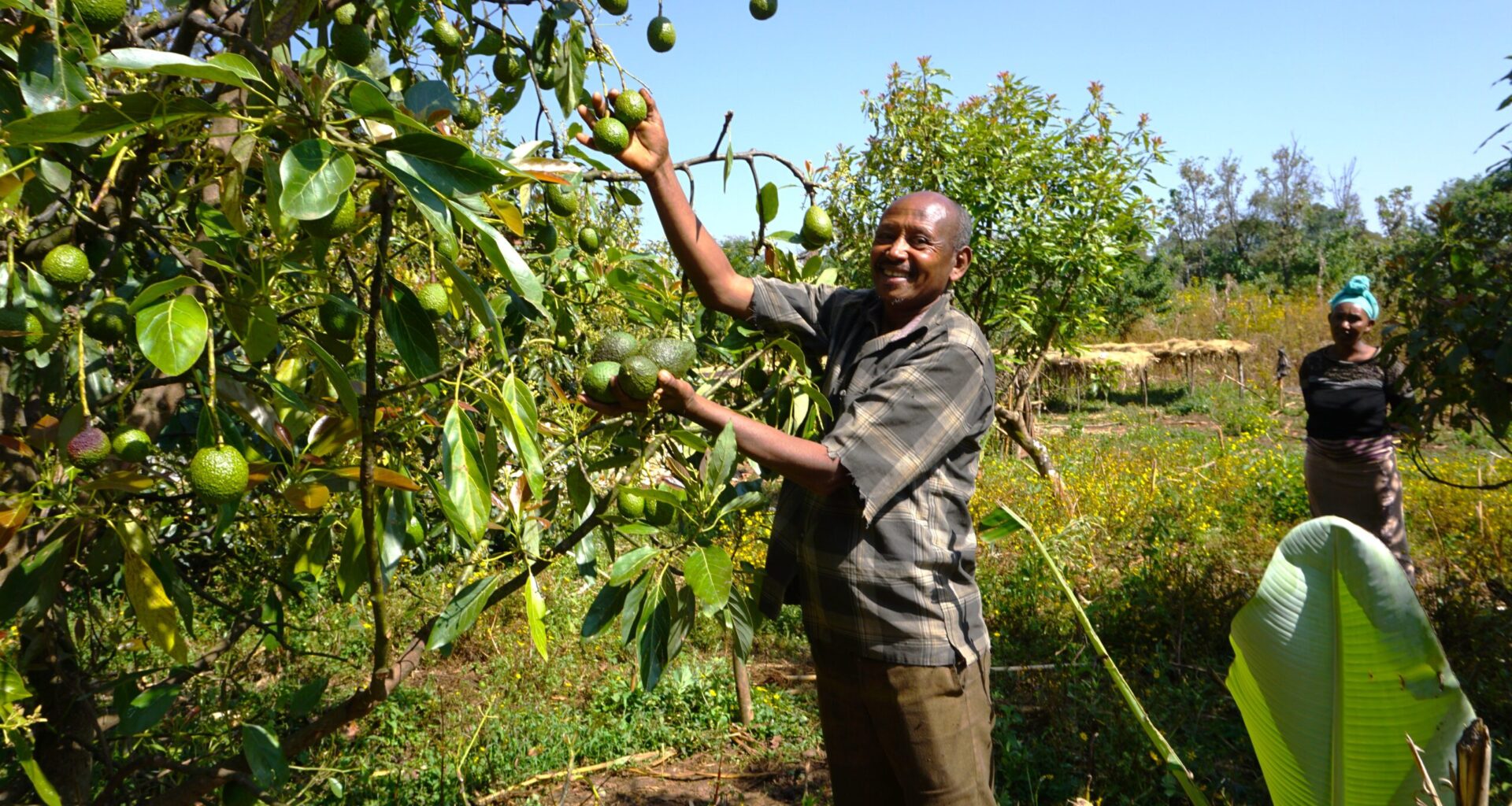
In Gechi District, Oromia Region, where coffee has long been the backbone of rural livelihoods, a quiet shift is taking place. Farmers who once relied almost entirely on a single crop are now harvesting avocados — a fruit that is bringing both food and cash and changing how they think about trees on their farms.
For Muluneh Getaneh and his wife, Demie Tesfaye, the change began just a few years ago. Like most households in the area, the couple grow coffee as their main cash crop. Six years ago, they were introduced to avocado trees brought in by a non-governmental organization from another district. At the time, the trees meant little to them. Some failed to survive, others were poorly cared for, and the potential benefits remained unclear.
That perception shifted in August 2021, when a Rural Resource Center (RRC) was established in the neighbouring Seko kebele— the lowest government administrative unit— with support from the Center for International Forestry Research and World Agroforestry (CIFOR-ICRAF)’s Engaging Rural Youth in Tree-based Value Chain and Functionalizing the Watershed and Agroforestry Multistakeholder Platform project. Over the past five years, the couple have planted 70 grafted avocado seedlings, 50 of them sourced directly from the Seko RRC.
Better trees, better returns
According to the project coordinator, Feyisa Ararsa, the first avocado seedlings introduced during the establishment of the RRC were sourced from outside the area. “In 2021, during the establishment of the RRC, the project initially purchased grafted avocado seedlings from other areas to introduce the tree to the RRC group and beneficiary farmers,” he said. “However, these seedlings had lower survival rates, as they were less adapted to the local climate.”
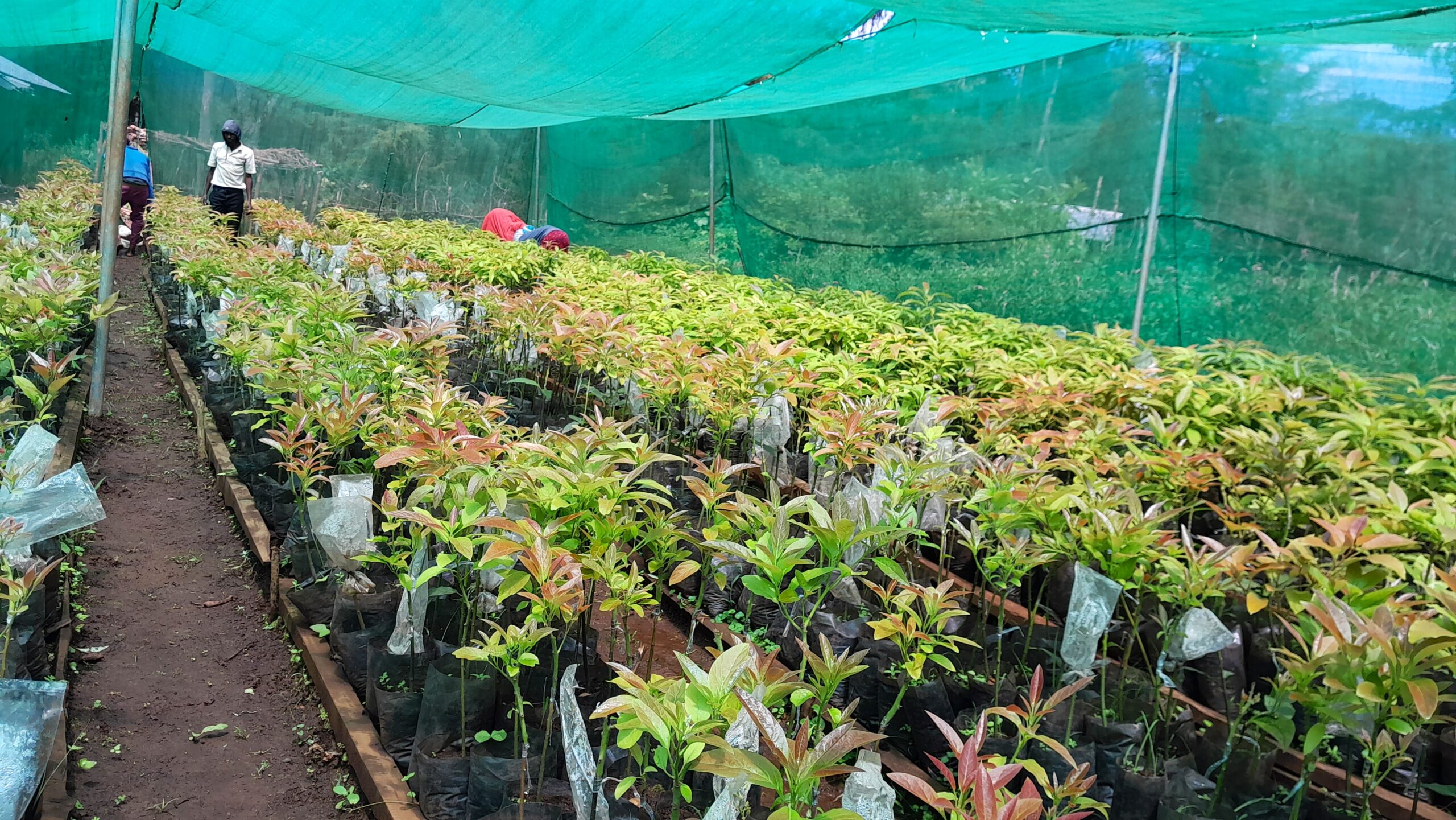 Grafted avocado seedlings are raised under shade at a Rural Resource Center, supplying farmers with planting material adapted to local conditions and supporting the expansion of fruit-based agroforestry systems in southwest Ethiopia. Photo by Eyob Getahun / CIFOR-ICRAF.
Seedlings now raised at the Seko RRC are better suited to local conditions, resulting in a higher survival rate. Grafted avocado seedlings also begin bearing fruit in about three years, while local, non-grafted varieties typically take more than seven years to produce their first fruits.
“We neither knew avocado nor its benefits before,” said Muluneh. “But once we began to reap the fruits, we could see the difference these trees make.”
At first, the couple received avocado seedlings free of charge. As the benefits became clearer, they began buying them directly from the RRC.“We eat avocado and sell it,” said Demie, Muluneh’s wife. “This year, we sold 280 kilograms of avocado at 55 birr per kilogram. Last year, we sold 360 kilograms.” She noted that lower rainfall this year reduced yields compared to the previous season.
Despite seasonal variability, Muluneh remains optimistic. “The trees we have will continue to grow, and we hope to benefit more in the coming years,” he said. His main concern now is the market. This year, a private company exporting avocados purchased their harvest, but he hopes demand will expand as production increases.
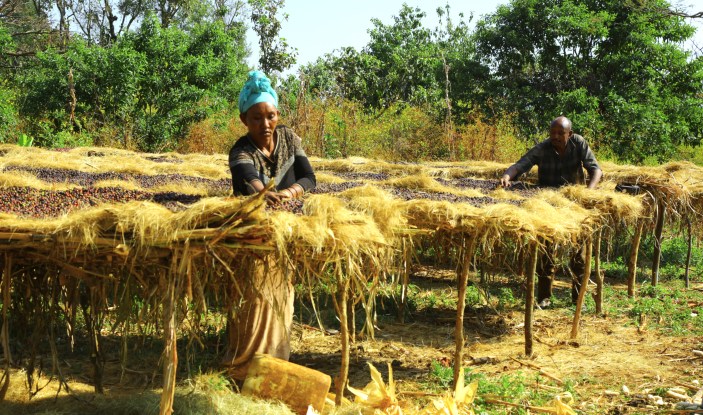 Demie Tesfaye and Muluneh Getaneh dry freshly harvested coffee berries, showing how fruit-based agroforestry complements coffee production and strengthens household livelihoods in southwest Ethiopia. Photo by Eyob Getahun / CIFOR-ICRAF.
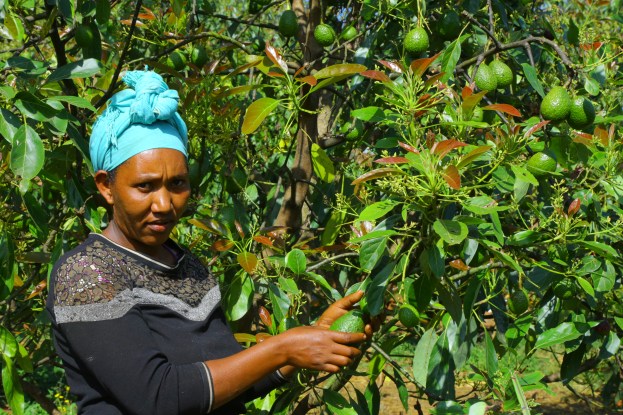 Demie Tesfaye inspects fruit on a productive grafted avocado tree grown alongside coffee, highlighting the role of agroforestry in improving nutrition and farm incomes in Gechi District, Oromia Region. Photo by Eyob Getahun / CIFOR-ICRAF.Encouraging adoption
Many farmers in the area were initially reluctant to plant grafted avocado trees, as they were more familiar with annual crops and coffee. To address this hesitation, the project worked across four districts — Gechi, Chora, Mattu and Becho — providing training to around 230 farmers.
In addition to seedlings, farmers received livelihood support to help them care for the trees during their first three years, before they began producing fruit. This support included the provision of improved chicken breeds and seeds of high-quality vegetables such as cabbage, carrot, onion, beetroot and garlic.
Four RRCs were established in Illubabor and Buno Bedele zones of Oromia Region. Three of them are performing well, while one, established in Mattu, was not successful due to a lack of commitment among members. The project has purchased thousands of seedlings from the RRCs and distributed them to women farmers living nearby, helping to expand agroforestry practices in the area. In total, grafted avocado seedlings have been distributed to 650 households. Farmers received Ettinger, Fuertes, Hass and Nabal varieties, selected for their productivity and suitability to local conditions.
Women benefiting from agroforestry
Gadissie Yadeta, who lives in Gito kebele, Gechi District, planted 40 grafted avocado trees obtained from the nearby RRC in Seko. Fifteen of the trees she planted in 2022 are already producing fruit. She also received training in vegetable production and seeds for several crops.
“We eat the vegetables andsell some in the nearby Gechi town,” she said. “This year, we also sold 60 kilograms of avocado.”Gadissie was also among the farmers who received improved chicken breeds through the project. “These chickens lay eggs every day as long as they get enough feed,” she said. “Local chickens may lay eggs for a short time and then stop for months.”
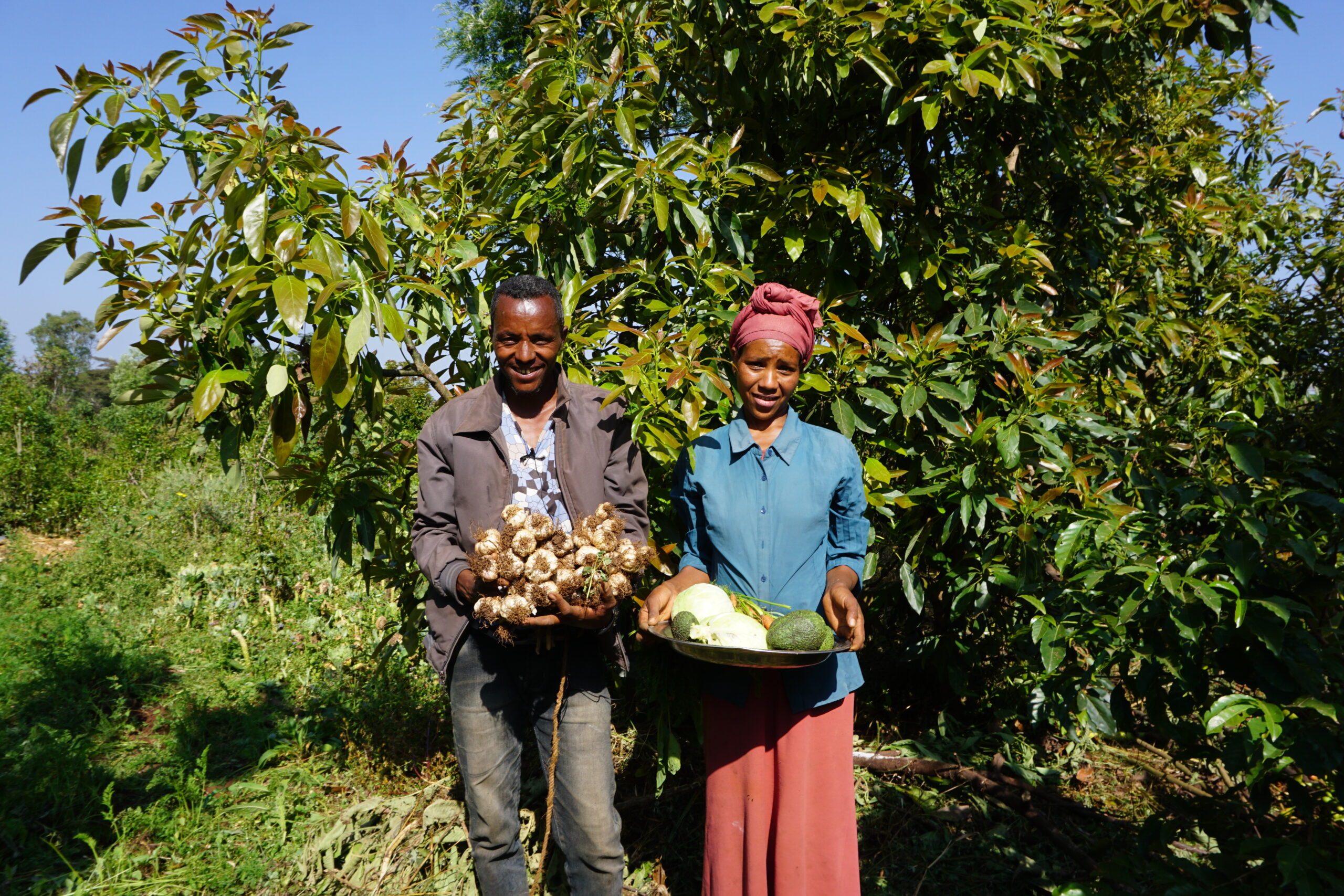 Muluneh Getaneh and his wife, Demie Tesfaye, display vegetables and avocados harvested from their diversified farm, illustrating how agroforestry is strengthening food security and household incomes in southwest Ethiopia. Photo by Eyob Getahun / CIFOR-ICRAF.
Another farmer, Zawditu Befikadu, a widow farmer, has 14 avocado trees, 12 of them from the Seko RRC. When the CIFOR-ICRAF Ethiopia communication team visited her in June 2023, the trees were barely as tall as she was and not producing fruit. By November 2025, all had grown to more than two metres and were yielding heavily.
She sold 70 kilos of avocado in 2025. “I hope to buy a three-wheeler taxi in two years with the income from the sale of avocados and other agricultural products,” Zawditu said. “The encouragement and support I received have been very important to me.”
Looking ahead
As more farmers recognize the nutritional and financial benefits of growing grafted avocado trees, the project’s impact is expected to become increasingly visible across southwest Ethiopia. Three RRCs established with the project support continue to operate, supplying seedlings to local farmers.
“We are pleased to see that we are creating dignified green jobs for unemployed rural youth and women, while making quality planting materials available closer to farming communities through the RRC business model,” said CIFOR-ICRAF country director Niguse Hagazi. “At the time, we are promoting fruit-based agroforestry systems in the project implementation areas.”
With avocado exporters already active in the region, and with appropriate market promotion by district and regional authorities, expanded avocado cultivation could attract even more buyers. As farmers continue to integrate fruit trees alongside coffee, avocado is increasingly emerging as a complementary cash crop — one that also contributes to landscape restoration and local food security.
AcknowledgmentThis article draws on work supported by the David and Lucile Packard Foundation under the Engaging Rural Youth in Tree-based Value Chain and Functionalizing the Watershed and Agroforestry Multistakeholder Platform project, with collaboration from Mattu University and relevant government stakeholders.