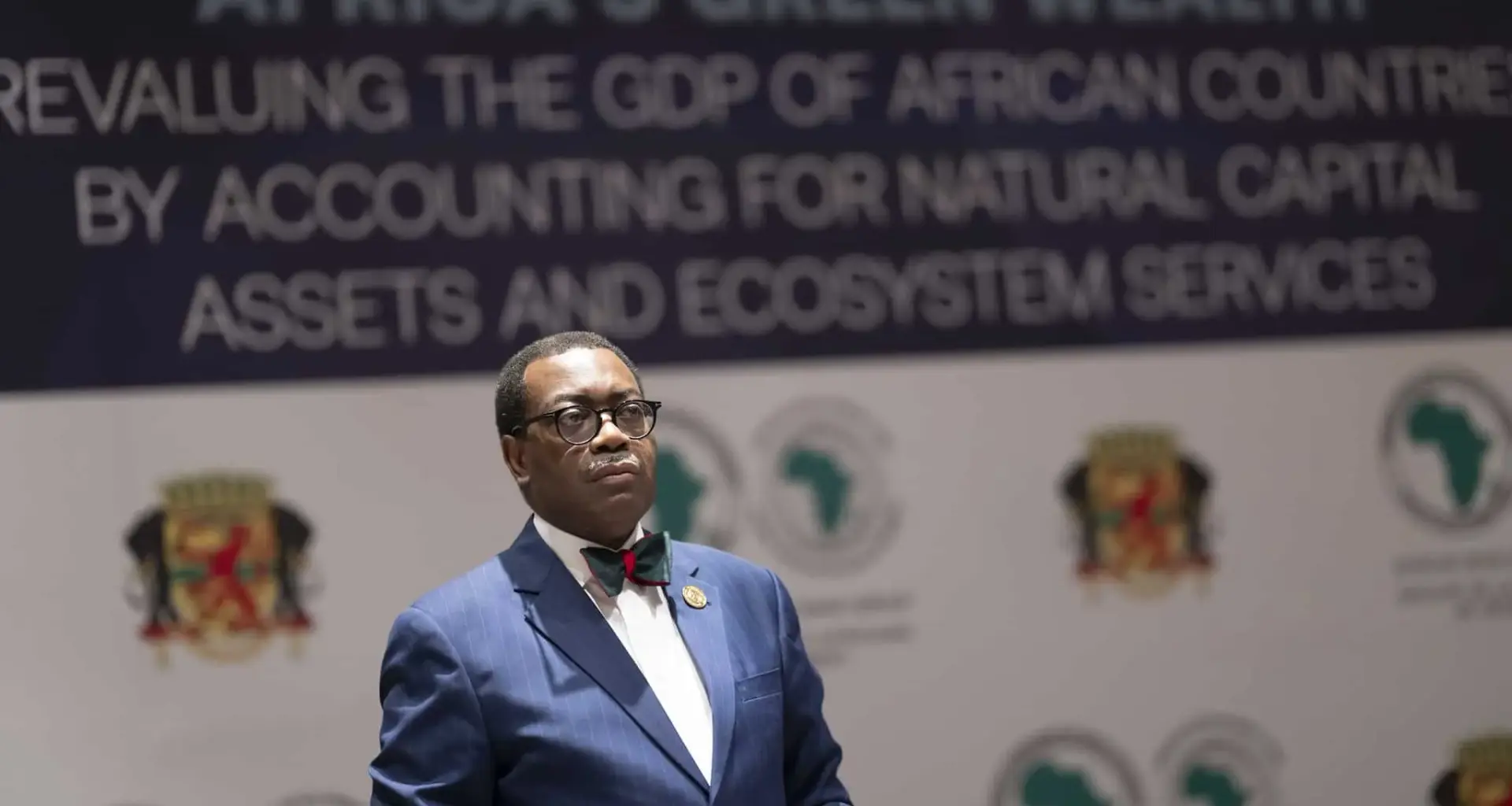
New African leadership pushes to break colonial bonds. From demanding stolen treasures and calling for justice, the stakes are high, but Africa’s sovereignty is higher.
At the 2025 African Union (AU) Summit, leaders focused on “Justice for Africans and people of African descent through reparations.” During the event, the 55-member organization emphasized several moves to change the power dynamics between Africa and former colonial authorities. These drastic alterations, if carried out, will transform the influence of primary and neo-colonial control over the continent; all the while, challenge a longstanding global order that has excluded much of Africa’s countries from being key players in geopolitical conversations.
Moreso, the outcomes of the meeting further emboldened the broad grassroots and youth movements pushing for what is termed as a “second decolonisation wave.”
Key items on the agenda addressed how nations could recalibrate in a mutating world governance called “the Great Reset.” One, they proposed to seek financial restitution to African nations and communities affected by colonial exploitation. Another AU plan coming out of the summit is to work towards the repatriation of cultural artifacts in order to restore and promote African cultural heritage suppressed or destroyed during colonial times. Addedly, they will push for land restitution; especially in countries where land was taken from indigenous populations.
Demilade Phillips, a Nigerian journalist confirmed to Ark Republic that he strongly supports AU efforts in reparations, believing Africa is owed far more than it has received. Building on this perspective, Phillips connected past injustices to present-day realities, arguing that the lingering influence of former colonial powers reinforces the case for reparations.
He acknowledged that something like reparations might seem to be a far-fetched undertaking, yet “colonialism itself was supposed to be unrealistic, but they made it happen.” Reflecting on the brutal histories of countries like Portugal, France or even Belgium. Phillips also pointed out that many of these continue to exert influence over their former colonies. Because of the inequities established by colonialism, Phillips pointed out those of African descent often start life at a disadvantage compared to descendants of colonizers.
The impact of systemic issues formed during the colonial period extended out of Africa, and still exists today, even in Europe. Phillips explained that “most of the physical labor in countries like Portugal is still done by people from [their former colony] Brazil or Portuguese-speaking African countries.”
Back in Africa, Phillips represents a palpable youth contingency who say reparations could help accelerate Africa’s development. For Phillips, reparations ensures that the “power of the passport,” or the ability to migrate like those in colonizer countries, provides them with more opportunities and mobility often limited for young Africans. At the same time, restorative action creates opportunities for Africans to thrive in their own countries, so they do not have to leave home to pursue their dreams abroad. It is about giving back after so much was taken without consent and enabling people to build their nations.
While there is a push from former colonial authority, there is pull for newfangled global entanglements. In AU’s reformation of power, governments across the continent are forging new alliances—with powers like China, India, Russia, Turkey, and Gulf States—to reduce dependence on Europe. These partnerships, rooted in economic and diplomatic engagement, offer Africa alternatives without colonially tinged conditions.
Alienating the French
As of late, several nations in Francophone Africa have taken a strong stance against French neo-colonial authority. One of the most salient, current examples being the newly-led Burkina Faso under its charismatic, Africa-first interim president, Captain Ibrahim Traoré. The military officer who led a coup in the West African country has been the head-of-state since 2022.
Under this new direction, in September 2023, Burkina Faso made headlines by expelling French troops from its territory. This ended a military agreement with France, ultimately opening up for local forces to control operations. In addition, it ordered the closure of French-run institutions, including media outlets seen as sympathetic to the once-greatly influential former colonial power. This move came subsequent to widespread anti-French sentiment and the rise of military juntas that sought to reclaim sovereignty and explore partnerships with Russia and Turkey instead.
Since, Burkina has developed closer contacts with Russia. Traoré gave an interview saying Burkina was not “the enemy of the French people,” but of its government policies. “We have to accept seeing each other as equals… and accept an overhaul of our entire cooperation,” he said on state television.
While this position is celebrated in some circles, in others, questions arise. Does the pan-Africanist leader’s push for new alliances truly serve Burkinabé’s long-term interests or does it merely swap one form of dependence for another? There are concerns that Traoré’s sidelining regional bodies like the Economic Community of West African States (ECOWAS) could isolate the country politically and economically, raising doubts about the junta’s vision for sustainable sovereignty.
In an interview with Ark Republic, Ueli Staeger, a research associate at the Global Governance Centre in Geneva, observed that African nations are “rethinking their relationships with former colonial powers.” He also emphasized that this pursuit of self-rule, while symbolized by leaders like the Burkinabè Military Ruler, involves complex decisions about future alliances.
While breaking ties with France expresses a “strong desire for change,” Staeger cautioned that turning to new allies such as Russia risks “repeating old patterns of dependence.” The assistant professor of international relations at the University of Amsterdam added that some French post-colonial connections are now outdated and misaligned with today’s global international relations.
Staeger warned of the “palpable” danger in cutting ties too drastically — choosing to “emancipate from France,” only to fall into reliance on another major power instead of focusing on “self-reliance.” This complexity, Staeger noted, is compounded by Captain Traoré’s push for Burkina Faso to exit liberal regional organizations like ECOWAS.
All in all, this Sahelian nation has become a household name across Africa, with many regional citizens drawing comparisons between their own leadership and Traoré. To a large number, his leadership embodies a steadfast patriotism, determined to elevate his country — an effort that has caught the keen attention of neighboring states and the colonizers in question.
In recent years, Mali has also reduced its ties with France, marking a major shift in its foreign policy and regional alignment. The Malian government expelled the French ambassador in 2022, ending defense and military cooperation, and formally withdrawing from joint special force initiatives like Operation Barkhane. It also banned French media outlets such as RFI and France24, suspended visa issuance to French nationals in a retaliatory move, and removed French as its official language.
Early 2025, Mali withdrew from the Organisation Internationale de la Francophonie, solidifying its break from French influence and aligning more closely with regional partners like Burkina Faso and Niger.
Indeed, numerous nations within the continent are following suit and cutting military ties with France. Included is Ivory Coast president, Alassane Ouattara. In his 2024 end-of-year address to the country on December 31, the head of state confirmed that the Ivorian government had decided to expel French troops because the Ivorian army is “now effective.” He did not give any other reasons. Overall, by January 2025, six African countries – Mali, Burkina Faso, Niger, Chad, Senegal, and Ivory Coast – had done so. Not only this, but the United Kingdom (UK) became much less present in Africa following Brexit, nearly five years to the date.
During his annual address to ambassadors, French president Emmanuel Macron criticised what he called African nations’ “ingratitude” toward their former colonizer. In his condemnation, he said that African leaders failed to “thank” France for its military interventions, including the 2013 operation in the Sahel. Macron’s remarks reflected a broader frustration, as he suggested that current African leadership owes its sovereignty in part to France’s past military interventions.
“It’s no big matter, it will come with time,” Macron warned, adding that without France’s counterterrorism efforts, “none of them” would be governing a sovereign nation today.
In response, Traoré called Macron’s remarks an insult. “To him, we are not human beings,” he retorted.
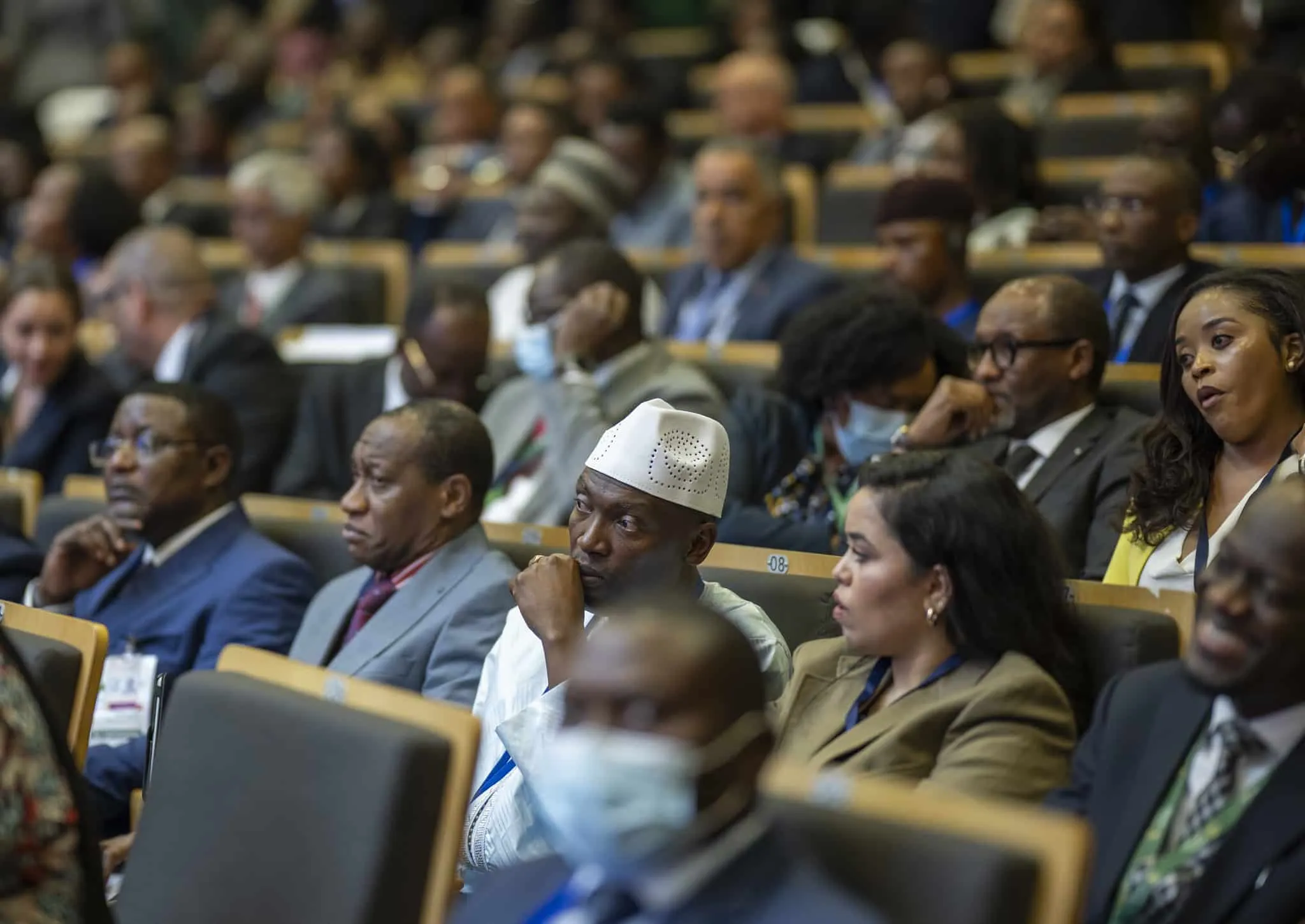 37th AU Summit Opening Ceremony, February 2024. Photo credit: Paul Kagame Flickr account
Back to the roots
A journey through the continent’s history has been essential to completely redefining this relationship. This growing awareness of historical injustices prompted several African nations and former colonial powers to reassess their ties. Actions such as financial commitments and the return of cultural artifacts are efforts to address the lingering impacts of imperialism.
Germany committed to compensate Namibia with roughly €1.1 billion for colonial-era atrocities. Under its formal rule, from 1884 to 1915, German occupation killed 80% of the Herero people and 50% the Nama. Then they instituted concentration camps, forced labor and repeated sexual atrocities. Included were subjecting native nations to scientific experiments. Today, Germany has begun returning stolen treasures. Many see it as a substitute for Deutschland paying reparations for its historical brutalities.
Along these lines, Belgium recently returned the remains of Patrice Lumumba to his family — a notable gesture toward reconciliation. Lumumba’s gold tooth was all that remained after his body was disposed off following his 1961 assassination. Of import, Lumumba helped to free the Democratic Republic of the Congo (DRC) from Belgian colonial rule and became its first prime minister. It is noted that the Central Intelligence Agency (CIA) played an important role in destabilising the DRC and in Lumumba’s assassination.
The West, particularly Belgium and the US, opposed Lumumba’s plans to nationalize Congo’s raw materials — an initiative also currently being carried out by Captain Traore and others — and his proximity with the Soviet Union in the midst of the Cold War. Not long after, Lumumba and two aides were shot in the forest under the command of Belgian officers. Years later, the DRC, with all its raw materials and wealth, suffers immense poverty and an ongoing war. This goes to say that the country — among many others within the region — has not had a president of his people ever since.
This legacy of external interference and betrayal has fueled growing resentment across the region, leading countries like Rwanda to also sever ties with former colonial powers in a bid to reclaim their sovereignty. The East African nation ended diplomatic ties with Belgium, accusing it of maintaining “pitiful,” “neocolonial delusions,” signaling a decisive break from old-era dynamics.
The Netherlands also recently returned many artworks to Nigeria and Benin, signaling a shift in power and awareness.
Stumbling blocks in the pursuit of sovereignty
As African nations maneuver through this path, experts observe both the progress made and the persistent challenges that remain. From shifting international alliances to the ongoing influence of colonial legacies in economic and political systems, the journey is far from straightforward. This is especially critical when we look at the continent’s dependence on external aid.
In an earlier Ark Republic article reporting on the cut of US aid under the current Donald Trump presidency. The topic of Africa’s reliance on aid from western countries emerged. “Even though the AU is an institution that is African in name, the majority of the body comes from the European Union, which means the AU does not work [i]n Africa’s interest,” David Hundeyin, an investigative journalist and researcher, expressed to Ark Republic. The influence of foreign powers often outweighs the needs and voices of African nations, leading to policies that serve external interests rather than the well-being of the continent’s people. This imbalance, he argues, is a significant barrier to achieving true autonomy and progress for Africa.
Staeger calls attention to the powerful role external funding plays in shaping Africa’s political scene. He reinforced that his research on the African Union’s finances reflects broader patterns across the continent: Despite the growing rejection of financial dependence in Africa as it strives for greater autonomy, European funding remains a practical necessity, creating tensions rooted in historical and moral considerations. “Africa is undergoing a shift where monetary reliance is no longer morally accepted — although in practice, European funding remains necessary,” Staeger noted.
This paradox, he said, creates tension, especially given Europe’s unease with its past. Furthermore, Staeger pointed out that discussions around reparations and financial hierarchies make many western diplomats very uncomfortable, complicating the relationship between the two sides.
“It shapes mindsets on both sides,” the assistant professor expounded on this economic dynamic; it not only influences policy decisions, but also affects diplomacy.
At the same time, western actors often struggle to reconcile their current role with their historical responsibilities, leading to hesitation in fully engaging with discussions about power imbalances or structural reforms. This, he argued, contributes to a complex and sometimes strained partnership, but he confirms his optimism towards progress.
Further breaking free from entrenched patterns — such as Africa’s focus on exporting raw materials rather than processed goods has always been difficult because foreign investment is often necessary.
Africa’s raw materials
Experts who attended the 10th African Economic Conference in Kinshasa called on African states to reduce their excessive dependency on raw material exports and imported consumer goods. They contended that this was the only viable way to reduce poverty and social inequality on the continent. Ultimately, this would provide the right terms to invite external actors without creating new dependencies.
This economic reality is just one part of the wider challenge African nations face as they work toward genuine self-governance. As Phillips reminds us, many are still in the early stages of independence compared to longer-established democracies, which shapes expectations and the pace of progress.
“When discussing democracy, many overlook the fact that …unlike the US — which has had centuries of independence despite its current challenges — African nations mostly became independent in the 1960s.” Phillips made clear that despite this fact, there is often an expectation for the region to achieve the same results as nations with much longer histories of self-governance.
While currently living in Portugal, he reflects on the tension he notices between the locals and people from other Portuguese-speaking countries. Highlighted, a proposed bill that would require those from former Portuguese colonies to obtain visas to enter the Iberian nation, calling it “unfair and a slap in the face.” Portugal should not build barriers that restrict access, Phillips opines; especially since much of the country’s infrastructure was built by former slaves. “The descendants of those taken from their homes long ago should be able to benefit from what their ancestors helped create,” he says.
A similar situation is unfolding in the UK, where new legislation aims to limit Nigerians and other former British colonial subjects from entering the country.
However, Phillips noted that Africans are pushing back. “Africa is realizing its strength and independence,” Phillips affirmed. “We are now bold enough to demand what’s rightfully ours.” He added that while there used to be fear of backlash, Africans now recognize that even powerful countries like the US face instability, and this is the moment to assert their rights and lead global conversations.
Regardless of the uphill battle, the passion for change often burns brightest in youth. Of which, explains why younger generations are the most vocal today, as evidenced by the ongoing regional protests. While Africa still faces hurdles in finding its path, the current young demographic is re-learning history and it is clear that transformation is underway.
Despite some European countries introducing restrictive policies targeting African nations, he believes the power of the youth will fuel progress, noting that “the older generation isn’t always ready to fight.”
According to Phillips, challenges like corruption and political instability continue to block progress, with many unethical leaders resisting change because they benefit from the status quo. Yet, he remains optimistic. As more people continue to push back, real change is on the horizon.
For him, the future belongs to those bold enough to demand it.