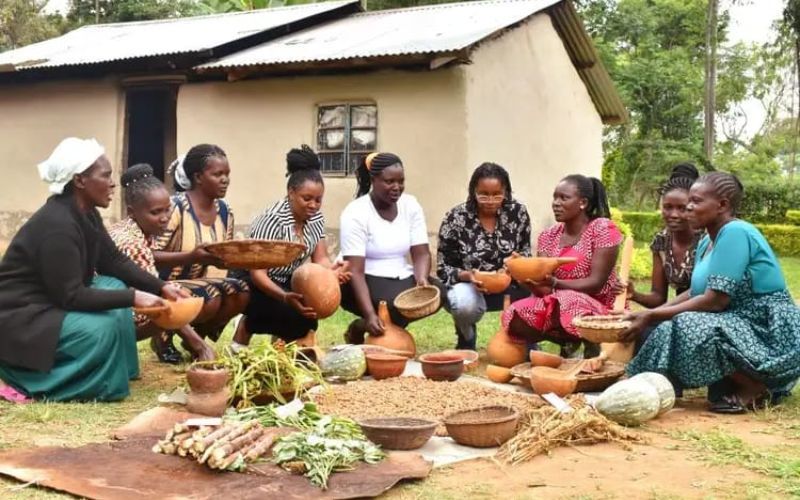
“After years of campaigning, a group of farmers supported by civil society organizations, including our partner Biodiversity and Biosafety Association Kenya (BIBA Kenya), have successfully challenged Kenya’s seed laws that criminalized farmers for saving their own seeds,” the Catholic agency said.
According to CAFOD, declaring the seed laws unconstitutional in Kenya sets “a positive precedent to challenge similar laws in other countries as well as proposed new laws.”
The charity agency explained that the ruling in Kenya means that, without fear of prosecution, farmers in Kenya are now free not only to save their own seeds and share seeds within their communities but also to exchange and sell farmer varieties and strengthen farmer-managed seed systems.
“This is a huge step towards restoring seed sovereignty, defending indigenous knowledge and protecting the heart of African agroecology, and affirms that seeds belong to farmers, communities and generations – not corporations,” CAFOD said.
The agency emphasized that the ruling “is the result of years of campaigning, community mobilization, court battles, policy advocacy, farmer education and collective resistance against criminalization of indigenous seeds.”
“Overturning more regressive laws, such as those in Kenya, is imperative to return the rights to farmers to use their seeds to grow food,” CAFOD said, and reaffirmed its long-standing efforts to challenge punitive seed laws through its Food Systems campaign. The agency noted that the initiative seeks “to put an end to regressive seed laws that restrict, or even criminalize, smallholder farmers’ access to their own seed varieties.”
“When farmers cannot freely access their own seeds, food for their communities cannot be produced,” the UK charity agency said.
On the role of the World Bank in fighting against punitive seed laws, CAFOD said that the bank plays “a key role in promoting these regressive seeds laws because once these laws are put in place, small farmers are forced to buy expensive commercial seeds, which are good for agri-business profit but have devastating consequences for millions of small farmers, including many of the communities that CAFOD serves.”

Silas Mwale Isenjia is a Kenyan journalist with a great zeal and interest for Catholic Church related communication. He holds a Bachelor’s Degree in Linguistics, Media and Communication from Moi University in Kenya. Silas has vast experience in the Media production industry. He currently works as a Journalist for ACI Africa.