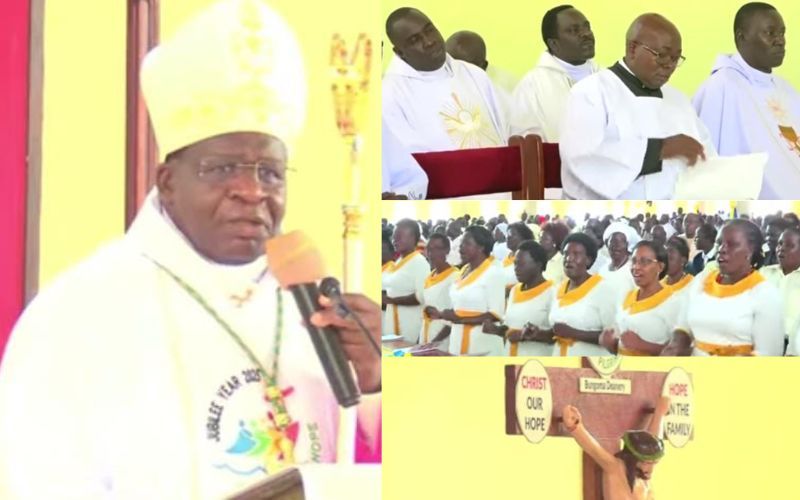
“Our hope is when we find Jesus, we serve him with all we have. All that we have is for him. We give him the best of ourselves,” he said, adding, “That is how we create hope. When we create hope, we serve others with all we have, with all the strength, with all the wealth, that everything is given for the Lord and the good of others. That is all for the glory of God.”
Bishop Kadima also called upon Christians “especially those who are older, who are more talented, who are given offices like mine” to be guiding stars to others, saying, “You have to guide others to reach Jesus, to reach God, to reach the success of their lives, and to reach their happiness. Someone following you will not be misled, and he will not be lost.”
He said that reliability is required of those who guide others, adding, “We have to be reliable stars to be looked at to bring hope. People look at us that each one of us leads others. Most of us are family people here. We have to give direction.”
Bishop Kadima urged Christians to lead by example, noting that authentic witness is itself a source of hope. “People who are fake, who are liars, who don’t keep promises, mislead others. Hope is the example that all of us have to live. And that example is the hope that people look at, that is the star,” he said.
The Catholic Church leader highlighted gratitude and contentment as hallmarks of hopeful people. He warned against constant complaining and entitlement, encouraging believers to recognize when they have received enough and to take responsibility by producing more in their lives.
“People of great hope are grateful. They are happy, satisfied. No more questions, no more complaints,” he said, and added, “A hopeful person is one who says thank you. You have done for me, now its me to work. It is me now to produce, let me go back and work.”

Sabrine Amboka is a Kenyan journalist with a passion for Catholic church communication. She holds a bachelor’s degree in mass communication from St. Paul’s University in Kenya.