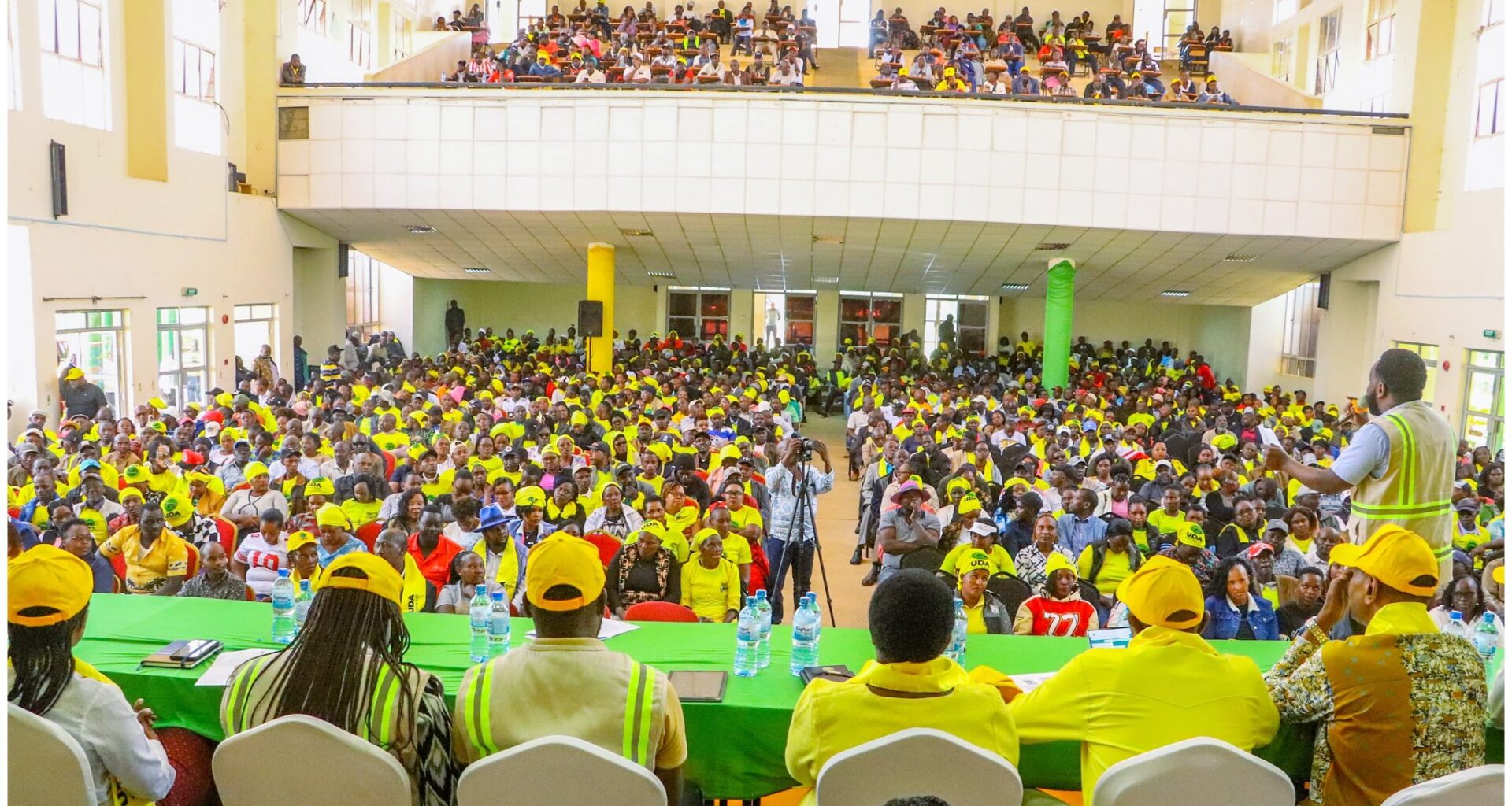
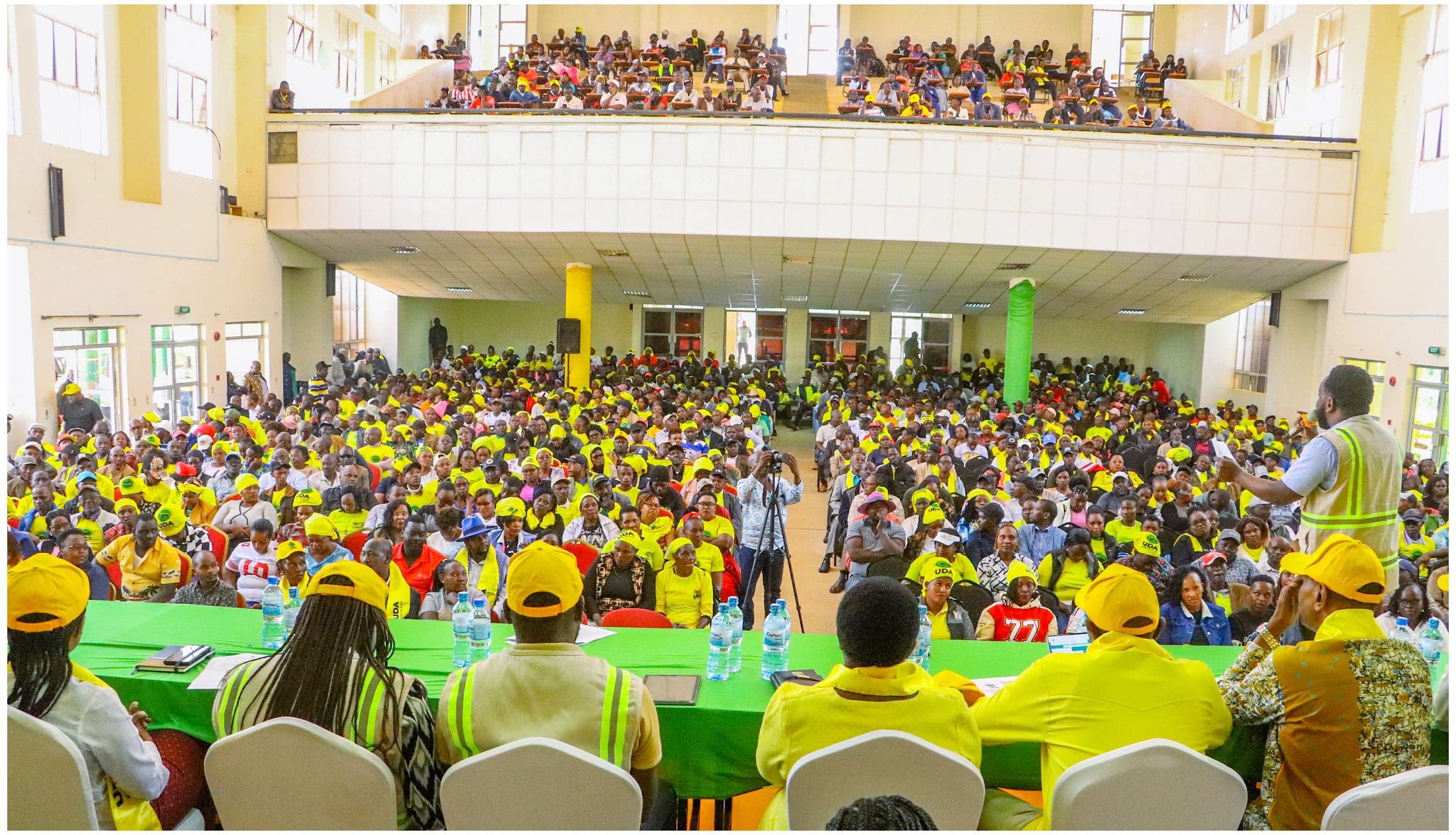
 UDA party elected leaders from Nyeri county and the party secretariat during the grassroots elections sensitization program at Kagumo Teachers Training College on December 10, 2025The ruling United Democratic Alliance faces a big political test in Mt Kenya
region as it conducts its party grassroots elections this Saturday.
The elections will also be conducted in the Rift Valley, the only other
remaining region.
The two regions propelled President William Ruto to the 2022
electoral victory.
However, things have changed in Mt Kenya, with growing hostility towards President
Ruto’s administrations and the UDA party.
The party elections, the first in the
region, thus come at a delicate moment for Ruto.
Mt Kenya, once a key support base for Ruto, has been restive following the
impeachment of former Deputy President Rigathi Gachagua and the subsequent formation
of his political outfit, the Democracy for the Citizens Party.
At the same time, retired President Uhuru Kenyatta has stepped up efforts to
revive his Jubilee Party, further
complicating the political terrain for UDA in the region.
DCP and Jubilee are widely viewed as Mt Kenya-centric parties, largely
because of their association with Gachagua and Uhuru respectively. Their
renewed activity has intensified competition for political influence in a
region, which in 2022 voted for Ruto almost to a man.
For UDA, the grassroots elections are intended to entrench party structures
at the ward, constituency and county levels, strengthen mobilisation and
reconnect the party with its base.
Nyeri Senator Wahome Wamatinga said the grassroots elections will offer an
opportunity to strengthen the ruling party.
“UDA, being the ruling party,… we would want to revamp it. We have seen and
are quite excited by the interest people have expressed in the party. For
instance in Mukurweini, we have 2,800 people who have registered to compete in
different offices in the polling station level,” he said.
Notably, Mukurweini MP John Kaguchia, who was elected on the UDA ticket, has
since aligned with the Gachagua camp.
In Mathira, MP Eric Wamumbi said 3,000 participants have registered to
seek different positions.
“Every polling station will be required to elect 20 representatives to
represent them in the UDA party. After that, we will have ward-level elections,
then constituency and county elections, all the way to the national level. We
want to build a strong party with structures right from the grassroots level,”
he said.
Mathira is Gachagua’s home constituency.
However, the exercise is unfolding against a backdrop of public discontent
linked to economic pressures, controversial policy choices, and perceptions the region has been sidelined since Gachagua’s removal.
Political observers see the elections as both
an organisational exercise and a political barometer.
Low turnout, disputed
outcomes or visible resistance to UDA candidates could signal deeper problems
for the party in Mt Kenya.
The party was forced to extend the registration period to January 5 to “allow
all eligible participants adequate time to complete the registration”.
The party secretariat also moved to establish county-based support teams to
assist members and candidates who may be experiencing challenges.
On the other hand, a smooth process with strong participation could offer Ruto’s allies an opportunity to argue that the party still retains
significant grassroots support despite recent turbulence.
The stakes are particularly high for UDA
leaders and elected officials from Mt Kenya who have remained loyal to Ruto.
They are under pressure to use the elections to popularise the
party, defend the government’s record, and counter narratives being advanced by
DCP and a resurgent Jubilee. Failure to do so could weaken their standing both
within the party and among voters in their backyards, playing their own
political future on the lifeline.
In the Rift Valley, President Ruto’s political
stronghold, the elections are expected to be less contentious. Still, the
region will be closely watched for signs of internal competition, factionalism
or voter apathy that could affect UDA’s cohesion going into the next electoral
cycle.
Beyond internal party dynamics and in the
regions, the grassroots polls have broader implications for the 2027 presidential
race.
A strong showing by UDA in Mt Kenya would complicate efforts by rival
parties to consolidate the region against Ruto.
On the other hand,
any visible cracks could embolden DCP and Jubilee as they seek to position
themselves as alternative vehicles for Mt Kenya’s political interests.
The elections also test UDA’s capacity as a
relatively young party to manage internal democracy without triggering disputes
that could spill into the courts or fuel defections.