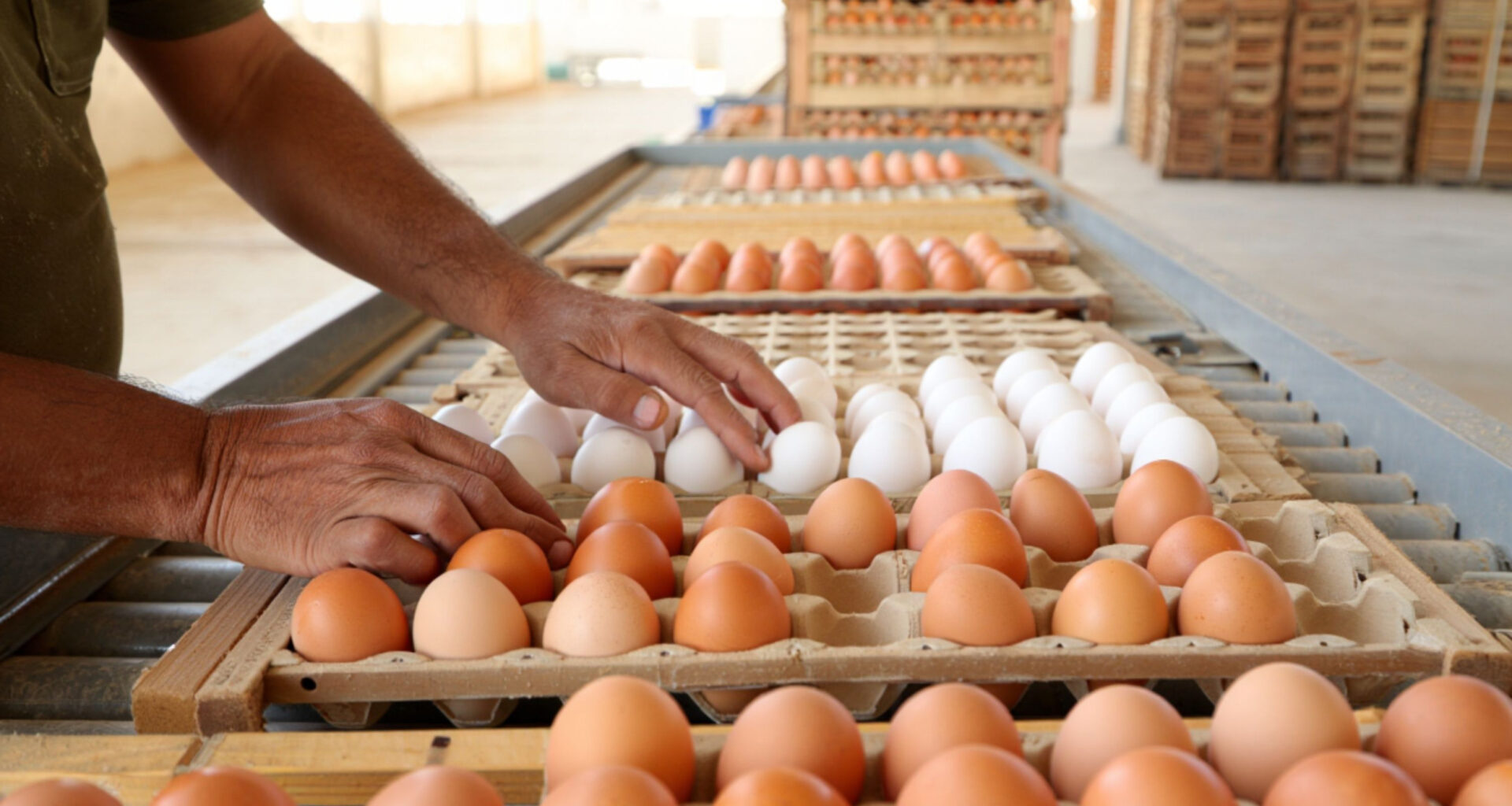
 Intensive production has enabled Tunisia to largely meet its domestic demand for eggs. Image created with the help of AI (Reve.art)
In this 5th article in this series, Sebastiane Ebatamehi from The African Exponent gives a comprehensive overview of the country in 6th position in the top 10 poultry producing countries in Africa in 2025: Tunisia.
Tunisia’s poultry industry, though not matching the output volumes of giants in Africa like Egypt, South Africa, or Morocco, is well-established and growing steadily.
Tunisia’s poultry industry contributes about 12% of total agricultural production and 33% of animal production, demonstrating its importance to the national economy.
Poultry meat production
In 2022, the country reportedly produced approximately 242,000 mt of poultry meat, a figure that has shown modest increases year over year. Forecasts suggest that by 2028, Tunisia’s poultry meat production may reach approximately 265,000 mt, though growth is expected to remain moderate (CAGR approximately 1.5%).
Egg output
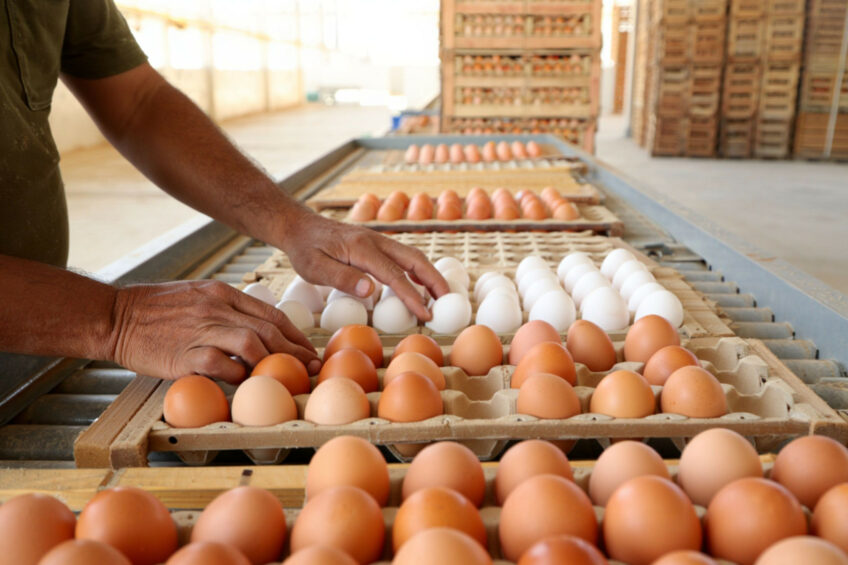
Egg production is a strong pillar in Tunisia’s poultry landscape. The latest data shows that the country produces over 2.1 billion eggs per year, with about 97% of that output coming from intensive commercial production, while a small portion is from traditional/local flocks.
Intensive production has enabled Tunisia to largely meet its domestic demand for eggs, reducing reliance on imports in that sub-segment.
ALSO READ: Morocco launches CBD poultry feed study as an antibiotic alternative
There are some 850 layer farms and about 350 breeding poultry farms, supported by 4 hatcheries. This network underpins Tunisia’s ability to supply domestic markets reliably, especially for egg consumption. Furthermore, in early 2025, egg supply figures for months like August were stable at around 162 million eggs, reflecting that supply chains are holding up relatively well despite price pressures.
Supply, pricing and regulatory oversight
Yet, Tunisia’s poultry sector faces significant hurdles. Local feed grain production is limited, so Tunisia depends on imports for many inputs. In addition, fluctuations in poultry meat and egg prices remain a challenge. Retail and producer margins are under scrutiny – public efforts currently underway to regulate egg pricing to protect both farmers and consumers from volatile swings.
Institutions like Tunisia’s National Chamber of Poultry and White Meat Traders and ONAGRI (National Observatory of Agriculture) are increasingly active, working on ensuring adequate supply, stabilizing pricing, and improving regulatory oversight.
For Africa, Tunisia exemplifies how mid-sized producers can leverage strong layer/egg sectors and steady broiler growth, even when challenged by input costs and external dependencies, to contribute to food security and reduce import erosion.
In the next article we zoom in on Algeria.
In the previous articles that explore Africa’s poultry powerhouses:
10th position: Ghana
9th position: Malawi
8th position: Mozambique
7th position: Kenya