A team of archaeologists excavating southern Africa has found the oldest direct evidence of human use of poisoned weapons, extending the known date for this technology to 60,000 years ago. This finding was made by analyzing chemical traces identified on ancient quartz arrowheads found in the Umhlatuzana Rock Shelter in KwaZulu-Natal, South Africa.
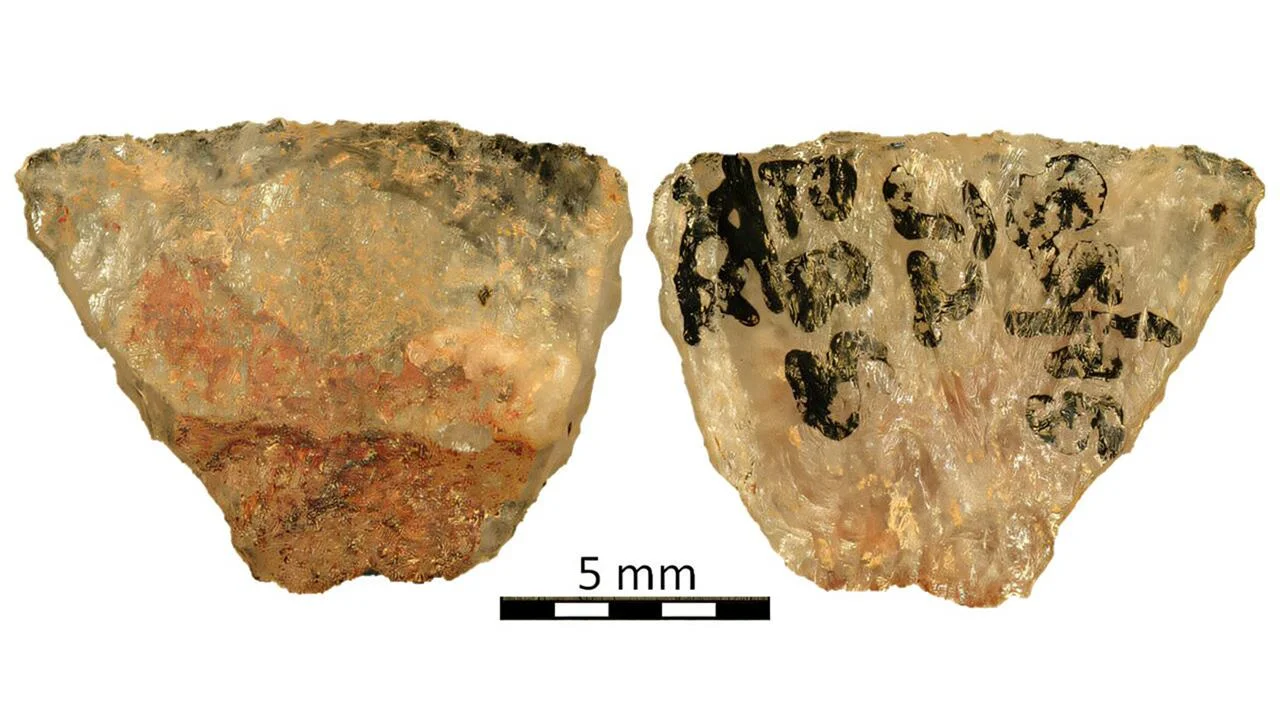 Both sides of one of the arrowheads analyzed. The left-hand image shows the organic remains in which the arrowhead residues were identified. Credit: Marlize Lombard
The study focused on a small selection of stone arrow tips excavated decades ago from deposits associated with the Howiesons Poort cultural tradition, a period known for its technological innovation among early Homo sapiens. Through the use of advanced microchemical and biomolecular analyses, researchers found the presence of the alkaloids buphandrine and epibuphanisine in some samples. These are considered toxic compounds found in the Amaryllidaceae family of plants. The poisonous bulb of Boophone disticha is the particular plant still in use in southern Africa as an arrow poison.
Of the ten arrowheads analyzed, five retained clear traces of these plant toxins. These toxins are slow-acting, meaning they would not kill prey instantly. They would have weakened animals over time before death. Such toxins would make persistence hunting easier or allow hunting at a distance because they reduce the physical demands on hunters and increase the chances of a successful kill.
Until now, the first use of poison in hunting had to be inferred from largely indirect evidence that could not be conclusively linked to weapons. The Umhlatuzana discovery is the first to offer definite proof that hunters during the Middle Stone Age were using plant poison on the tips of arrows. Previous confirmed examples of these types of poisoned weapons were no older than a few thousand years. This new discovery is more than 50,000 years older than any known examples.
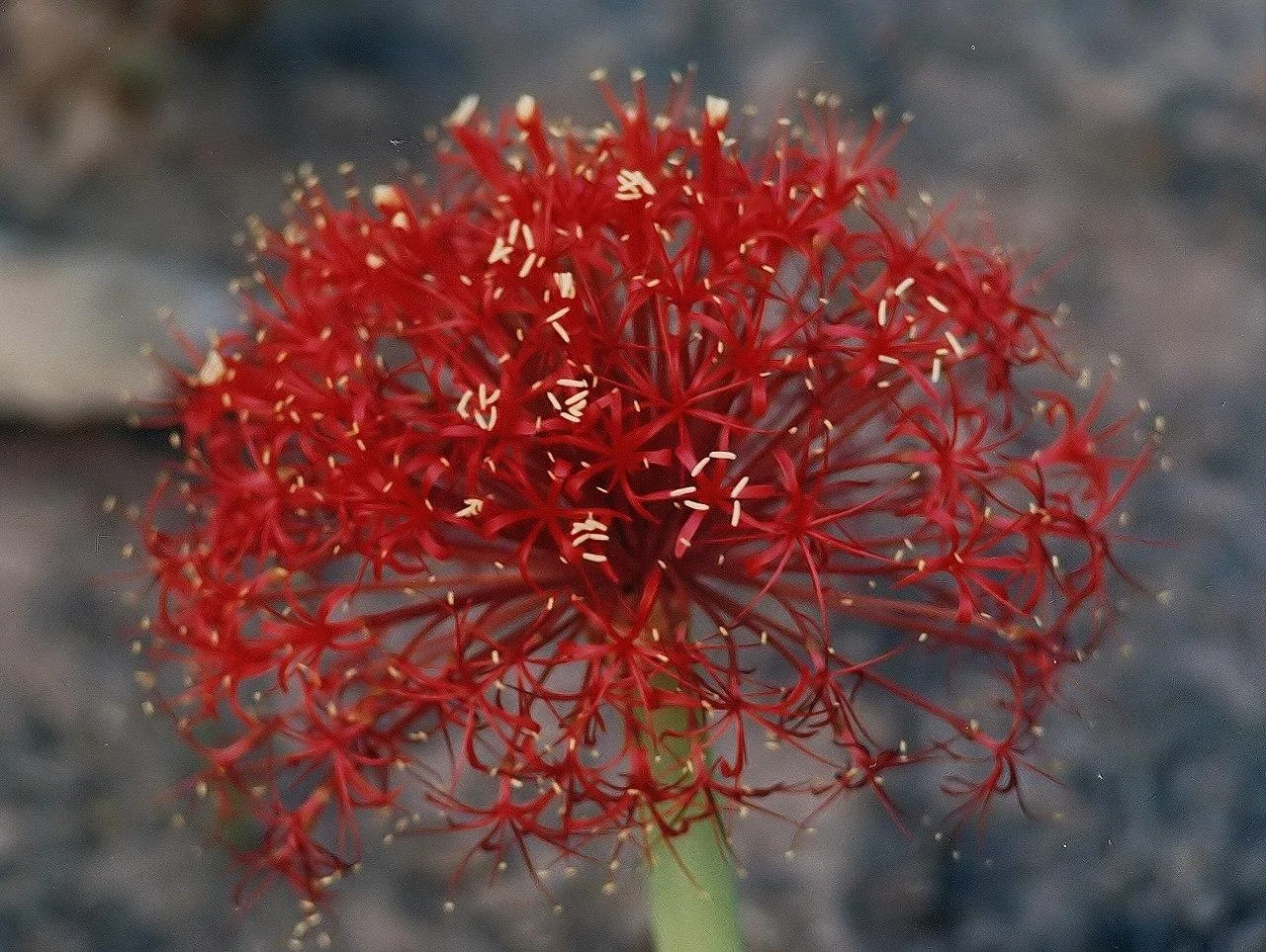 Inflorescence of Boophone disticha. Credit: Hans Hillewaert / CC BY-SA 4.0
To support their conclusions, the authors analyzed the ancient residues together with the poison found on historical arrowheads discovered in southern Africa during the 18th century, as well as extracts from the bulbs of the modern-day plant Boophone disticha. This suggests an astonishing continuity in ecological knowledge and hunting practices over tens of millennia.
More importantly, from a technological perspective, the discovery contributes to our understanding of early human intelligence. The production and use of poisoned arrows require planning, understanding plant properties, and knowledge of delayed cause-and-effect relationships. These skills reflect a high degree of cognitive ability and complex subsistence strategies already present among human populations in southern Africa during the late Pleistocene.
The findings, published in Science Advances, also demonstrate that, under favorable conditions, fragile organic residues can survive for extended periods of time. This opens new possibilities for identifying ancient poisons and medicines elsewhere.
Publication: Isaksson, S., Högberg, A., & Lombard, M. (2026). Direct evidence for poison use on microlithic arrowheads in Southern Africa at 60,000 years ago. Science Advances, 12(2). doi:10.1126/sciadv.adz3281